

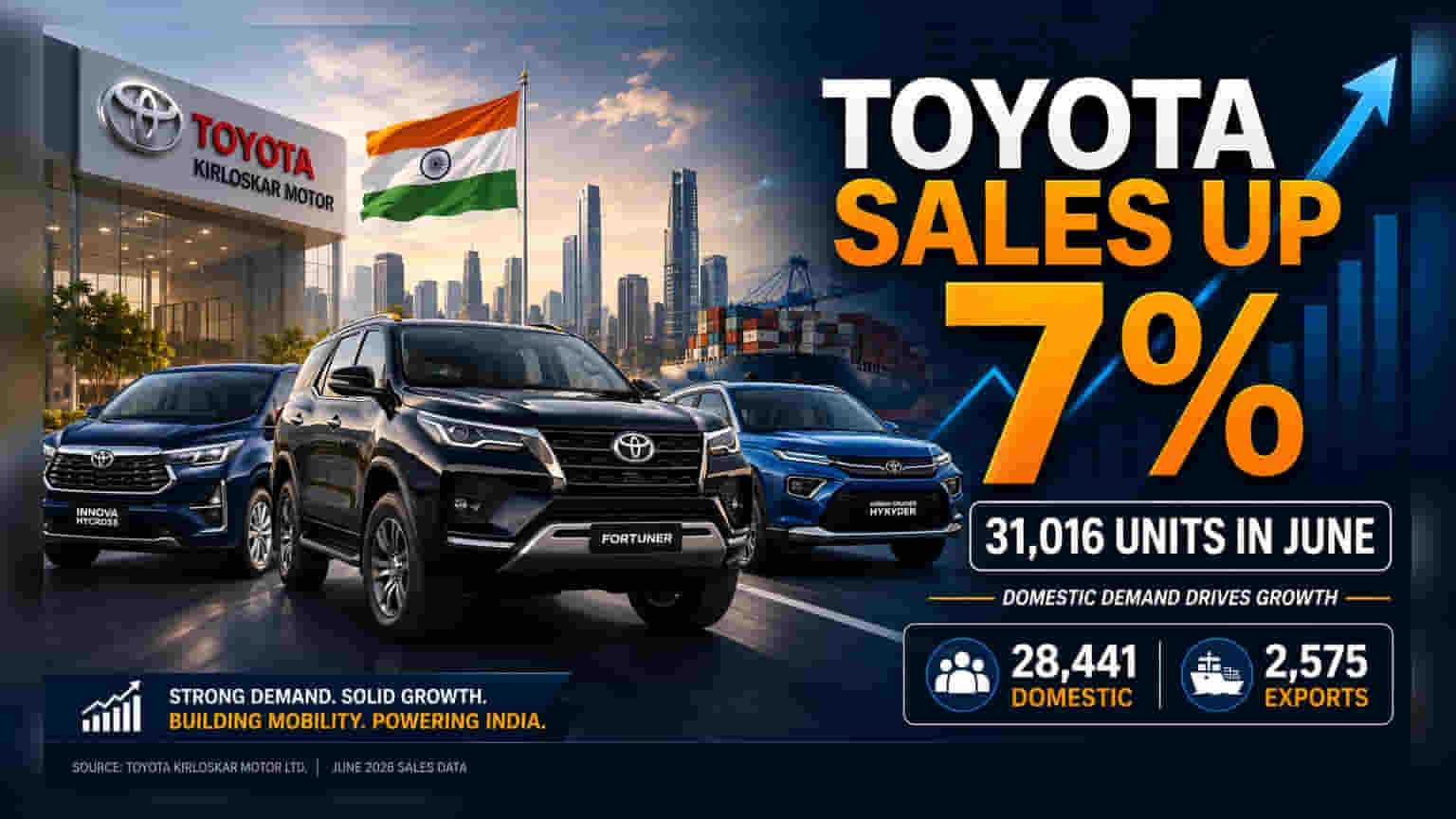
Toyota Kirloskar Motor (TKM) reported a 7% year-on-year sales increase in June 2026, totaling 31,016 units. Driven by an 8% rise in domestic demand, the performance highlights sustained consumer interest in premium SUVs and MPVs. Since the company is unlisted, these figures serve as a proxy for consumer sentiment in India’s higher-value automotive segment, which can influence the outlook for listed automotive component suppliers.
What Happened
Toyota Kirloskar Motor (TKM) has released its sales performance for June 2026, recording a total of 31,016 units. This marks a 7% growth compared to the same month last year. The primary driver of this volume was the domestic market, which saw 28,441 units sold, representing an 8% year-on-year increase. Exports also showed positive momentum, rising 7% to 2,575 units from 2,416 units in the previous year.
Premium Segment Demand Trends
Toyota’s model lineup in India is heavily focused on the premium SUV and MPV segments, including popular models like the Innova Hycross, Fortuner, and Urban Cruiser Hyryder. The 8% growth in domestic sales suggests that demand for higher-ticket vehicles remains resilient. Unlike the entry-level hatchback segment, which is often more sensitive to inflation and interest rate hikes, the premium vehicle buyer demographic typically displays more stable spending patterns. This performance indicates that the appetite for utility vehicles continues to hold firm even as the broader auto industry monitors monthly sales cycles.
Impact on the Automotive Ecosystem
While Toyota Kirloskar Motor is not a publicly traded company in India, its production numbers are a valuable data point for investors following the automotive sector. Many listed auto component manufacturers serve as suppliers to TKM. When TKM reports volume growth, it often signals stable or increasing production requirements for its vendor base. Investors tracking auto ancillaries often look at such sales figures to gauge potential order flow and capacity utilization rates for component suppliers that have direct exposure to Toyota’s supply chain.
Sectoral Challenges to Monitor
While sales volume is growing, the automotive industry faces ongoing pressure from raw material costs and fluctuating commodity prices. Manufacturers must balance volume growth with profitability. For investors in the auto sector, the key concern remains whether companies can pass on input cost increases to consumers without hurting demand. Additionally, while the premium segment is showing strength, any sudden shift in interest rates could potentially impact loan-heavy vehicle purchases, even in the higher-value categories.
What Investors Should Track Next
Investors watching the Indian automotive sector should monitor upcoming monthly wholesale and retail sales reports from other major automakers to see if this trend of premium demand holds across the industry. Additionally, tracking commentary from auto component suppliers regarding their revenue mix and client-specific growth can provide insight into how production volumes at companies like TKM are translating into financial performance for the listed supply chain companies.