

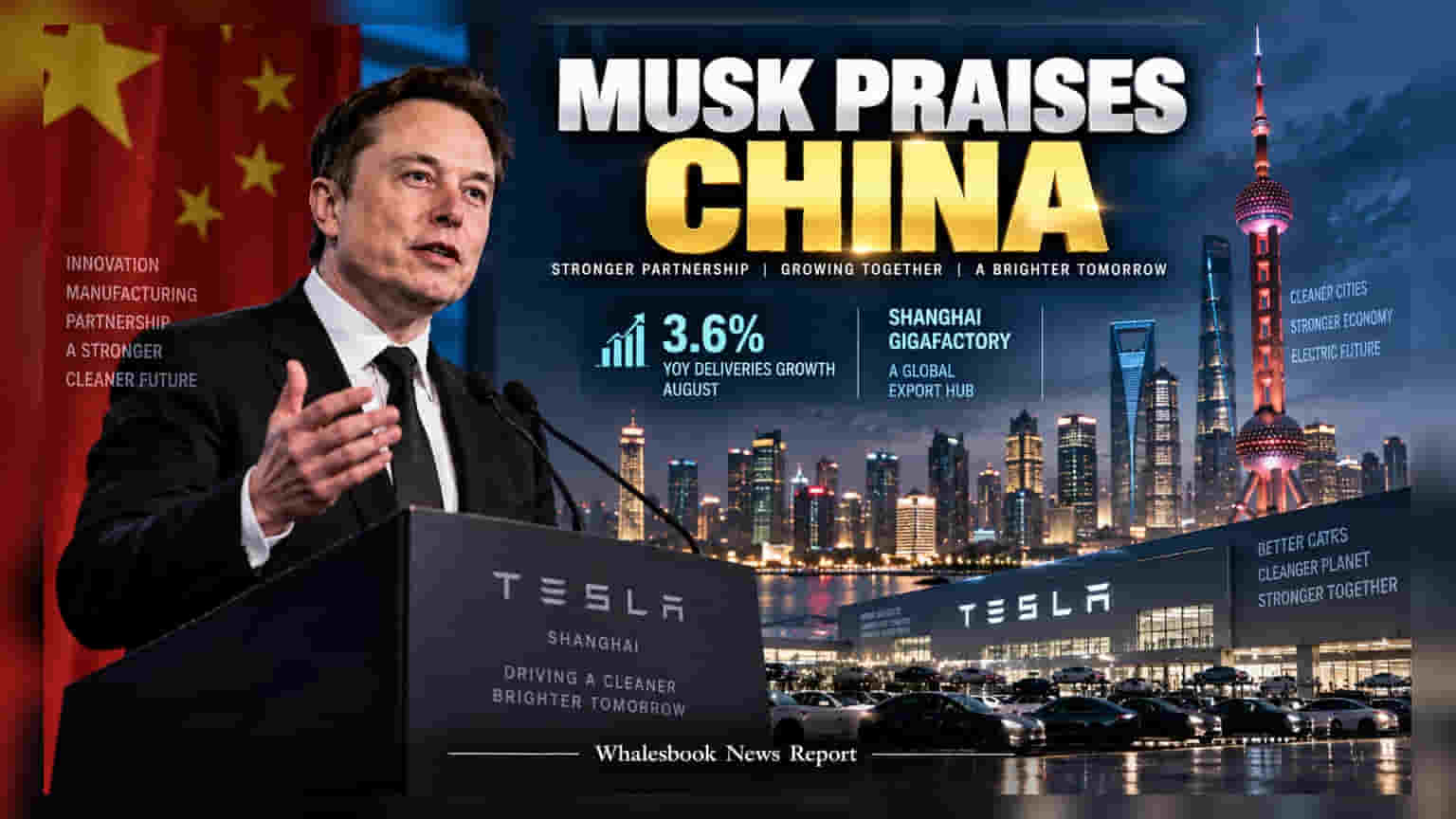
Tesla’s Shanghai Gigafactory reported a 3.6% year-on-year sales increase in August, though growth is showing signs of cooling. CEO Elon Musk’s recent praise for Chinese leadership highlights the automaker’s strategic reliance on its largest global export hub. Investors are balancing the importance of this manufacturing base against intense competition from local electric vehicle makers and potential geopolitical risks.
Tesla’s Shanghai manufacturing facility saw a 3.6% year-on-year rise in deliveries for the Model 3 and Model Y during August. While the facility remains the company’s most important export hub globally, the pace of growth has notably slowed, reflecting a more competitive environment for electric vehicles (EVs) in China. This latest update coincides with public remarks from Tesla CEO Elon Musk, who recently expressed support for Chinese leadership, citing infrastructure gains and economic growth.
Strategic Importance of the Shanghai Hub
The Shanghai Gigafactory serves as the backbone of Tesla's international supply chain. Beyond meeting strong domestic demand, the plant is the primary source for Tesla's exports to various global markets. For investors, the facility represents a central business advantage, as it generally allows for lower production costs compared to manufacturing hubs in other regions. Musk’s recent positive commentary on the local business environment and the workforce underscores the high stakes for the company in maintaining this operational foothold.
Competitive and Market Pressure
Despite the factory's scale, the company is dealing with a cooling sales environment. The 3.6% growth figure is significantly lower than the rapid expansion rates seen in past years. The Chinese EV sector is currently crowded with aggressive domestic competitors, including major players like BYD and emerging tech-driven auto brands. These competitors are frequently introducing new models at competitive price points, which can put pressure on Tesla's profit margins. When sales growth slows, the risk is that the company may need to resort to price cuts to maintain volume, which directly affects the profit generated from each vehicle sold.
Risks and Investor Monitorables
Operating in the world's largest automotive market requires a careful balancing act. The company faces ongoing risks related to geopolitical tensions, which can lead to sudden shifts in trade policies or regulatory requirements. Because so much of Tesla's global manufacturing capacity is concentrated in a single location, any disruption—whether from geopolitical friction or local regulatory changes—could have a disproportionate impact on the company’s overall results.
Investors may continue to track monthly delivery data to see if growth remains soft or if the company can regain momentum. Additionally, the ability of the company to maintain its profit margins while competing with lower-priced local rivals in China will be a key factor to monitor. The management’s ability to navigate the complex diplomatic landscape while securing the long-term viability of the Shanghai plant remains a primary focus for shareholders.