

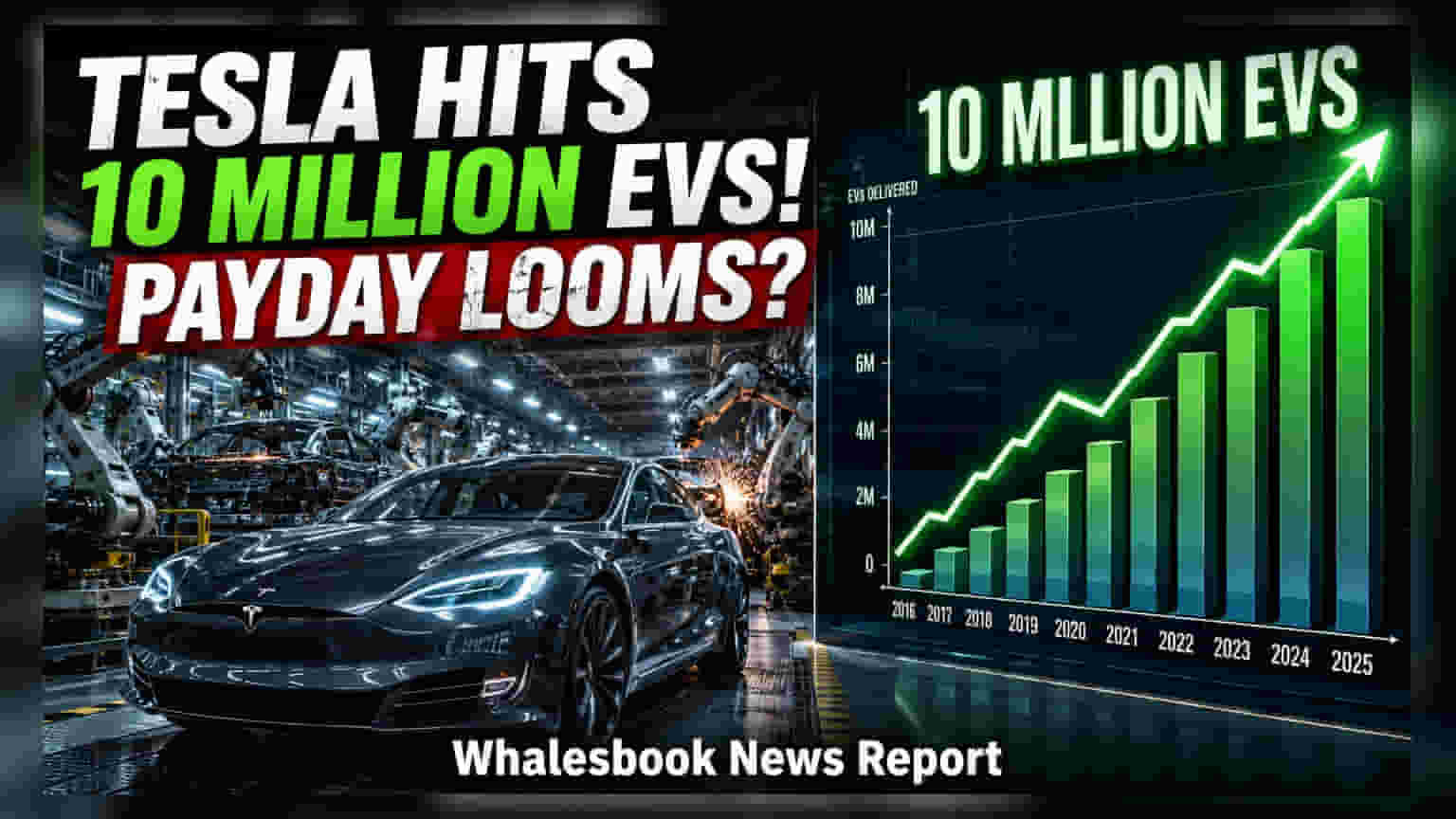
Tesla has manufactured its 10 millionth electric vehicle, reaching a key halfway point for performance goals linked to CEO Elon Musk's compensation plan. While the production milestone is significant, the company faces pressure from slowing U.S. sales and the need to scale software subscriptions to meet long-term targets by 2035.
Tesla announced on Thursday that it has reached a production milestone of 10 million electric vehicles. This achievement comes six years after the company first crossed the one-million vehicle mark. The production count serves as a central component of the performance targets required to satisfy the conditions of CEO Elon Musk’s compensation package, which received shareholder approval last year.
Scaling Production and Compensation Targets
To fully meet the requirements set for 2035, Tesla aims to produce 20 million vehicles, reach 10 million active subscriptions for its Full Self-Driving software, and deploy significant numbers of autonomous bots and robotaxis. While the 10 million vehicle production mark represents the halfway point for that specific metric, maintaining this momentum is a core challenge. Current annual sales projections indicate that the 20 million vehicle target may not be achieved until the early 2030s, particularly as the company navigates a shift in market demand.
Market Pressures and Profitability
Tesla has encountered notable difficulties in its domestic market, where second-quarter sales saw a 13% decline compared to the previous year. To offset this, the company has expanded its focus on international markets, including Japan, Australia, and Lithuania. Profit margins have also come under pressure due to heavy vehicle discounting, a reduction in revenue from regulatory credits, and increased money spent on artificial intelligence and robotics research.
Regarding the software component of the compensation goals, Tesla reported slightly fewer than 1.5 million users for its Full Self-Driving subscription. The company faces a steep path toward reaching 10 million subscribers. Additionally, reaching the adjusted EBITDA target of $400 billion by 2035 remains a significant hurdle, as recent financial reports show the figure at approximately $3.27 billion.
Competitive Landscape
In the global electric vehicle sector, competition remains intense. China-based BYD continues to be a major rival, with total sales of over 17 million new energy vehicles. It is important to note that a large portion of BYD's figures includes hybrid models, whereas Tesla focuses exclusively on battery-electric vehicles.
Investors will likely track the company's ability to balance high capital spending on AI and robotics with the need to stabilize profit margins and accelerate subscription growth. Future updates regarding the official count of paid FSD users and progress on autonomous robotaxi deployments will be key monitorables for tracking the company's long-term performance targets.