

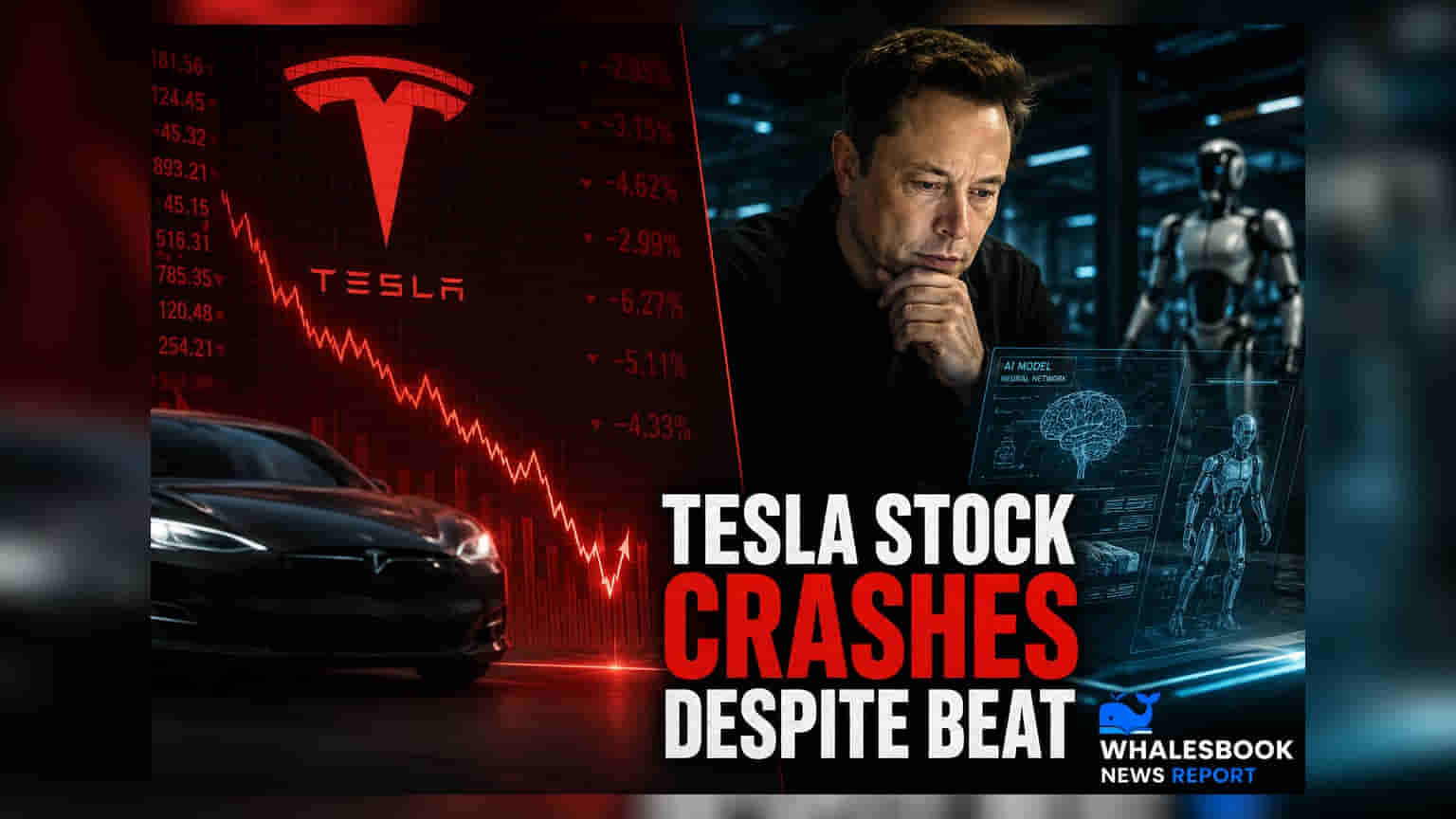
Tesla shares dropped 7% to $394.18 even after the company reported second-quarter vehicle deliveries of 480,126 units, beating analyst estimates. Investors are increasingly concerned about the company’s heavy capital spending on AI and robotics, looking ahead to the July 22 earnings report for details on profitability.
What Happened
Tesla Inc. shares fell by approximately 7% in Thursday's trading session, closing at $394.18. This decline occurred despite the company reporting strong delivery numbers for the second quarter of 2026. Tesla delivered 480,126 vehicles between April and June, comfortably beating the consensus market estimate of 406,600 units. Production for the same period stood at 451,758 vehicles. The Model 3 and Model Y remain the primary revenue drivers, making up 97% of the total units delivered.
Why Investors Are Concerned About Spending
The stock price reaction reflects a growing trend where investors prioritize future profit margins over immediate delivery volume. Tesla has committed to capital spending exceeding $25 billion this year, largely directed toward long-term bets like the Cybercab robotaxi platform and the Optimus humanoid robot. Because these projects require massive upfront costs without immediate revenue, investors are waiting for the July 22 earnings report to understand how this spending affects the company's bottom line. For the third consecutive quarter, positive delivery news has failed to stop the stock from falling, suggesting the market is closely scrutinizing the company's path to sustainable profitability.
Competition and Market Pressures
Tesla is navigating a difficult period as it tries to recover from two years of declining annual sales. The company faces stiff competition from Chinese manufacturers like BYD, Nio, and Xiaomi, which are launching high-tech, lower-cost electric vehicles. Traditional global automakers like Volkswagen and Hyundai Motor Group are also intensifying their competitive efforts. To defend its market share, Tesla has introduced more affordable variants of its core models and is expanding its Full Self-Driving (Supervised) software into European markets.
Energy Storage Performance
Beyond its core electric vehicle business, Tesla’s energy storage division is also in focus. The company deployed 13.5 gigawatt-hours of energy storage during the second quarter. While this performance showed growth compared to the first quarter and the same period last year, it missed the market expectation of 13.8 GWh. This slight shortfall in a growth-focused segment has added to the cautious sentiment surrounding the company's overall operational efficiency.
What Investors Should Track Next
The primary monitorable for investors is the upcoming earnings report scheduled for July 22. Market participants will be looking for specific updates on profit margins, the impact of current capital spending on free cash flow, and management's commentary regarding the timeline for its AI and robotics initiatives. Understanding whether the company can maintain profitability while funding these massive technology projects will be key to the stock's future direction.