 Whalesbook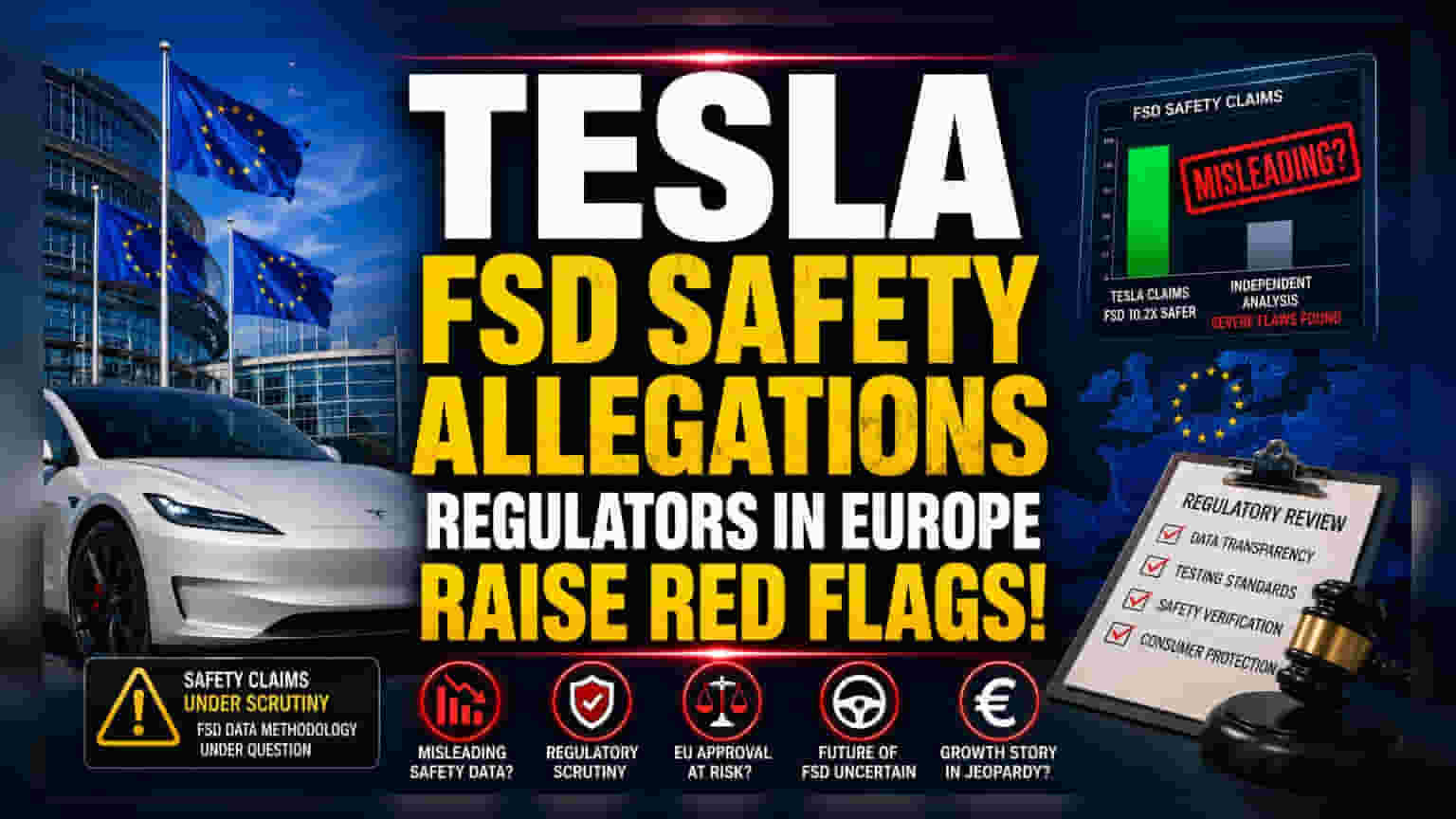


Tesla is facing regulatory questions in Europe as researchers challenge the methodology behind the safety data used to support its 'Full Self-Driving' technology. This scrutiny impacts investor confidence in the company’s autonomous driving narrative as it seeks wider approval across the EU.
What Happened
Tesla is facing new regulatory scrutiny in Europe as independent researchers and industry watchdogs raise concerns about the safety statistics used to promote its "Full Self-Driving" (FSD) system. The electric vehicle maker, which has been seeking broader certification for its autonomous driving features across the European Union, allegedly provided safety data to regulators in Sweden and the Netherlands that experts argue is misleading.
According to reports, Tesla has consistently claimed that its FSD technology is significantly safer than human-driven vehicles. However, analyses by researchers suggest that the methodology behind these figures—which Tesla has used in discussions with road authorities like the Netherlands' RDW—contains significant flaws. While the RDW did grant approval for FSD in April after conducting its own tests, the ongoing debate regarding the reliability of Tesla's self-published data has created friction as the company attempts to leverage this Dutch authorization for wider EU-wide adoption.
Why This Matters For Investors
The core of the issue is not just a disagreement over statistics; it hits the heart of the "autonomous driving" valuation narrative that many investors associate with Tesla. A significant portion of the company’s long-term growth story is tied to the expectation that FSD will eventually unlock massive revenue streams through robotaxis and advanced driver-assistance features. If regulators or the public begin to view Tesla’s safety claims as unreliable or inflated, it could lead to stricter testing requirements, delays in approvals, or even a reversal of current authorizations.
For investors, the risk is that the regulatory pathway to full autonomy is becoming more complex. While Tesla has successfully navigated the approval process in some European markets, the demand for transparent, independently verifiable data is increasing. Any regulatory pushback in the EU—a market with historically stringent safety and data privacy rules—could slow down the company's expansion plans.
The Data Methodology Question
The primary criticism centers on how Tesla compares its safety performance to that of the general US vehicle fleet. Critics, including traffic-safety researchers, argue that Tesla’s statistical comparisons are not "apples to apples." For instance, Tesla has reportedly counted crashes where its own vehicles’ airbags deployed and compared those figures to a broader category of accidents—including those requiring tow trucks—which often includes less severe incidents where airbags did not deploy.
By including less severe accidents in the baseline comparison, researchers argue that Tesla’s figures may artificially inflate the perceived safety benefit of FSD. This discrepancy between the company’s internal safety marketing and independent research creates a “trust gap” that regulators are now being forced to investigate more closely.
Regulatory Hurdles and Growth Risks
Tesla’s growth strategy in Europe depends on its ability to convince national regulators that its software meets high safety standards. The regulatory environment in the EU is fragmented, with different member states often having distinct requirements for testing and deployment. While the Dutch RDW has stated that its decisions are based on its own independent tests, analyses, and verifications rather than company marketing claims, the scrutiny on Tesla’s data submission is intensifying.
If other EU regulators adopt a more skeptical view, Tesla may face a longer, more expensive process to prove the safety of its systems. This uncertainty could hinder the pace at which the company can roll out new features to European users, impacting the recurring subscription revenue associated with FSD.
What Investors Should Track Next
Investors should monitor how the company addresses the methodology concerns raised by researchers. A key monitorable will be whether Tesla updates its reporting to align more closely with independent standards, which could help rebuild trust with regulators. Additionally, investors should watch for any official statements from EU regulators regarding potential reviews or changes to existing FSD certifications. Any updates from the company’s management regarding the transparency of its safety data will also be critical to understanding the potential for future regulatory friction.