

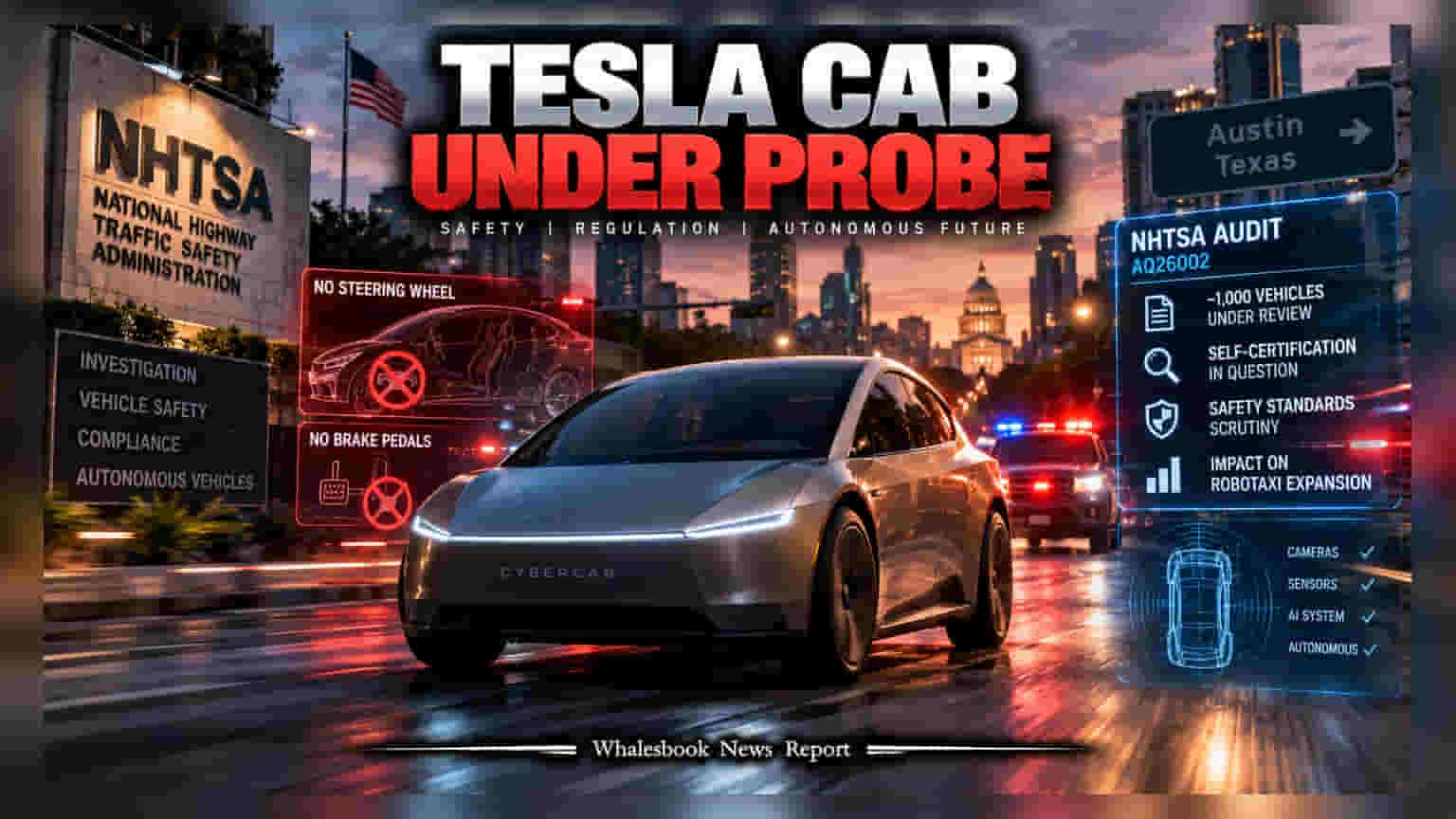
The US safety regulator has launched an audit into 1,000 Tesla Cybercab vehicles following their recent launch in Austin. The probe investigates if the car’s design, which lacks traditional steering wheels and pedals, complies with federal safety standards. This regulatory action raises questions about the pace of Tesla’s autonomous fleet expansion and potential operational delays.
On September 4, 2026, the US National Highway Traffic Safety Administration (NHTSA) launched a formal audit into Tesla’s newly deployed Cybercab fleet. The investigation, designated as audit query AQ26002, covers approximately 1,000 vehicles that Tesla recently released for commercial robotaxi services on the streets of Austin, Texas. The primary focus of this inquiry is the absence of traditional manual controls, specifically steering wheels and brake pedals, in the Cybercab design.
Regulatory Challenge to Self-Certification
Tesla has relied on the industry-standard self-certification process to assert that its vehicles comply with Federal Motor Vehicle Safety Standards. Under this system, manufacturers declare that their vehicles meet safety requirements without needing pre-approval for every design choice. However, the NHTSA is now scrutinizing the data and methodologies Tesla used to make this declaration for a vehicle that fundamentally lacks the manual controls required in conventional passenger cars. The agency is questioning whether the exemptions Tesla bypassed are applicable to the Cybercab's unique configuration, and whether the safety standards are being met without them.
Implications for Autonomous Rollout
This regulatory review introduces uncertainty regarding the timeline for Tesla’s robotaxi expansion. The process mirrors the experience of other autonomous vehicle developers, such as Amazon-owned Zoox, which faced a multi-year audit and special order process before gaining the necessary approvals to operate vehicles without manual controls. The Zoox precedent highlights the significant friction that can occur when moving from prototype to commercial operation. If the NHTSA determines that the current certification process was insufficient, it could force Tesla to pause operations, modify vehicle designs, or undergo a lengthy and costly exemption process, potentially impacting the commercial viability of the Austin rollout.
Financial and Strategic Context
For investors, this development adds another layer of complexity to Tesla’s financial picture. The company has been under pressure to demonstrate consistent profitability in its core business while managing extremely high capital spending on AI and autonomous vehicle development. Large-scale investments in these technologies, coupled with the slow ramp-up of new product lines, have already pressured operating margins. Any significant delay caused by regulatory hurdles could limit the speed at which Tesla can scale its robotaxi revenue, forcing the company to sustain high spending levels for longer periods without the expected offsetting income from its autonomous fleet.
Moving forward, the primary monitorable for investors will be the findings of the NHTSA audit and any subsequent management guidance regarding operational adjustments. Market participants will track whether Tesla can resolve these compliance concerns through technical data submissions or if the situation necessitates deeper structural changes to its fleet or expansion strategy.