

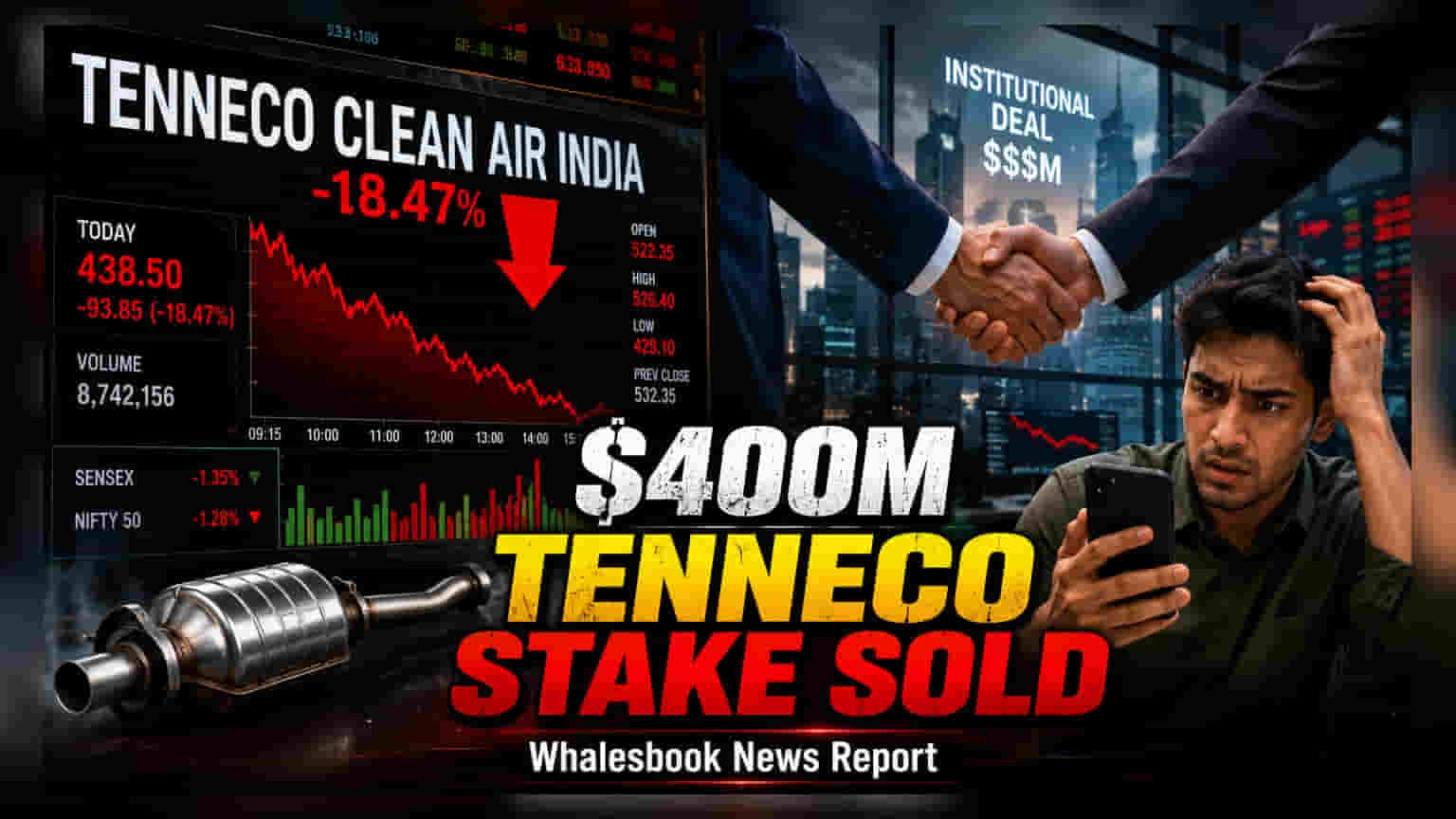
Tenneco Mauritius Holdings sold approximately 8% to 10% of its stake in Tenneco Clean Air India through a block deal on August 12, 2026. The transaction, valued at nearly ₹1,699 crore, drew interest from institutional buyers like SBI Mutual Fund and HDFC Mutual Fund, causing the stock to trade with volatility.
On August 12, 2026, Tenneco Mauritius Holdings, the promoter of Tenneco Clean Air India, completed a significant divestment of its holding in the automotive component company. The promoter sold approximately 8% to 10% of the total equity through large open market block deals. The transaction was valued at approximately ₹1,663 to ₹1,699 crore, with a floor price set at ₹515 per share.
The sale saw participation from major domestic institutional investors, including SBI Mutual Fund and HDFC Mutual Fund, who acquired significant portions of the shares offered. High trading volumes accompanied the deal, with activity levels reaching roughly 35 to 47 times the typical two-week average for the stock.
The stock reacted to the high volume of supply, experiencing intraday volatility. Shares hit a low of ₹524 during the session before recovering slightly to close at ₹540.65, marking a decline of 1.81% for the day on the National Stock Exchange.
Financial and Operational Context
Investors tracking the company may note the current financial performance amid this stake sale. While the company reported a 20% increase in revenue for the first quarter of fiscal year 2027, profitability has faced headwinds. Net profit for the quarter declined by 2% year-on-year to ₹165 crore. This disconnect between revenue growth and profit is largely attributed to rising raw material costs and increased employee expenses, which have put pressure on the company’s operating margins.
The company is currently in a transition phase, moving from traditional internal combustion engine (ICE) components to hybrid and electric vehicle (EV) technologies. Scaling these new, higher-value technologies while maintaining margins is a key strategic challenge. Management has previously noted that global demand fluctuations and geopolitical uncertainties in regions like West Asia could continue to impact operational stability.
Moving forward, investors may want to monitor whether the company can improve its profit margins through better cost control. The execution of its transition toward EV-related products and its ability to expand its customer base beyond its current core clients will be important factors in the coming quarters. The market will also watch for any further volatility as the impact of this large block deal is absorbed by the broader investor base.