 Whalesbook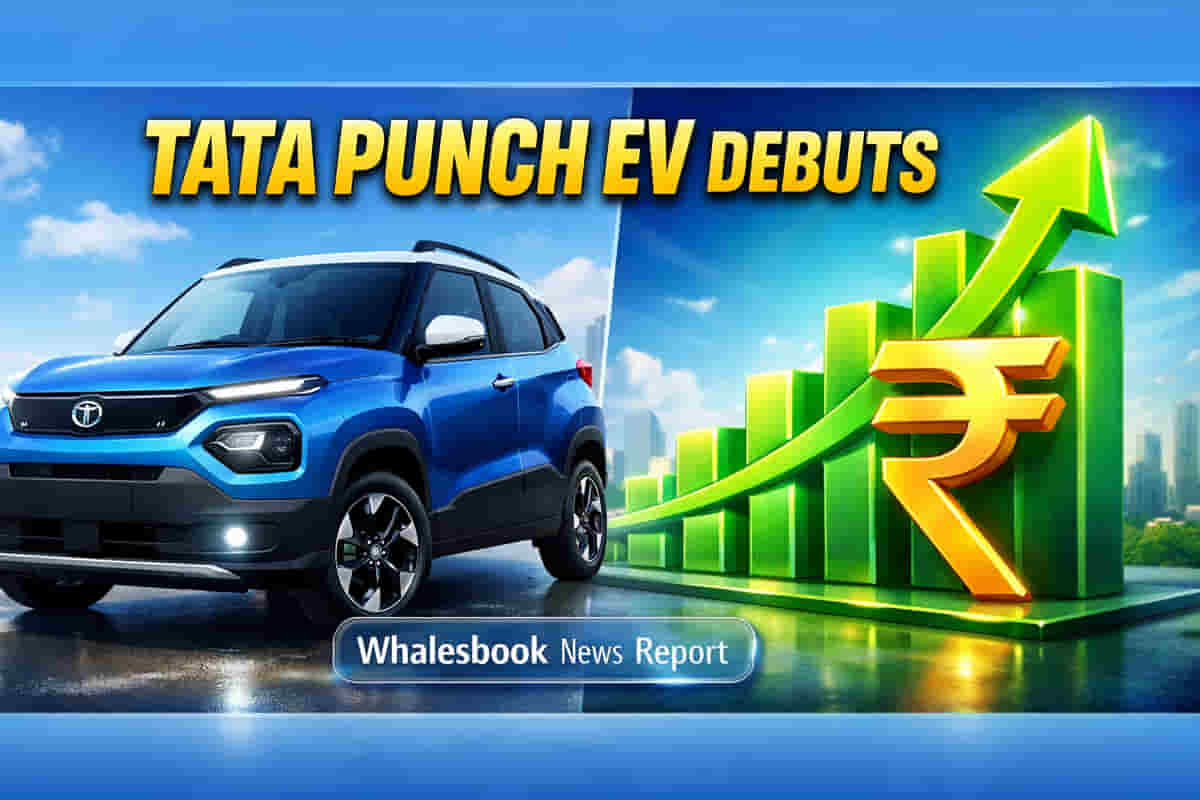
THE SEAMLESS LINK
This strategic positioning highlights Tata Motors' intent to fundamentally alter the entry-level automotive market by making electric mobility a practical and financially viable primary vehicle choice. The aggressive pricing and innovative financing options are designed to overcome long-standing barriers to EV adoption, not just within the EV segment but by directly competing with established gasoline-powered alternatives.
The Core Catalyst: Redefining Entry-Level EV Economics
The launch of the Punch.ev at an introductory ex-showroom price of ₹9.69 lakh for the 30 kWh Smart variant significantly undercuts comparable electric vehicles like the Tata Tiago EV (starting ₹7.99 lakh) and the MG Comet EV (starting ₹6.31 lakh). [3, 9, 10, 19, 22, 23, 40] However, the real disruptor is the Battery-as-a-Service (BaaS) option. This allows customers to purchase the vehicle for as low as ₹6.49 lakh, with a separate monthly payment for the battery. This model directly addresses the high upfront cost, a primary deterrent for entry-level buyers, and positions the Punch.ev as a direct competitor not only to other EVs but also to popular ICE hatchbacks like the Maruti Swift (starting ₹5.79 lakh) and Hyundai Exter (starting ₹5.64 lakh). [2, 5, 8, 14, 18, 25, 34] The vehicle boasts a real-world range of approximately 355 km from its 40 kWh battery, with fast charging capabilities adding up to 135 km of range in just 15 minutes. [cite: SOURCE A] This competitive range and charging speed aim to alleviate range anxiety, a persistent concern for prospective EV owners.
The Analytical Deep Dive: Market Positioning and Competitive Landscape
Tata Motors, already a dominant force in India's EV market with a historically high share (peaking at over 80% previously), is leveraging the Punch.ev to solidify its leadership against an increasingly crowded field. [21, 46] While its EV market share recently dipped to around 35-40%, the company aims to recapture 45-50% through a broader portfolio and deeper ecosystem investments. [21, 44, 46] The Punch.ev, positioned below the Tiago EV, directly competes for volume in the crucial entry-level segment. Unlike the compact city-focused MG Comet EV, which offers a shorter range (~230 km), the Punch.ev provides greater utility for both urban commuting and longer journeys. [10, 40] The company's investment of approximately ₹16,000 crore in its EV division underscores a commitment to expanding its EV offerings and infrastructure. [21] Government incentives, including a reduced GST on EVs and charging infrastructure, alongside state-level benefits like road tax exemptions, further support the affordability push. [26, 38, 42] Tata Motors' extensive charging network, boasting over 2.3 lakh public charging points aggregated through partners, complements the vehicle's practical range. [cite: SOURCE A]
⚠️ THE FORENSIC BEAR CASE
While the aggressive pricing and BaaS model are intended to drive volume, they raise significant questions about profitability. The introductory pricing, particularly with the BaaS option, could place considerable pressure on Tata Motors' margins in the entry-level segment, which is traditionally the most price-sensitive. The long-term financial viability and scalability of the BaaS model remain untested, potentially exposing the company to risks associated with battery depreciation and customer defaults. Competition from established ICE manufacturers offering well-serviced and familiar vehicles at similar price points, such as the Maruti Swift and Hyundai Exter, presents a formidable challenge. [2, 8, 14, 18, 25] Furthermore, Tata Motors' EV market share has seen a notable decline from its peak, indicating that rivals are rapidly gaining ground. [21, 44] The company's overall financial health, reflected in its P/E ratio (ranging from approximately 11.6x to 31.3x in early 2026), suggests that while investors are paying a multiple for its earnings, the pressure to demonstrate consistent profitability across its segments, including the newly aggressive EV offerings, will be intense. [11, 12, 33, 39] Shailesh Chandra, Managing Director, has highlighted the need to address perceptions of EVs as solely urban vehicles, indicating an ongoing effort to broaden appeal, but this requires sustained marketing and infrastructure development beyond the product itself.
The Future Outlook
Tata Motors aims to regain a 45-50% EV market share by expanding its portfolio and ecosystem. [44, 46] The Punch.ev is a key component of this strategy, targeting the critical entry-level segment. The company's broader "2:2:2" EV strategy, focusing on two compelling models each in the entry, mid, and premium segments, aims for comprehensive market coverage. [27] Analysts are watching whether Tata Motors can balance aggressive market penetration with sustainable profitability, particularly as the EV market matures and competition intensifies. The successful adoption of the BaaS model and its impact on both customer acquisition and company financials will be a closely monitored development. The projected growth of the Indian EV market, expected to reach $117 billion by 2032, presents substantial opportunity for players like Tata Motors that can navigate the evolving economic and technological landscape. [36]