 Whalesbook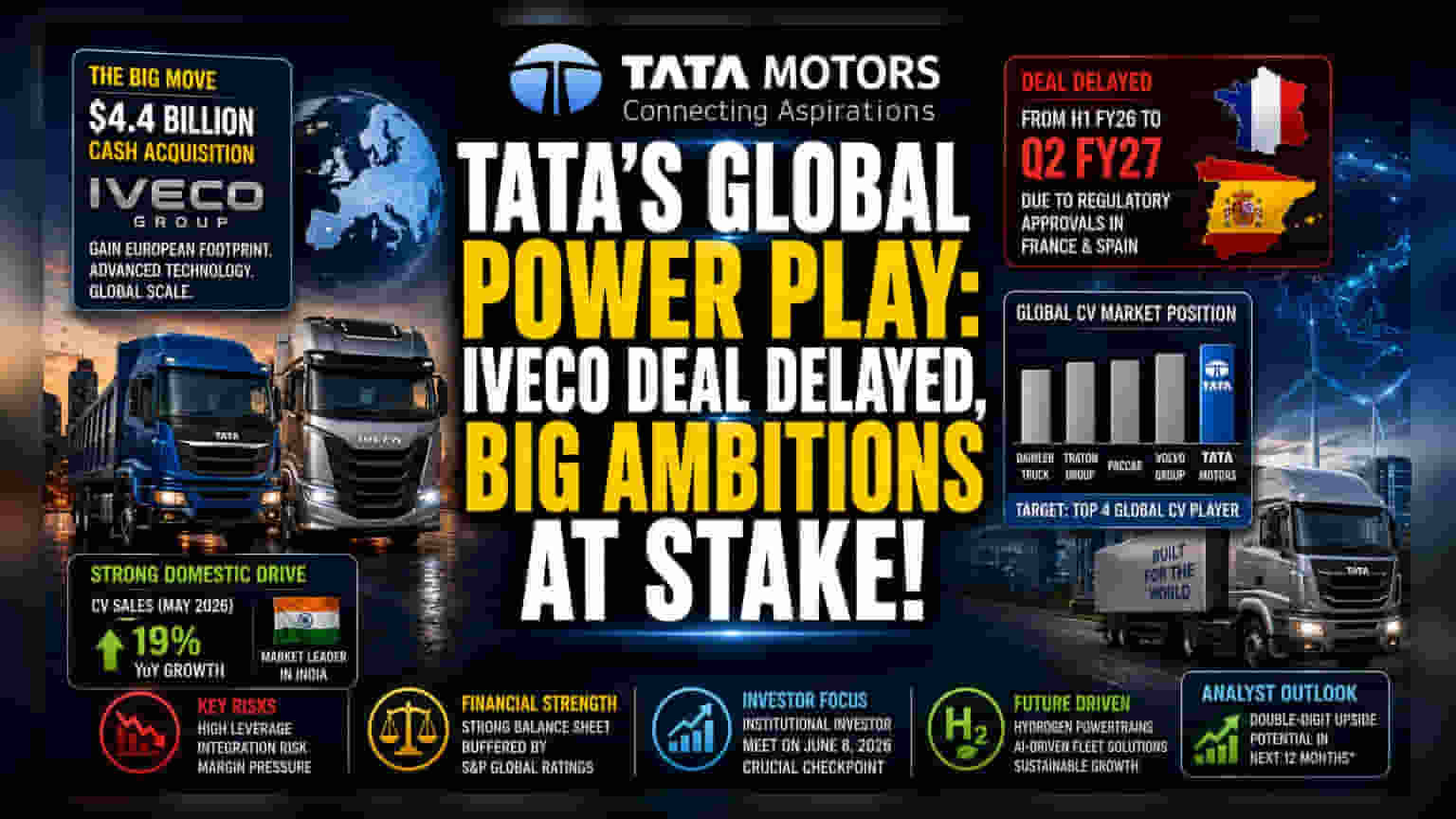


The Ambition Versus Execution Gap
Tata Motors is aggressively realigning its commercial vehicle division to command a top-tier position in the global market. Chairman N. Chandrasekaran has signaled a long-term strategy centered on integrating Iveco’s advanced European technological stack and manufacturing footprint into the Tata ecosystem. However, this strategic leap is currently hampered by operational friction. While initial timelines targeted a closure within the first half of 2026, the complexity of international regulatory oversight—specifically regarding financial authorizations in France and Spain—has pushed the anticipated integration to the second quarter of FY27.
Assessing the Competitive Landscape
Positioning Tata Motors among the world’s four largest commercial vehicle manufacturers requires more than just capital deployment; it necessitates an integration of disparate supply chains and cultural operations. Current sector benchmarks place the company in a precarious position where domestic strength in India, where it remains the market leader, must be balanced against the volatile international export landscape. While domestic CV sales posted a healthy 19% year-on-year increase in May 2026, international volumes have faced headwinds, recording a decline. The acquisition of Iveco is intended to bridge this gap, granting the group a robust European gateway, yet the success of this maneuver hinges on whether the combined entity can maintain the cost-efficiencies that have traditionally defined Tata’s Indian operations.
The Forensic Bear Case
From a risk perspective, the Iveco acquisition presents significant balance sheet implications. Although S&P Global Ratings has previously suggested that Tata’s solid financial health provides a buffer, the sheer scale of the $4.4 billion cash transaction introduces leverage concerns during a period of market uncertainty. Furthermore, management faces the challenge of potential margin compression if the integration process runs over budget or if regional regulatory bodies impose stringent compliance costs. Investors should also note that the stock has experienced notable volatility, with the price-to-earnings ratio reflecting high market expectations that may be susceptible to correction should the deal completion timeline slip further or if the promised synergies fail to manifest in the immediate post-merger quarters.
Future Outlook and Analyst Sentiment
Brokerage and analyst sentiment remains cautiously optimistic, with consensus estimates often highlighting a double-digit percentage upside potential over the next 12 months. However, the immediate focus for market participants is the upcoming institutional investor engagement scheduled for June 8, 2026. This meeting serves as a critical checkpoint for the market to assess management’s conviction on the deal’s trajectory and their ability to navigate the final regulatory hurdles. As Tata Motors continues to invest heavily in hydrogen powertrains and AI-driven fleet solutions, the success of the global expansion narrative will remain tied to its ability to convert these technological investments into sustainable, high-margin commercial outcomes.