

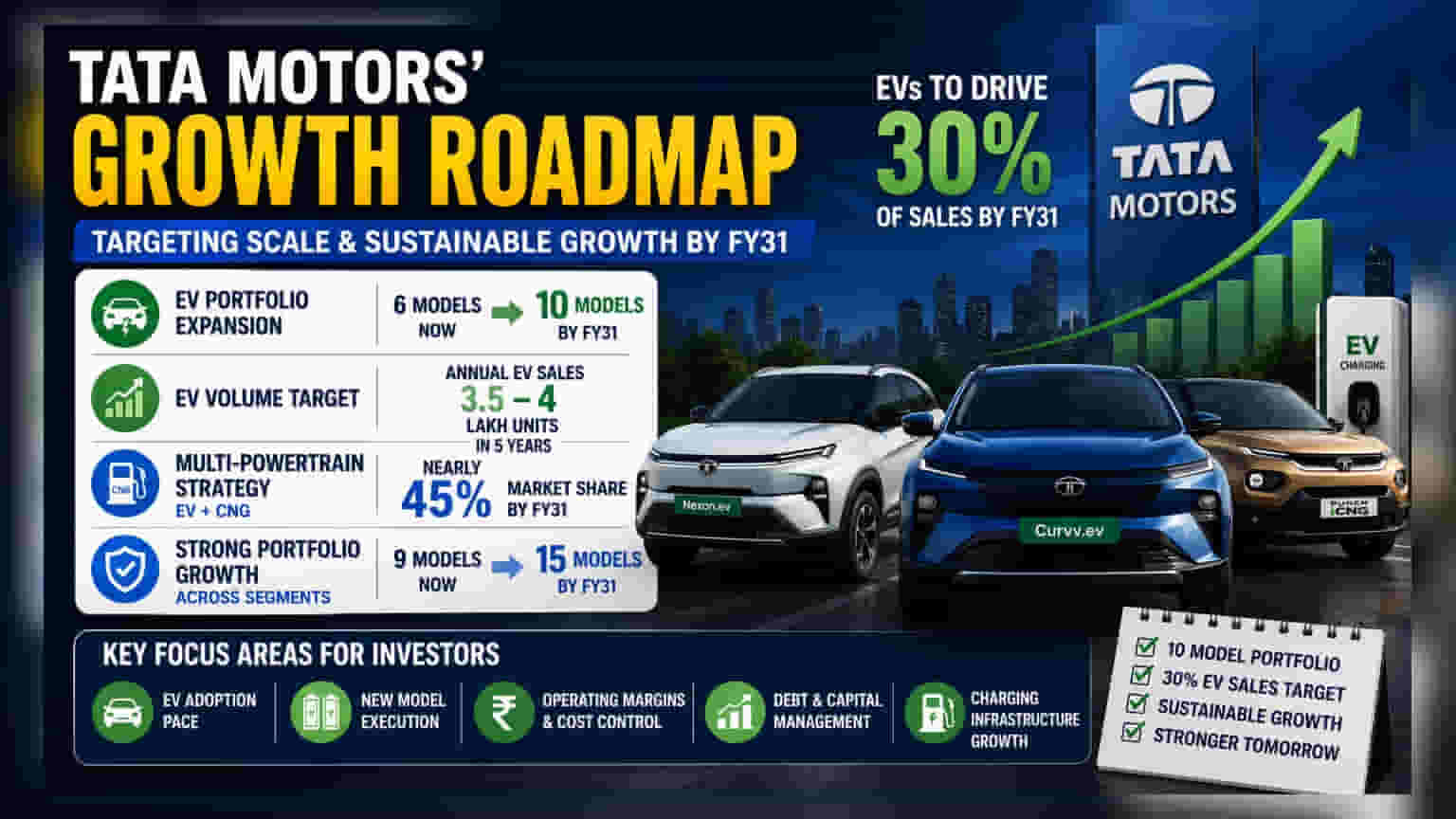
Tata Motors plans to expand its EV lineup to 10 models, aiming for electric cars to comprise 30% of its total passenger vehicle sales by fiscal year 2031. The company projects annual EV volumes of up to 4 lakh units, balancing this growth alongside its CNG and internal combustion engine strategy.
What Happened
Tata Motors has outlined an ambitious growth roadmap to capture a larger share of the Indian passenger vehicle market by the end of the decade. During a recent investor presentation, the company announced that it aims for electric vehicles (EVs) to account for 30% of its total sales by fiscal year 2031. To achieve this, the automaker plans to scale its EV product portfolio from the current six models to ten. Tata Motors anticipates that this shift will drive annual EV volumes to between 3.5 lakh and 4 lakh units within the next five years.
The Multi-Powertrain Strategy
Beyond its electric push, the company is focusing on a multi-pronged approach to its vehicle portfolio. Tata Motors plans to grow its overall passenger vehicle lineup from nine models to fifteen by FY31. This expansion strategy heavily relies on the growth of Compressed Natural Gas (CNG) vehicles alongside electric options. The company expects that a combination of EV and CNG models will command nearly 45% of its total passenger vehicle market share by FY31. This suggests the company intends to cater to cost-conscious buyers with CNG while pushing premium EV adoption for urban consumers.
Competition And Sector Challenges
While the plan is aggressive, Tata Motors faces a changing competitive landscape. Domestic rivals like Mahindra & Mahindra are also ramping up their electric SUV portfolios. Furthermore, global manufacturers are increasingly looking at India with hybrid and electric offerings, which could intensify competition. A critical factor for the entire sector remains the pace of charging infrastructure development in India. While urban adoption is growing, widespread EV penetration depends on the availability of reliable, fast-charging networks across the country, which remains a significant bottleneck for all automakers.
Financial And Operational Risks
For investors, the transition to electric vehicles involves several business complexities. Battery technology and raw material costs—such as lithium—can cause volatility in profit margins. Unlike traditional internal combustion engines, where costs are relatively predictable, EV manufacturing costs are highly sensitive to global commodity prices. Additionally, the success of the 10-model roadmap will depend on the company’s ability to execute these product launches on time and manage the capital spending required to build this new capacity without significantly straining its balance sheet or free cash flow.
What Investors Should Track
As the company moves toward this 2031 target, the focus for stakeholders will be on the actual rate of EV adoption in India versus the company's projections. Investors may monitor the commissioning of new models, the maintenance of operating margins as the product mix shifts toward EVs, and how the company manages debt levels while funding this expansion. Additionally, the growth of the charging ecosystem will serve as a lead indicator for whether the passenger vehicle industry can meet the aggressive electrification targets set by market leaders.