

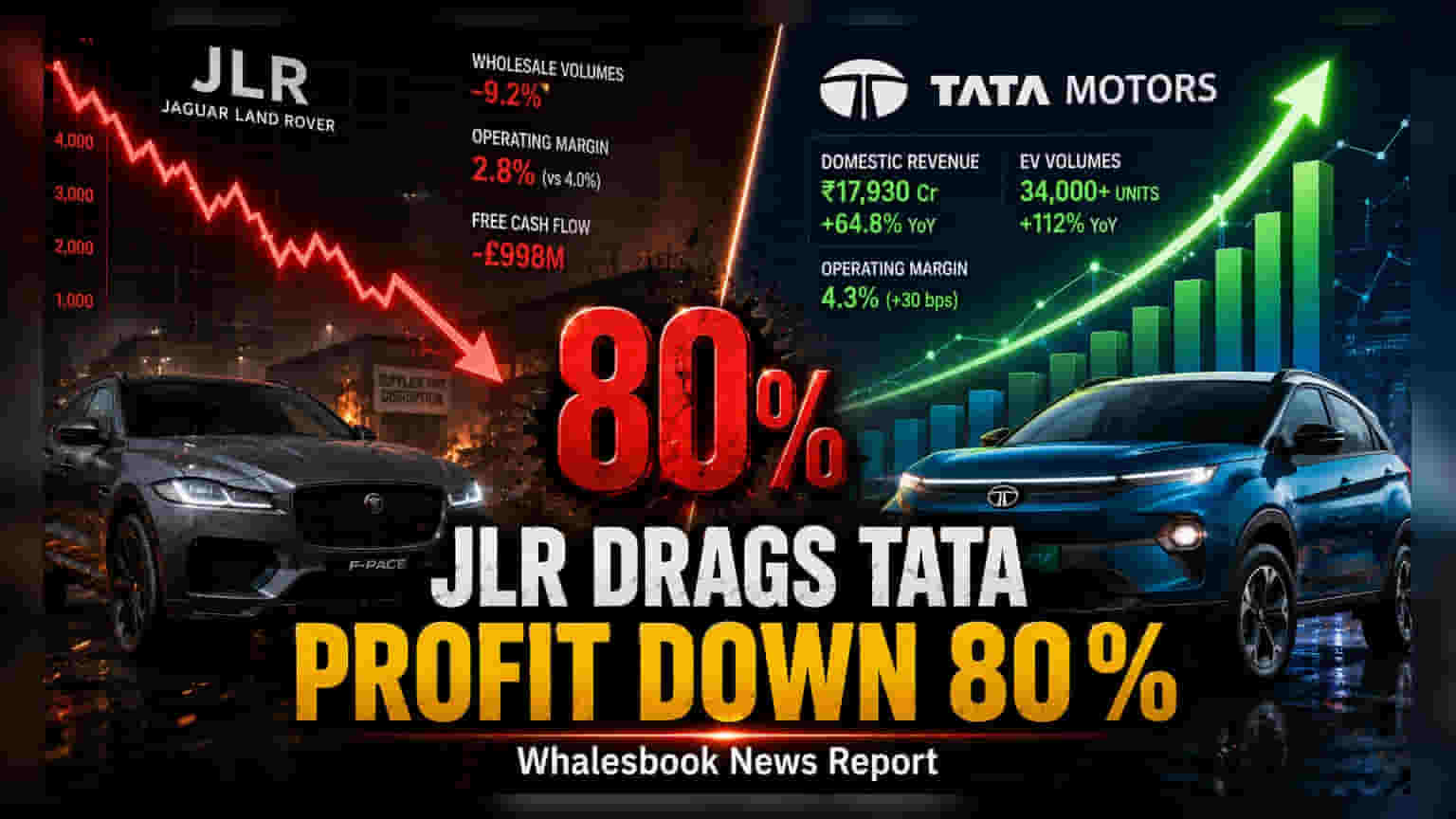
Tata Motors reported an 80.3% slump in Q1 FY27 net profit to ₹775 crore, primarily dragged down by weaker performance at its luxury arm, Jaguar Land Rover (JLR). While the domestic passenger vehicle and electric vehicle segments showed strong volume growth, investors are concerned about JLR’s supply chain issues, rising costs, and negative cash flow.
Tata Motors has reported a challenging start to the 2027 fiscal year, with its consolidated net profit declining by 80.3% to ₹775 crore in the April-June quarter, down from ₹3,924 crore in the same period last year. Despite this sharp drop in bottom-line profit, the company’s consolidated revenue from operations grew by 9.3% to ₹95,799 crore, highlighting the uneven performance across its different business units.
JLR's Operational Hurdles
The primary factor behind the earnings decline is the performance of the Jaguar Land Rover (JLR) division, which faced significant operational pressure during the quarter. JLR saw its wholesale volumes—the number of vehicles sold to dealers—drop by 9.2% compared to the previous year. Profitability also took a hit, with the adjusted operating margin for the luxury division contracting to 2.8%, down from 4% in the previous year.
Management and reports have attributed these struggles to a combination of factors, including a fire at a key component supplier, the impact of the ongoing conflict in the Middle East, and the intentional wind-down of older, legacy Jaguar models ahead of a brand transition. These disruptions forced JLR into a position where it generated negative free cash flow of £998 million, meaning the division spent significantly more cash on operations and investments than it brought in during the quarter.
Domestic Business Resilience
In contrast to the luxury division, Tata Motors’ domestic passenger vehicle business showed signs of strength. The domestic unit reported revenue of ₹17,930 crore, a 64.8% increase year-on-year. The shift toward electric vehicles remains a core part of this growth, with EV volumes surging by 112% to over 34,000 units. The domestic segment managed to improve its operating profit margin by 30 basis points to 4.3%, indicating that despite intense competition in the Indian market, the company is managing its costs and product mix effectively.
Risks and Future Focus
For investors, the key concern remains the company's financial flexibility. With consolidated net debt standing at ₹42,200 crore, the ability of JLR to recover its cash generation is critical. The company has pointed to its 'Enterprise Missions' program, which targets £1.7 billion in cost savings over the next two years, as a major lever to improve its financial health.
The future performance of the stock will likely depend on whether JLR can resolve its supply chain issues and successfully transition to its new product cycle. The company is preparing to launch several electric models, including the Range Rover Electric and the new Jaguar Type 01. Investors will be monitoring the upcoming quarterly results to see if volume growth stabilizes and if the cash flow situation improves as these new vehicles enter the market.