 Whalesbook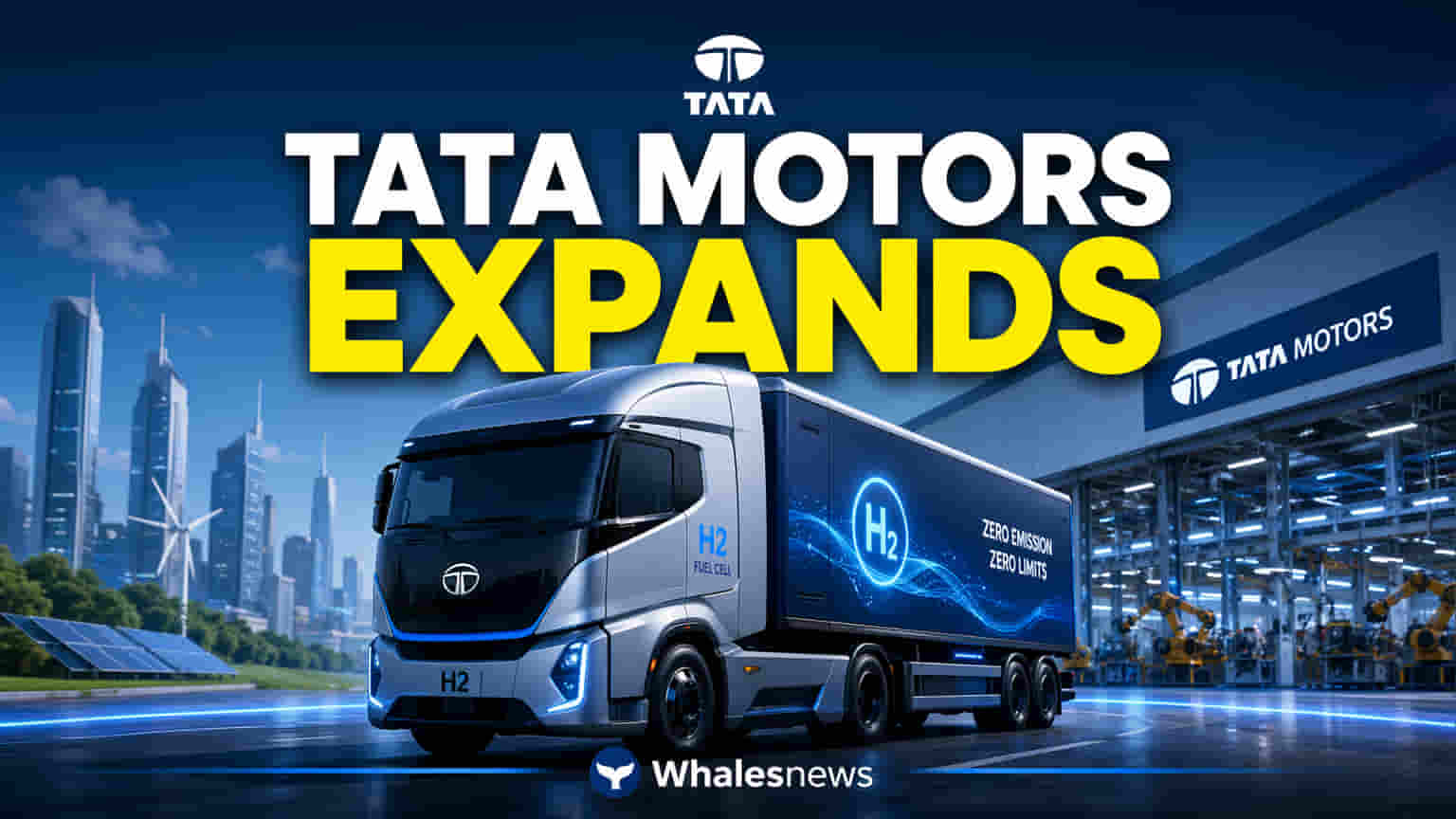


Lucknow: Multi-Energy Hub
The roll-out of Tata Motors' one millionth commercial vehicle from its Lucknow manufacturing facility on April 15, 2026, marks a significant operational achievement and signals an ambitious expansion strategy. The company aims to double production to two million commercial vehicles over the next five years. Central to this growth is the planned introduction of hydrogen-powered buses and trucks, utilizing the Lucknow plant's advanced capabilities. This facility, operating since 1992, currently produces vehicles across diesel, CNG, and electric powertrains and is set to become a core of Tata's multi-energy mobility platform. The plant has an annual capacity exceeding 100,000 units and runs on 100% renewable energy.
Market Rebounds, Growth Forecast
Tata Motors anticipates rapid growth, with Chairman N. Chandrasekaran confident the next two million vehicle milestone will be reached within five years. This outlook is supported by a recovering Indian commercial vehicle market, projected to surpass its pre-COVID peak of FY19 in FY26. Market growth is expected to be driven by sustained government infrastructure spending, expanding e-commerce logistics, and fleet modernization. Experts forecast the Indian CV market to reach approximately USD 53-54 billion in 2025 and grow at a CAGR of 5-7% annually.
Market Share & Competition
Tata Motors currently holds a commanding position, capturing 39-45% of the Indian commercial vehicle market as of early 2026. The company's CV segment has shown improved profitability, with double-digit EBITDA margins reported, driven by a favorable mix toward higher tonnage vehicles and margin-accretive non-core revenues.
Focus on Hydrogen
The strategic push into hydrogen technology shows Tata Motors' proactive stance on future mobility. The company is actively involved in trials of hydrogen-powered heavy-duty trucks, integrating both Hydrogen Internal Combustion Engine (H2-ICE) and Hydrogen Fuel Cell Electric Vehicle (H2-FCEV) technologies. This initiative aligns with India's National Green Hydrogen Mission and aims to refine technology and develop essential refueling infrastructure. By introducing these vehicles from its Lucknow plant, Tata Motors is diversifying its powertrain offerings and positioning itself as a leader in decarbonizing commercial transport, a crucial step toward India's net-zero emission goals.
Market Position & Rivalries
Tata Motors operates in a dynamic market, facing established rivals like Ashok Leyland and BharatBenz in commercial vehicles, and Maruti Suzuki, Hyundai, and Mahindra in passenger vehicles. Despite a complex market and recent stock fluctuations, analysts remain optimistic. Global brokerage firm CLSA initiated coverage on Tata Motors' CV business with an "Outperform" rating and a price target suggesting significant upside, citing cyclical recovery, strong cash flow, and synergies from the Iveco acquisition. The average analyst target price indicates an upside potential of over 19%.
Key Challenges Ahead
However, significant challenges persist. While Tata Motors leads India's EV passenger vehicle market, the broader automotive sector faces potential headwinds from rising input costs and intense competition. The company's Passenger Vehicle division, despite strong sales growth, has seen stock weakness, reflecting investor concerns about underlying profitability and maintaining margins against rivals like Maruti Suzuki and Hyundai. Furthermore, the significant investment in the Iveco acquisition, while offering global expansion, introduces execution risks and a substantial debt burden requiring careful management. The commercial vehicle segment, despite market leadership, is inherently cyclical and susceptible to shifts in infrastructure spending and freight demand. Although hydrogen technology is forward-looking, widespread adoption and cost-effectiveness of these powertrains are yet to be proven at scale, posing long-term technological and market acceptance risks.
Future Outlook
Tata Motors' focus on a multi-energy platform, coupled with capacity expansion and its dominant market position, positions it to capitalize on India's projected economic growth and the shift to cleaner mobility. The company's aggressive five-year plan signals a long-term commitment to innovation and market leadership. Analyst sentiment remains largely positive, with a consensus 'Buy' rating and expectations of continued growth, particularly driven by its commercial vehicle segment and expanding EV portfolio.