

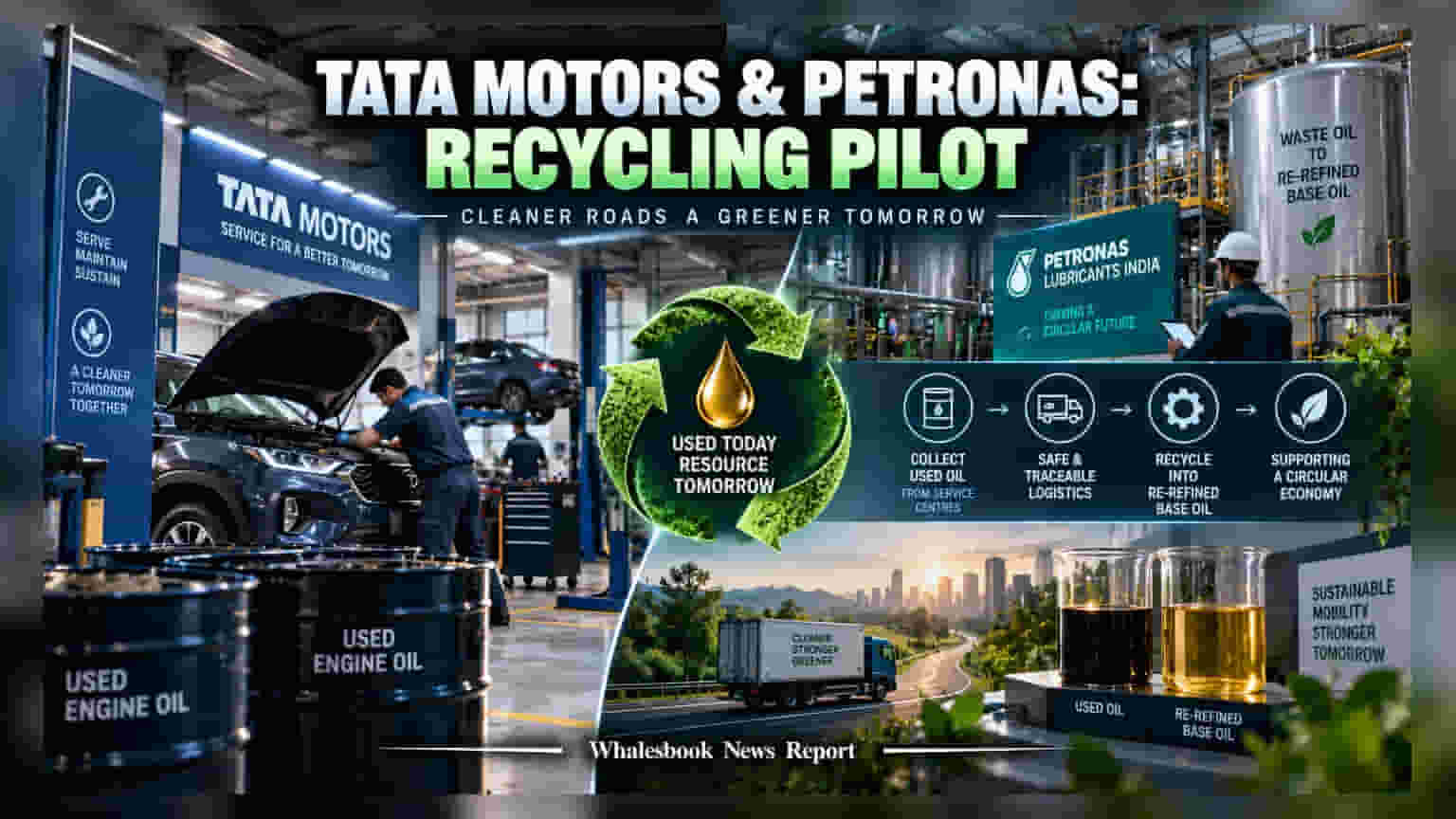
Tata Motors and Petronas Lubricants India have launched a pilot program to recycle used automotive oil in Maharashtra and Tamil Nadu. This move helps the companies meet evolving environmental regulations under Extended Producer Responsibility (EPR) norms. The initiative aims to create a traceable system for converting hazardous waste into re-refined base oil, marking another step in Tata Motors’ strategy to formalize its circular economy framework.
Tata Motors and Petronas Lubricants India have officially launched a pilot program to manage the collection and recycling of used automotive lubricants. The project, which has commenced in Maharashtra and Tamil Nadu, focuses on creating a secure and traceable system to transform hazardous waste oil into re-refined base oil.
This initiative is primarily driven by the need to comply with India's Extended Producer Responsibility (EPR) framework. Under these regulations, manufacturers are increasingly expected to take accountability for the entire lifecycle of their products, including the responsible disposal of hazardous byproducts like used motor oil. By implementing this formal collection system, both companies are proactively aligning their operations with tightening environmental standards, which helps mitigate the risk of future regulatory penalties or compliance hurdles.
This partnership is part of a broader trend within Tata Motors' service operations. It follows similar recycling initiatives the company has undertaken earlier this year, including collaborations with Hindustan Petroleum Corporation Limited (HPCL) in May 2026 and Castrol India in June 2026. These recurring partnerships indicate that the company is actively testing different logistical models to build a sustainable, nationwide circular economy framework across its vast service network.
The business logic behind these pilots is to utilize the company’s existing service centers as collection points for hazardous waste. This approach aims to streamline the logistics of gathering used oil, which has historically been difficult to manage due to the fragmented nature of the sector. If the model proves successful in these initial states, it could serve as a blueprint for a larger, national-scale rollout.
Investors should, however, consider the operational complexities involved. Managing hazardous waste requires strict adherence to safety and environmental standards, which can be logistically challenging and capital-intensive to scale. While these programs support long-term sustainability goals, they also introduce potential operational costs that need to be managed effectively. The broader automotive sector also continues to face pressures from fluctuating raw material costs and intense competition, which places a premium on operational efficiency.
The key monitorable for investors going forward will be the performance and scalability of these pilot programs. Tracking whether the company can successfully expand these systems nationwide without significantly impacting margins will be important for assessing the long-term impact of these circularity efforts on the company’s balance sheet.