

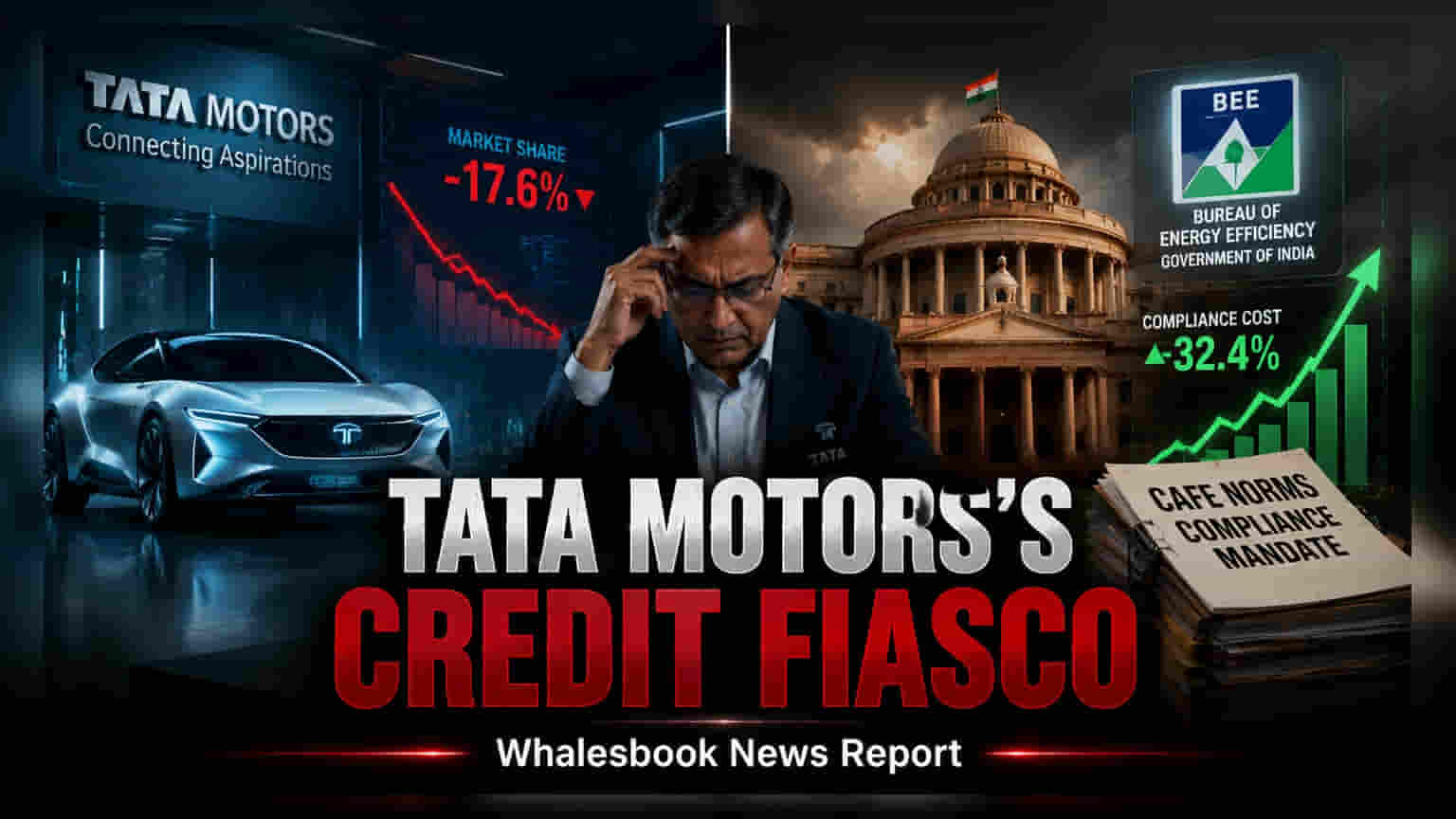
Tata Motors has expressed concerns over a government proposal allowing automakers to buy carbon credits directly from the Bureau of Energy Efficiency at ₹2,500 per unit. The company warns this could weaken fuel efficiency goals by offering a cheaper alternative to actual technology investment. Investors should track how this policy debate impacts the auto sector's regulatory compliance costs.
Tata Motors has formally raised objections regarding a draft proposal under the Corporate Average Fuel Efficiency (CAFE II) framework. The core of the dispute involves a government suggestion that would permit automobile manufacturers to purchase compliance credits directly from the Bureau of Energy Efficiency (BEE) at a set price of ₹2,500 per gram of CO2 per kilometer.
Impact on Regulatory Compliance Costs
According to Tata Motors, the proposed price of ₹2,500 is significantly lower than the existing statutory penalty of approximately ₹5,000 per gram under the Energy Conservation Act, 2001. The company argues that if these credits are available in unlimited quantities at a lower cost, manufacturers might choose to simply buy their way into compliance rather than investing the necessary capital into developing more fuel-efficient engines or electric vehicle technology. This potential shift could discourage the industry from accelerating the transition toward lower-emitting vehicles, which is the primary objective of the CAFE norms.
Concerns Over BEE Market Role
Beyond the pricing issue, the automaker has questioned the role of the BEE as both a regulator and a market participant. Tata Motors emphasized that the BEE should remain a neutral administrator and verifier of credits. There is concern that by originating and selling credits, the BEE could disrupt price discovery and reduce the value of credits that other manufacturers generate through their own verified fuel efficiency efforts. The company suggests that a regulator acting as a seller creates potential conflicts of interest that could undermine the neutrality of the entire carbon credit market.
Need for Credit Carry-Forward Mechanisms
In its communication to the Ministry of Power, Tata Motors also advocated for changes to how credits are managed over time. The company supports a system where manufacturers can carry forward credits earned through verified over-compliance into future periods. This, they argue, would provide a more sustainable incentive for long-term investments in green technology compared to a system where credits expire if not used within a specific compliance window.
Investors may monitor the Ministry of Power's response to these concerns. The final decision on the CAFE II notification will be important for assessing the future capital requirements of automotive companies. If the government proceeds with the direct-sale model, companies with strong internal fuel-efficiency programs may face a different competitive environment than those relying on purchasing credits to meet regulatory targets. The upcoming regulatory updates will be key to understanding whether the government maintains a focus on incentivizing genuine technology improvement or moves toward a more flexible, credit-based compliance structure.