 Whalesbook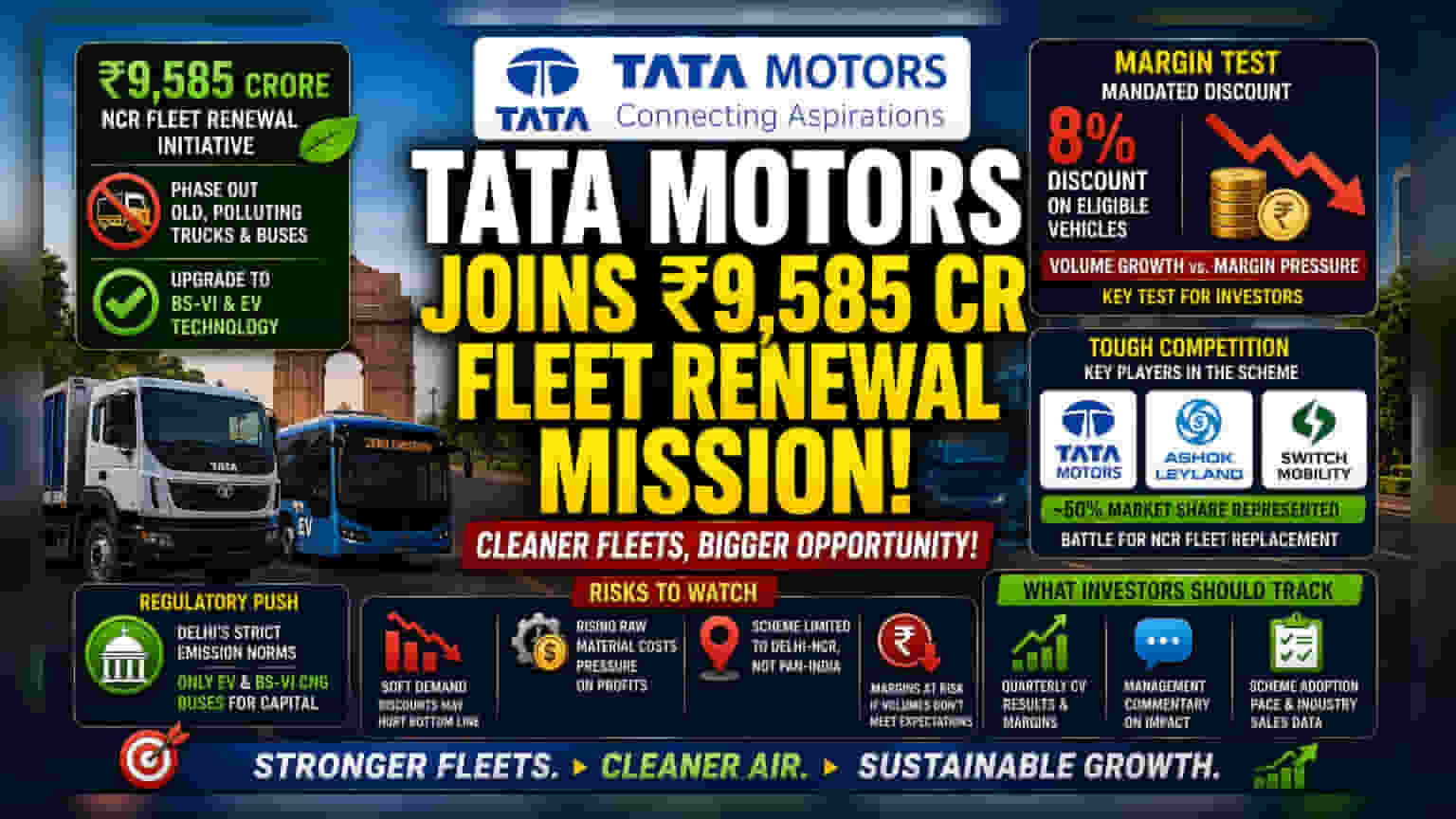
Tata Motors has joined the government’s ₹9,585-crore fleet renewal scheme in Delhi-NCR to replace older commercial vehicles with cleaner BS-VI and electric models. While this is a move to capture market share, the required 8% manufacturer discount may put pressure on profit margins. Investors should watch if the increase in sales volume offsets the lower margins in the commercial vehicle segment.
What Happened
Tata Motors has officially joined the government’s major fleet renewal initiative in the National Capital Region (NCR). The program, valued at ₹9,585 crore, is designed to phase out aging, high-emission trucks and buses. By participating, Tata Motors joins other industry players like Ashok Leyland and Switch Mobility in a collective effort to upgrade the commercial vehicle fleet to modern BS-VI standards or electric vehicle (EV) technology. This move aligns with broader regulatory efforts to improve air quality in the Delhi-NCR area.
The Margin Test for Investors
For investors, the most critical part of this initiative is the financial structure. To make the switch affordable for fleet operators, participating manufacturers—including Tata Motors—are required to provide an 8% discount on eligible vehicles. While this helps drive demand and clear inventory, it also means that each vehicle sold under this scheme will earn less profit compared to standard sales. The primary question for shareholders is whether the increase in sales volume will be enough to protect the company’s profit margins, or if the discount will lead to margin pressure in the commercial vehicle business.
Competitive Landscape
This scheme puts Tata Motors in direct competition with rivals who have already signed on, such as Ashok Leyland and Switch Mobility. With these companies representing roughly half of the commercial vehicle market, the competition to capture the replacement demand in Delhi-NCR is intensifying. For Tata Motors, which holds a significant share of the domestic truck and bus market, maintaining its leadership position in this region is strategic. However, the success of this strategy depends on the company's ability to balance market share with the financial impact of the mandated discounts.
The Regulatory and Sector Context
Delhi has some of the strictest emission norms in the country. The renewal scheme is not optional for those wanting to stay compliant, especially for bus operators in the capital who are now limited to electric or BS-VI CNG models. By supporting this transition, Tata Motors is positioning its product lineup to meet these tough requirements. While this helps the company build a long-term presence in the cleaner transport sector, it also highlights the regulatory risks that fleet operators face, which can influence how quickly they choose to upgrade their vehicles.
What Could Go Wrong
While the scheme aims to boost sales, there are risks to watch. If the overall demand for commercial vehicles remains soft, the 8% discount could hurt the company’s bottom line without a significant enough rise in volume to compensate. Additionally, if raw material costs rise, maintaining these discounts while protecting profitability will become more challenging. Investors should also note that this scheme is specific to the Delhi-NCR region, and its success does not automatically guarantee similar growth across other states where such mandates may not be as strict.
What Investors Should Track
Moving forward, the key monitorable for investors will be the company’s quarterly results, specifically the performance of the commercial vehicle segment. Look for management commentary on how the fleet renewal scheme is affecting overall margins and whether the sales volume growth is meeting expectations. Additionally, keep an eye on industry data regarding the pace of vehicle adoption under this scheme, as this will determine if the initiative is effectively clearing out old fleets as intended or if adoption remains slow due to the high cost of new vehicles.

