

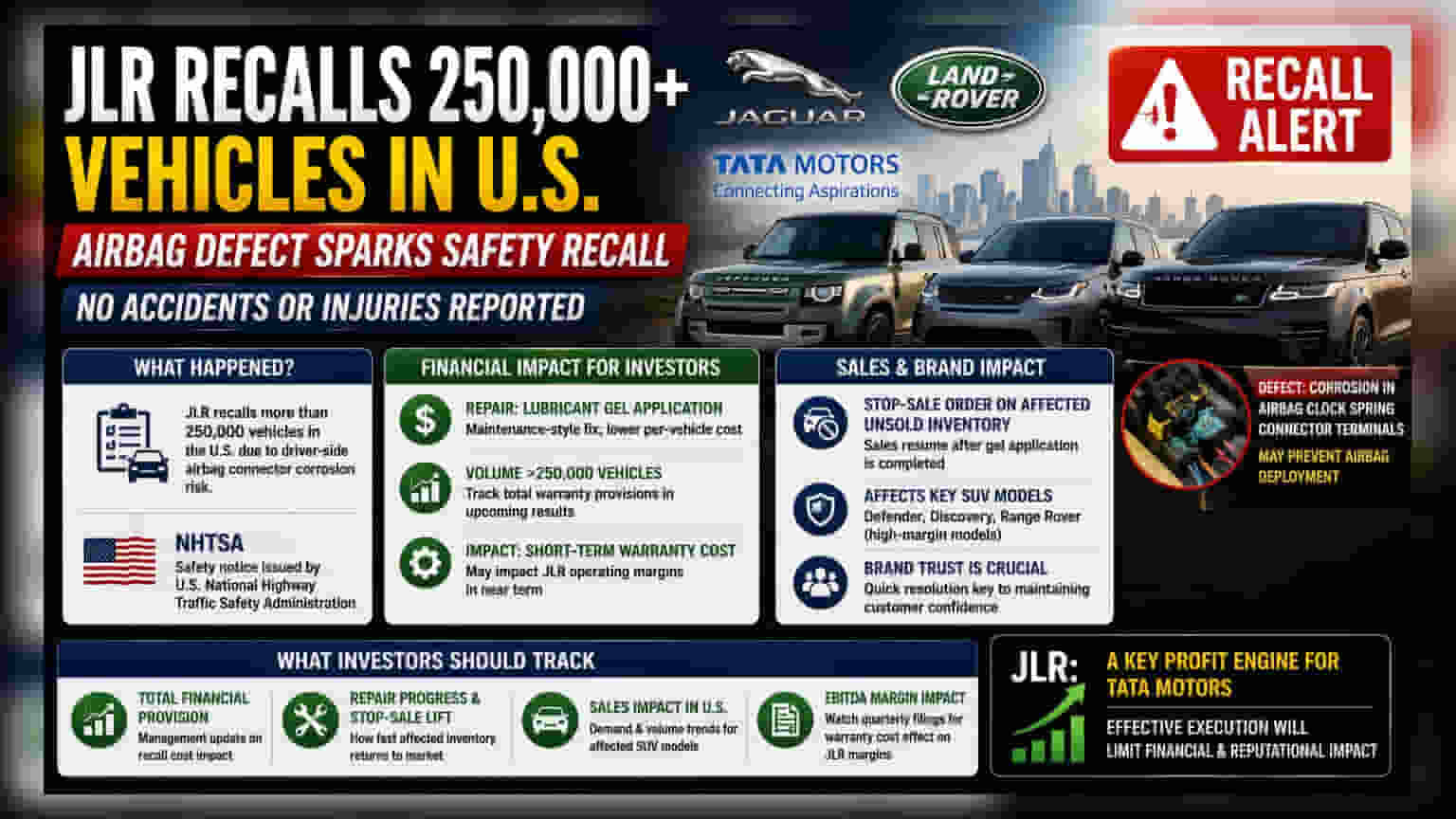
Jaguar Land Rover, a subsidiary of Tata Motors, is recalling over 250,000 SUVs in the U.S. to fix a faulty airbag connector. While the company reports no accidents or injuries, the large-scale recall and stop-sale order on unsold vehicles may draw investor attention to potential warranty costs and the impact on brand reputation in the critical North American market.
What Happened
Jaguar Land Rover (JLR), the premium car unit of Tata Motors, has announced a recall of more than 250,000 vehicles in the United States. The action is based on a safety notice from the U.S. National Highway Traffic Safety Administration (NHTSA) regarding an airbag system defect. The problem lies in the driver-side airbag clock spring connector terminals, which can corrode over time. This corrosion may disrupt the electrical connection, potentially preventing the airbag from deploying correctly during a collision. While the recall is extensive, JLR has stated that there have been no confirmed accidents or injuries resulting from this specific issue to date.
Why The Financial Detail Matters
For investors in Tata Motors, the financial implications of a recall depend on the cost of the fix. The company has stated that the repair involves applying a specialized protective lubricant gel to the connector terminals. Because the remedy is a maintenance-style fix rather than a complex mechanical replacement of the entire airbag unit, the per-vehicle cost is typically lower. However, with a volume exceeding 250,000 vehicles, investors will likely track the total warranty provisions in the upcoming quarterly results. Large-scale recalls often lead to a short-term increase in warranty expenses, which can impact the operating margins of the JLR business segment.
Managing Sales And Brand Reputation
Beyond the cost of repairs, the recall includes a temporary stop-sale order on unsold, affected vehicles currently in dealer inventory. This means these units cannot be sold until the corrective gel application is completed. For a premium automaker, maintaining brand trust is essential. While recalls are a common part of the automotive industry, they become a point of concern if they affect key growth models. This recall impacts popular SUVs like the Land Rover Defender, Discovery, and Range Rover, which are often high-margin vehicles. The company’s ability to quickly clear the backlog of repairs and resume sales will be essential to protecting revenue momentum in the U.S. market.
The Bigger Business Context
Tata Motors relies heavily on JLR for a significant portion of its total consolidated revenue and profitability. Whenever JLR faces a large-scale operational hurdle, it often reflects on the parent company's stock sentiment, particularly because JLR is a major contributor to the group's premium portfolio. Historical data in the automotive sector shows that while minor recalls are typically absorbed by companies without long-term financial damage, they do require consistent management and communication to prevent loss of customer confidence.
What Investors Should Track
Investors may monitor the following to understand the impact of this event:
- Management commentary on the total financial provision required for this recall.
- Updates on the pace of repairs and how quickly the stop-sale order is lifted for new inventory.
- Any shifts in sales volume or consumer demand for the affected SUV models in North America.
- Future quarterly filings for any impact on the EBITDA margins of the JLR segment due to unexpected warranty costs.