

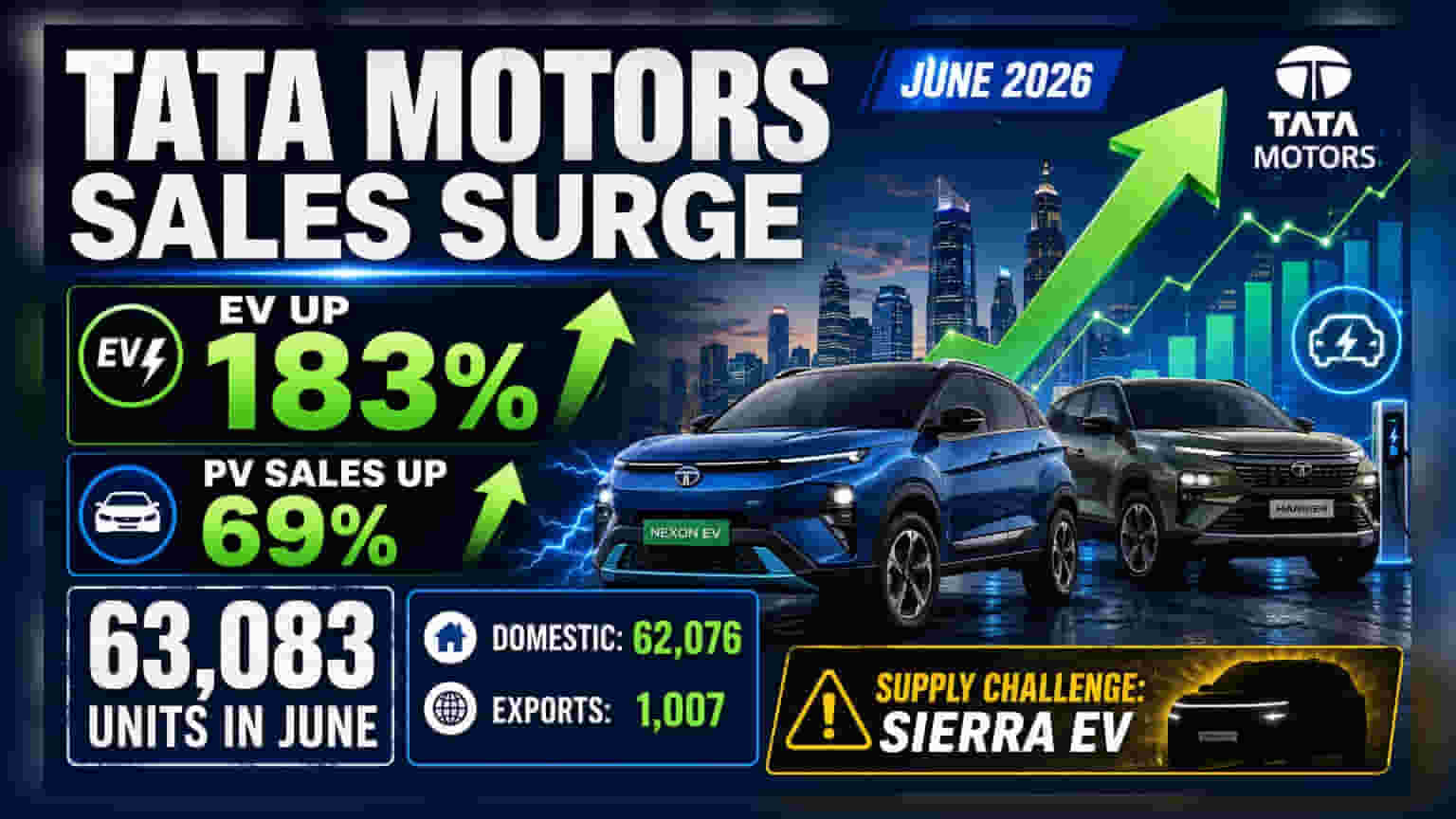
Tata Motors reported a 183% surge in electric vehicle sales to 14,800 units for June 2026. Total passenger vehicle sales climbed 69% to 63,083 units, highlighting sustained demand. While sales growth is strong, investors may track how the company resolves supply chain constraints that are currently impacting the production of the Sierra EV.
What Happened
Tata Motors has released its sales performance for June 2026, showing a sharp rise in both its traditional and electric vehicle (EV) segments. The company sold 14,800 electric vehicle units in June, a 183% increase compared to the same month last year. Total passenger vehicle (PV) sales also saw robust growth, rising 69% year-on-year to reach 63,083 units. Within the domestic market, sales grew 67% to 62,076 units, while exports rose to 1,007 units, up from 154 units in the previous year.
The EV Market Leadership
The strong growth in EV volumes, which more than doubled during the first quarter of the 2026 fiscal year, reinforces the company's position as a leader in India’s electric mobility space. For investors, this performance is a critical data point, as it shows that demand for the company’s electric models remains high despite broader competitive pressures in the auto sector. The ability to scale sales at this pace indicates a healthy order book and wide consumer acceptance of their current electric lineup.
The Supply Chain Challenge
While the sales numbers are positive, the company noted that supply constraints affected volume in the first quarter, specifically mentioning the Sierra EV. Supply chain bottlenecks can be a significant risk for auto manufacturers, as the inability to deliver cars on time may lead to lost sales or delayed revenue. Investors should watch whether the company can resolve these production issues quickly, as any prolonged delay in the Sierra EV's supply could impact its ability to capture further market share in the premium electric SUV segment.
Peer and Competitive Context
The Indian EV market is becoming increasingly crowded. Tata Motors faces growing competition from players like Mahindra & Mahindra and MG Motor India, both of which are also expanding their electric and hybrid portfolios. As competition rises, maintaining a leadership position requires not just high demand but also consistent product availability and competitive pricing. The company’s ability to manage costs while expanding capacity will be a key factor in protecting its profit margins against these rivals.
What Investors Should Track
The next important monitorables will be the company’s ability to resolve the supply constraints for the Sierra EV and maintain steady production levels across its wider portfolio. Investors may also want to watch future quarterly results to see if the surge in sales volume effectively translates into improved profit margins, or if the cost of managing the supply chain and competitive pricing pressures puts pressure on profitability.