 Whalesbook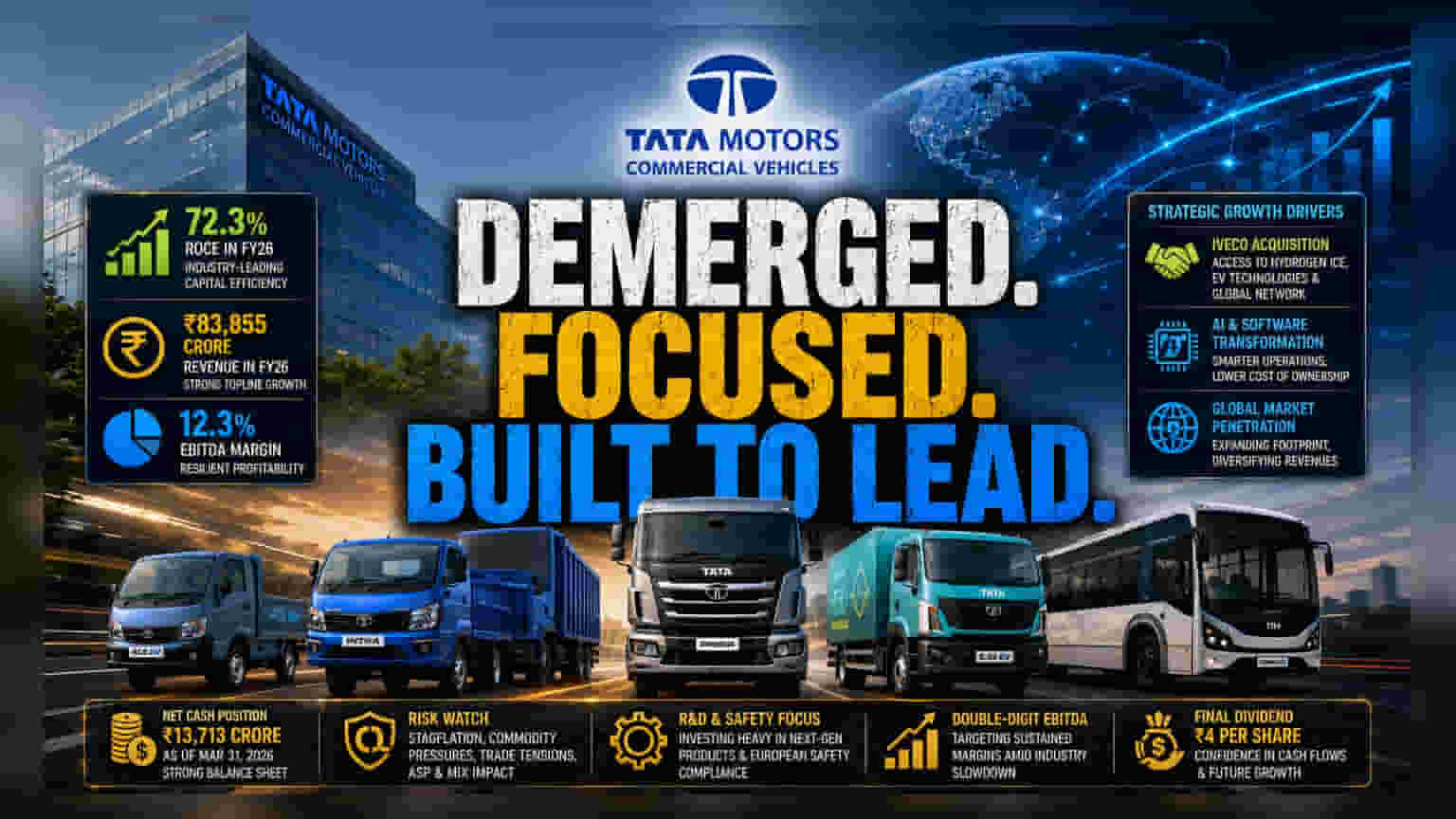


The Operational Pivot
Following its formal demerger into an independent entity, Tata Motors’ commercial vehicle (CV) division is signaling a shift toward higher capital efficiency. The company concluded FY26 with a robust 72.3% Return on Capital Employed (ROCE), positioning it among the most efficient operators in the global CV sector. This performance was underpinned by a revenue surge to ₹83,855 crore and a sustained EBITDA margin of 12.3%, even as the industry navigated a volatile first half characterized by supply chain dislocations.
Strategic Expansion and Tech Integration
Management’s focus for FY27 is centered on mitigating the impact of an anticipated slowdown in broader industry growth. To counter the potential cooling of domestic demand, the firm is prioritizing global market penetration and aggressive electrification. The proposed acquisition of the Iveco Group's industrial and financial services units remains a key catalyst, intended to grant access to advanced hydrogen ICE and electric architectures. Furthermore, the company is doubling down on 'software-defined' vehicle platforms and AI-led operational transformations to lower the total cost of ownership for fleet operators, a critical lever for maintaining market leadership in an increasingly price-sensitive environment.
The Forensic Bear Case
Despite recent successes, the path forward is laden with structural risks. The company’s FY26 reporting reflects a vulnerability to stagflation—a combination of rising commodity costs and shrinking output—which Chairman N. Chandrasekaran has explicitly flagged as a primary concern. Unlike leaner peers, Tata Motors must contend with the complexities of legacy integration post-demerger, including the need for massive R&D expenditure to transition its entire cabin portfolio to European safety standards. Furthermore, investors should remain cautious regarding the impact of adverse product mix on average selling prices (ASP), as a higher proportion of smaller vehicle sales can compress margins despite volume gains. The specter of global trade tensions, specifically volatile tariff structures, continues to threaten the export-led growth strategy, potentially offsetting gains made in domestic infrastructure-linked demand.
Forward-Looking Trajectory
With a net cash position of ₹13,713 crore as of March 31, 2026, the company possesses a stronger balance sheet than many of its highly leveraged industrial counterparts. The board’s commitment to a final dividend of ₹4 per share reflects confidence in its liquidity position. Moving forward, the focus will remain on sustaining double-digit EBITDA margins while navigating the delicate balance between aggressive EV investment and the necessary cost-rationalization required to protect bottom-line profitability in a slower-growth macro environment.