 Whalesbook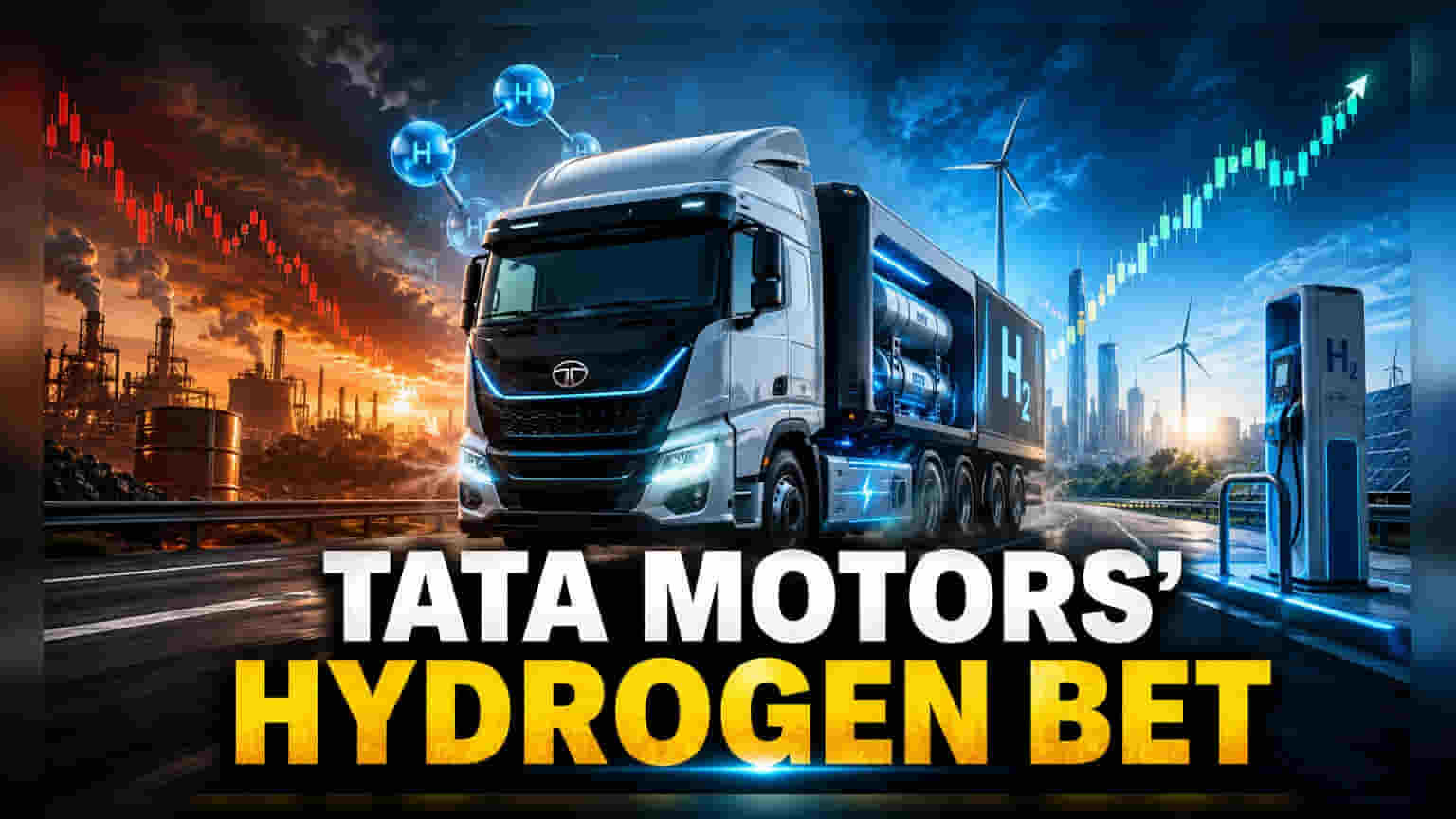


The Innovation Pivot
Following its strategic demerger, Tata Motors' commercial vehicle division is aggressively realigning its capital expenditure toward high-growth, zero-emission technologies. Chairman N Chandrasekaran has signaled a firm commitment to integrating hydrogen fuel cells, hydrogen-combustion engines, and electric powertrains, specifically targeting the heavy-duty and long-haul transport sectors. This approach moves beyond traditional diesel-dependent platforms, aiming to secure a competitive edge as environmental regulations tighten across global markets.
The Valuation and Operational Reality
Despite the optimistic technological roadmap, the financial reality remains complex. While the company posted a record-breaking fiscal year with 9.8% year-on-year revenue growth, the stock is currently trading under significant technical resistance, often hovering between ₹360 and ₹400. Market participants are increasingly looking past topline growth, focusing on the company's ability to maintain its high return on capital employed—which stands at a sector-leading 72.3%—in the face of rising input costs. Unlike competitors such as Ashok Leyland, which face similar cyclical pressures, Tata Motors' scale and ongoing JVs, including its collaboration with Cummins for hydrogen engine manufacturing, provide a cushion; however, margin compression remains a persistent threat as commodity prices fluctuate.
The Forensic Bear Case
Structural risks continue to weigh on institutional sentiment. While Tata Motors has successfully captured a massive market share in the CV space, its entry-level EV segment in the passenger vehicle side of the broader group has faced distinct policy headwinds, with the absence of targeted fiscal support under schemes like PM E-DRIVE dampening volume projections. Furthermore, the company faces significant exposure to geopolitical volatility and supply chain fragmentation. Critics also point to the potential for 'over-innovation' in capital-intensive hydrogen technology, which remains in a nascent stage of commercial viability in India. Any sustained increase in steel and aluminum prices threatens to erode the gains made through operational efficiencies, leaving the company vulnerable to short-term earnings misses.
The Future Outlook
Looking toward FY27, management is focusing on non-cyclical adjacencies such as digital fleet management through its 'Fleet Edge' platform, which recently hit a million-vehicle milestone. Analysts are currently split on the path forward, with brokerages maintaining a cautious 'Hold' rating for many of the conglomerate's entities. Future performance will largely depend on the successful integration of its proposed Iveco acquisition and the company's ability to pass on inflationary costs to a cost-sensitive, volume-driven buyer base.