

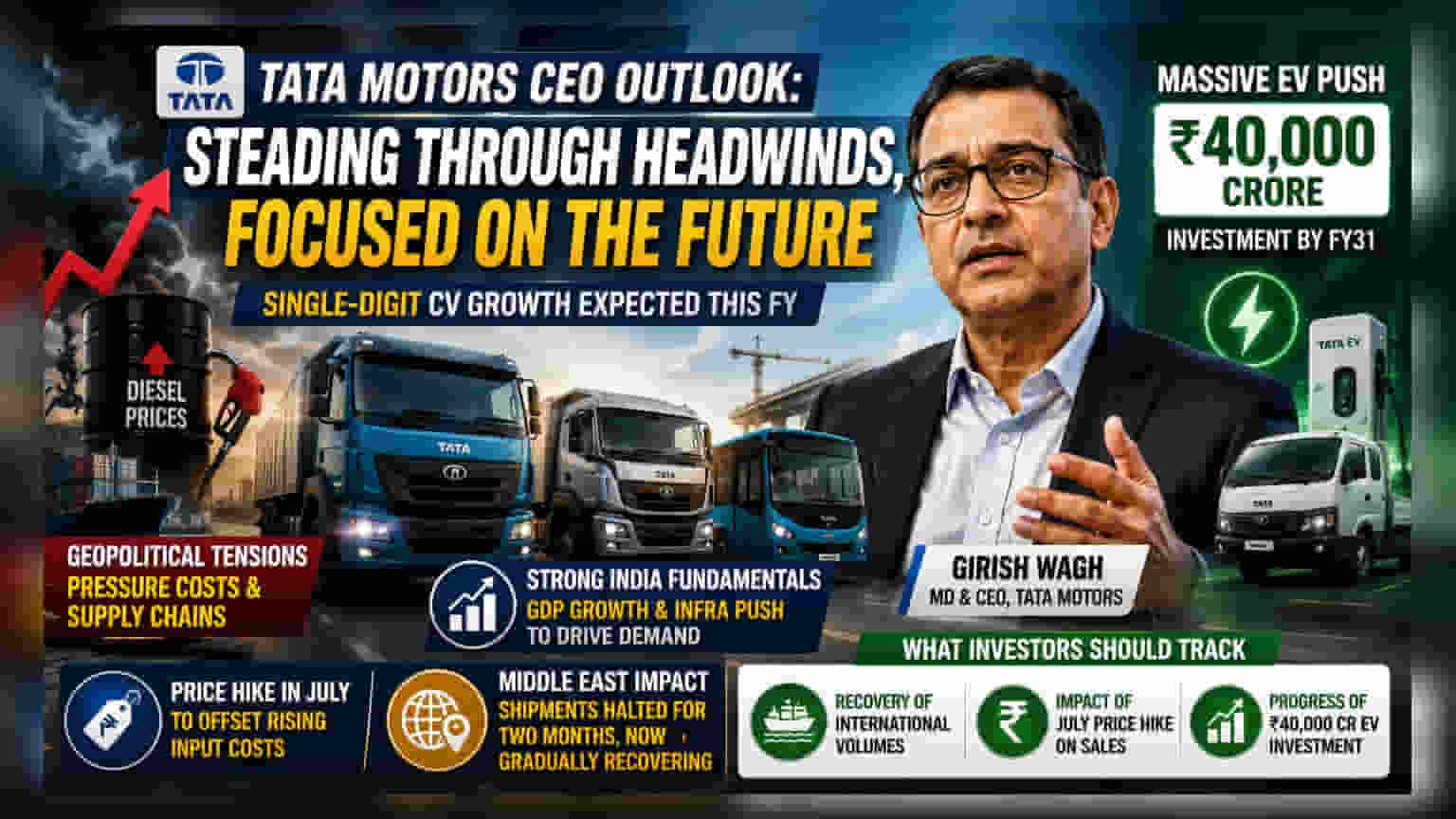
Tata Motors expects single-digit growth in the commercial vehicle segment despite geopolitical pressures. CEO Girish Wagh pointed to strong domestic demand as a buffer against rising fuel prices, while the company prepares a price hike in July to manage cost pressures.
What Happened
Tata Motors' MD & CEO, Girish Wagh, recently outlined the outlook for the company's commercial vehicle (CV) business amidst evolving geopolitical challenges. While the conflict in West Asia has pressured diesel prices and impacted global supply chains, the company maintains a cautiously optimistic view. The CEO anticipates single-digit growth for the commercial vehicle sector this fiscal year. He explained that India’s core economic indicators, such as consistent GDP growth and aggressive infrastructure spending, are expected to act as a counterweight to the temporary problems caused by higher fuel and commodity prices.
Why The CV Sector Is Sensitive To Costs
The commercial vehicle industry is deeply tied to the broader economy. When economic activity slows or transport costs rise, businesses often delay buying new trucks and buses. Higher diesel prices, fueled by geopolitical tensions, increase operating costs for fleet owners, which can lead to a wait-and-see approach regarding fleet upgrades. However, the company believes that the ongoing infrastructure push by the government and consistent freight demand will keep the industry moving forward, preventing a sharper downturn.
The Price Hike and Cost Management
To protect profit margins from rising input costs, specifically the increase in prices for materials like aluminum, Tata Motors has indicated it will raise vehicle prices in July. This move is a standard industry practice to pass on part of the cost burden to the end consumer. Investors should note that the success of such price hikes depends on market demand; if demand is weak, companies may struggle to pass on the full cost increase, which could put pressure on profit margins.
The Strategic Pivot to EVs
Beyond the short-term fluctuations, Tata Motors is focusing heavily on the long-term shift toward electric vehicles. The company is committed to investing approximately ₹40,000 crore by FY31 to scale its EV operations and other growth areas. This is a significant capital commitment, and shareholders will be looking to see if these investments eventually translate into better market share and healthier returns as the EV market for commercial and passenger vehicles matures.
Supply Chain and Geopolitical Risks
A key risk highlighted by the company is its exposure to international markets. The Middle East previously accounted for nearly 20 percent of Tata Motors' international monthly volumes, but shipments in that region were halted for two months due to the ongoing conflict. While operations are gradually restarting, the situation demonstrates how vulnerable specific segments of the company's business are to external events. The company is now actively working to de-risk its supply chain to reduce reliance on single transport routes.
What Investors Should Track
Going forward, investors may focus on three main areas. First, the recovery of international volumes in the Middle East will be crucial to restoring non-domestic revenue. Second, the actual impact of the July price hike on sales volume will indicate the strength of demand in the commercial segment. Finally, the progress on the massive ₹40,000 crore EV-related spending remains a primary monitorable, as it will shape the company’s capital allocation and debt position over the coming years.