

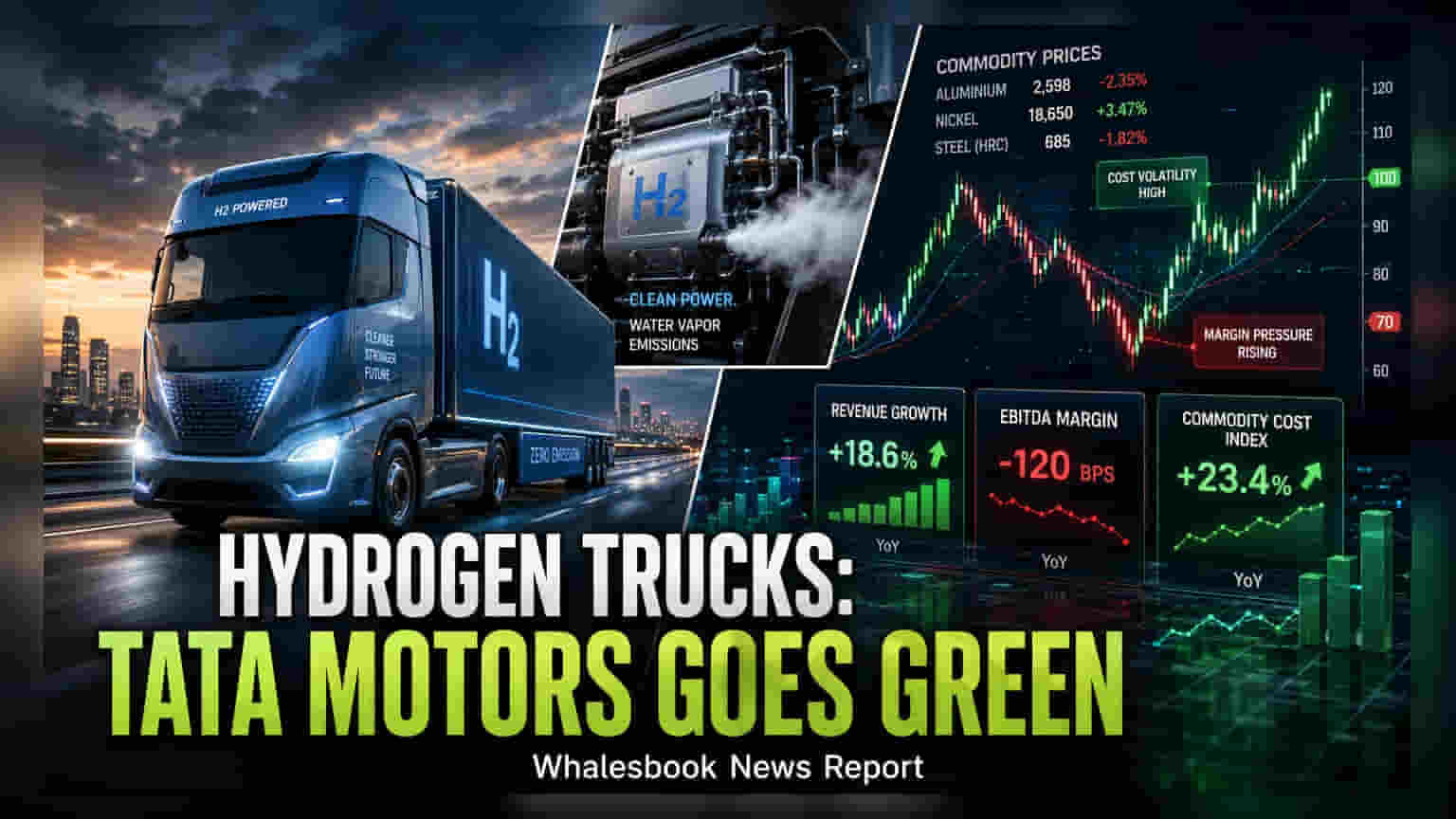
Tata Motors is scaling its hydrogen truck pilot programs in collaboration with the Indian Oil Corporation and V.O. Chidambaranar Port Authority. While the company reported an 83% year-on-year jump in Q1 FY27 net profit, it faces margin pressure from commodity costs and is considering further vehicle price hikes to maintain profitability.
Tata Motors is expanding its hydrogen-powered vehicle initiatives as part of a strategy to diversify its powertrain portfolio for commercial transport. The company is running pilot programs to test heavy-duty hydrogen trucks, including a 16-vehicle trial in partnership with the Indian Oil Corporation under the National Green Hydrogen Mission. Additionally, it has signed an agreement with the V.O. Chidambaranar Port Authority to deploy 40 hydrogen-fueled trucks, marking a significant step toward testing these vehicles in real-world port logistics operations.
Financial Performance and Operational Context
The push into hydrogen comes as Tata Motors’ commercial vehicle business shows strong headline growth but faces specific operating challenges. In the first quarter of fiscal year 2027, the company reported a consolidated net profit of ₹2,560 crore, representing an 83% increase compared to the previous year. Revenue growth for this segment was steady at 19-20%. Despite the strong profit growth, the company’s consolidated EBITDA margin for the commercial vehicle segment contracted by 90 basis points to 10.9%. This reduction in profitability was primarily driven by persistent commodity inflation, which has increased the cost of manufacturing.
To protect its margins, the company is actively considering further price hikes across its commercial vehicle range. While fleet replacement demand remains healthy, driven by infrastructure and mining projects, the company is managing its inventory carefully to ensure wholesale numbers align with actual retail demand. As of June 30, 2026, the company maintained a net cash position of approximately ₹13,500 crore, providing a financial buffer against ongoing capital spending requirements.
Risks and Future Monitoring
Investors are currently monitoring several factors that could influence the company’s performance. Beyond commodity-related cost pressures and the logistical challenges of scaling hydrogen infrastructure, the stock has recently experienced volatility linked to broader group-level management changes, specifically the departure of Tata Sons Chairman N. Chandrasekaran.
Looking ahead, the successful deployment of these pilot projects will depend on the development of reliable hydrogen refuelling infrastructure. For shareholders, the key areas to watch will be the company’s ability to pass on cost increases to customers without impacting demand, the trajectory of margin recovery in upcoming quarters, and the stability of the company’s leadership and long-term strategy following recent changes at the group level.