

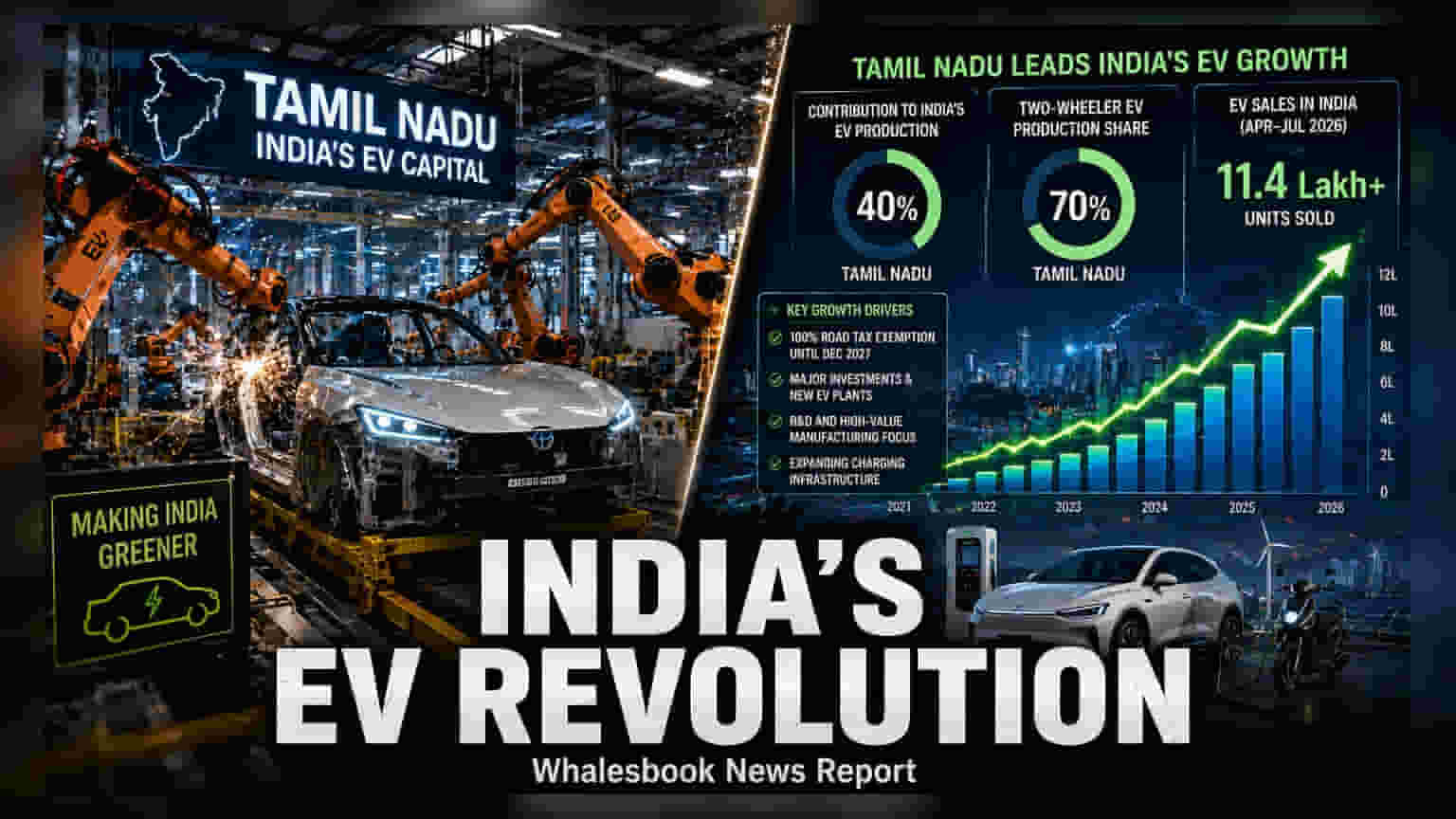
Tamil Nadu now manufactures nearly 40% of India's electric vehicles, including 70% of electric two-wheelers. The state has extended 100% road tax exemptions until December 2027 to boost growth. Investors should balance these policy incentives against sector-wide risks like raw material price volatility and the state's high public debt levels.
Tamil Nadu has cemented its position as India's primary manufacturing hub for electric vehicles. Recent data indicates that the state contributes approximately 40% of India's total EV production. The dominance is particularly strong in the two-wheeler segment, where the state accounts for roughly 70% of national production.
Strategic Investment and Policy Support
The growth is driven by a mix of infrastructure development and sustained government support. The state government has extended its 100% road tax exemption for electric vehicles until December 2027, providing a predictable environment for both manufacturers and consumers. This policy continuity is attracting significant interest from major automotive companies. For example, Hyundai Motor India has confirmed plans to launch its first mass-market electric vehicle from its Chennai plant in 2026. Additionally, VinFast has inaugurated an assembly plant in Thoothukudi, marking a significant step in the company's investment in the region.
Moving Up the Value Chain
Beyond simple manufacturing, the state is drafting a new industrial policy aimed at shifting its base toward higher-value activities. The goal is to evolve into a global hub for automotive research and development, contributing to the state’s long-term target of a $1.5 trillion economy by 2036. This move toward 'Vision 2031' aims to integrate the state more deeply into the international automotive supply chain by expanding charging infrastructure and creating a supportive ecosystem for high-tech vehicle components.
Investor Monitorables and Risks
While the expansion in the EV sector provides clear growth opportunities, investors should consider specific financial and sector-level risks. The state's fiscal health remains a point of discussion; a government White Paper from June 2026 reported the state's outstanding debt, including public sector undertakings, at ₹13.18 lakh crore. While this does not stop industrial growth, it serves as a reminder of the fiscal challenges state governments manage alongside development spending.
At the corporate level, manufacturers operating in this space face ongoing challenges. The EV sector is highly competitive, and companies are subject to raw material price volatility and potential supply chain disruptions. Profit margins for manufacturers can come under pressure if they lack vertical integration or cannot pass on costs to consumers. As the state moves toward higher-value manufacturing, investors should track individual company performance regarding their ability to maintain profit margins and manage debt levels, rather than focusing solely on the state's overall production capacity. The next key update to track will be the progress on the upcoming industrial policy and the actual utilization rates of the newly commissioned EV plants.