

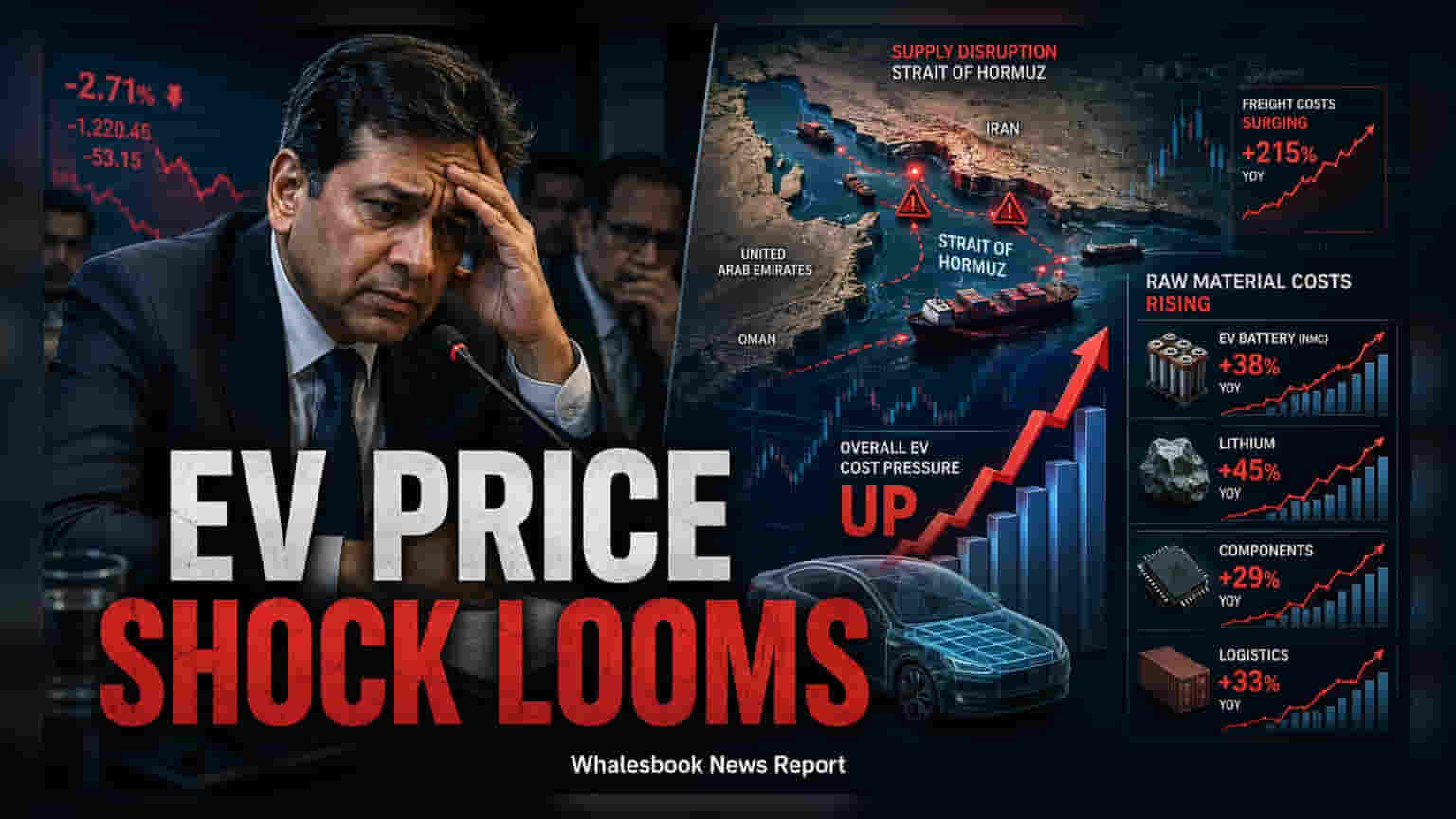
TVS Motor management has cautioned that electric vehicle prices could rise by 10-12% in the fourth quarter if geopolitical tensions near the Strait of Hormuz escalate. This warning highlights potential pressure on logistics and raw material costs. Investors are tracking how these supply chain headwinds may impact the company's profit margins in the coming months.
TVS Motor Company has indicated that electric vehicle (EV) prices may face an increase of 10-12% during the fourth quarter of the current fiscal year. The management has flagged the ongoing geopolitical instability near the Strait of Hormuz as a primary concern, noting that further escalation could significantly disrupt global supply chains, leading to higher logistics and raw material expenses.
While the company has not officially implemented this specific hike, the warning reflects the broader challenges facing the automobile sector. The company, like many peers, is navigating a year marked by cumulative material cost increases. For context, TVS Motor already implemented price adjustments across various two-wheeler models effective August 1, 2026, with increases ranging from ₹550 to ₹13,580, citing elevated input costs. The current warning serves to inform shareholders about the potential for further action should external macroeconomic pressures intensify.
Regional Strategy and Adoption Hurdles
Beyond supply chain risks, the company’s EV growth strategy remains closely tied to regional adoption rates. Management highlighted that while they command a significant market share in the electric three-wheeler segment, the uptake varies drastically across India. In regions like Gujarat, adoption remains slow, hampered by limited customer awareness and concerns regarding the reliability of charging infrastructure. To combat this, the company is investing in dealership networks and consumer education to boost confidence.
In contrast, growth is notably stronger in states like Uttar Pradesh, the North East, and Jammu & Kashmir, where regulatory support and restrictions on internal combustion engine registrations are acting as tailwinds. Rajasthan has also emerged as a favorable market, supported by strong local solar infrastructure which aids electricity availability for charging. These regional variations are critical for investors to track as they influence the company's ability to scale its EV volumes.
Investor Monitorables
The stock closed at ₹4,375.00 on the National Stock Exchange on August 12, 2026. Looking ahead, the ability of the company to protect its profit margins will depend on its success in managing input cost inflation. Investors may closely track management commentary regarding quarterly results, specifically focusing on how supply chain volatility is impacting manufacturing expenses. Additionally, updates on EV adoption trends in major markets and the company's success in navigating geopolitical risks will be key factors for long-term growth assessments.