

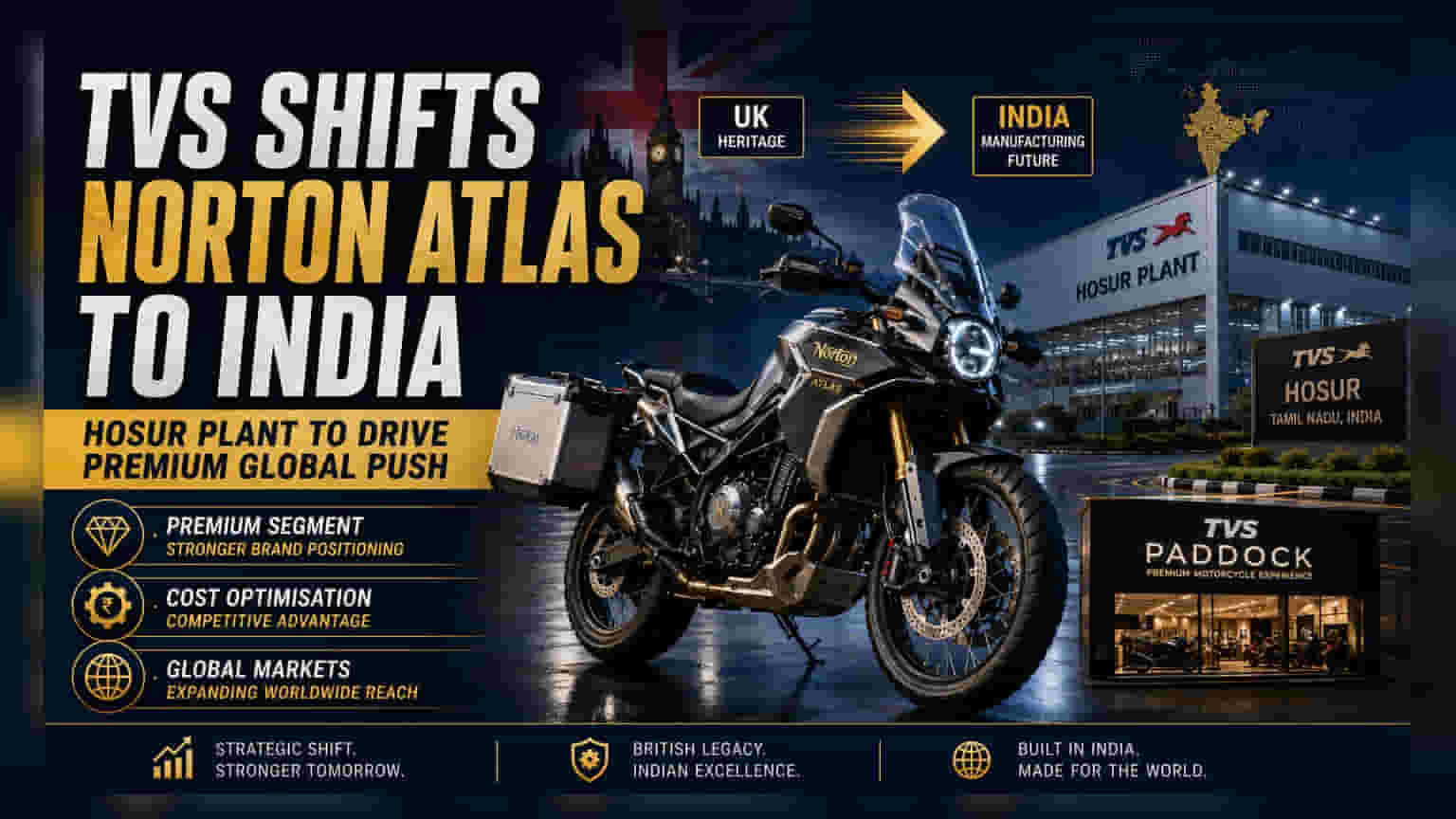
TVS Motor Company is moving the manufacturing of its Norton Atlas motorcycle range from the UK to its Hosur plant in India. This move is designed to improve cost efficiency and scale up production for global markets. Investors will be watching how this shift impacts the company's profit margins and its ability to compete in the premium middleweight motorcycle segment.
What Happened
TVS Motor Company has confirmed the transition of manufacturing for the Norton Atlas range of adventure motorcycles to its Hosur facility in India. This decision marks a change in strategy for the British brand, which TVS acquired in 2020. Previously, the production was centered in the UK. The company aims to leverage its large-scale manufacturing capabilities in India to supply these premium motorcycles to both domestic and international markets. Sales are expected to begin shortly, supported by the company’s new TVS Paddock retail format.
The Strategy Behind The Shift
For TVS Motor, this move is a clear effort to optimize production costs and improve business efficiency. Manufacturing in the UK is generally more expensive due to labor and operational costs. By shifting production to its established Hosur facility, the company aims to reduce these costs while maintaining the quality standards required for the Norton brand. This is a significant part of the company’s strategy to focus on higher-value products. Moving toward premium motorcycles often allows companies to command better pricing and achieve healthier profit margins compared to traditional commuter bikes.
The Middleweight Market Challenge
The premium middleweight motorcycle segment is highly competitive. In India, companies like Eicher Motors, through its Royal Enfield brand, have established a strong presence. Globally, brands like Triumph and Harley-Davidson are also major players. By introducing the Norton Atlas in this category, TVS is attempting to capture a share of the market that prioritizes brand heritage and performance. The success of this move will depend on whether the company can maintain the 'premium' appeal of the Norton brand while scaling up production in a mass-market manufacturing hub.
Risks and Execution Factors
Investors should consider the risks associated with this type of business transition. A primary concern for any legacy brand being moved to a new country is whether it can retain its original identity and perceived value. Additionally, the company faces execution risks, such as the need to manage supply chains for international parts and the challenge of establishing a new retail network under the TVS Paddock name. If the company cannot balance these factors, it could affect brand equity or lead to higher-than-expected costs during the initial rollout.
What Investors Should Track
Moving forward, investors may track a few key indicators. The most important will be the initial sales volume in both the Indian and international markets. The company's commentary on profit margins for its premium portfolio in upcoming quarterly reports will also be critical. Furthermore, the pace of expansion for the TVS Paddock retail network will give clues about how aggressively the company intends to push these premium models. Finally, any feedback regarding the product quality from early international customers will be a vital monitorable for the brand's long-term success.