

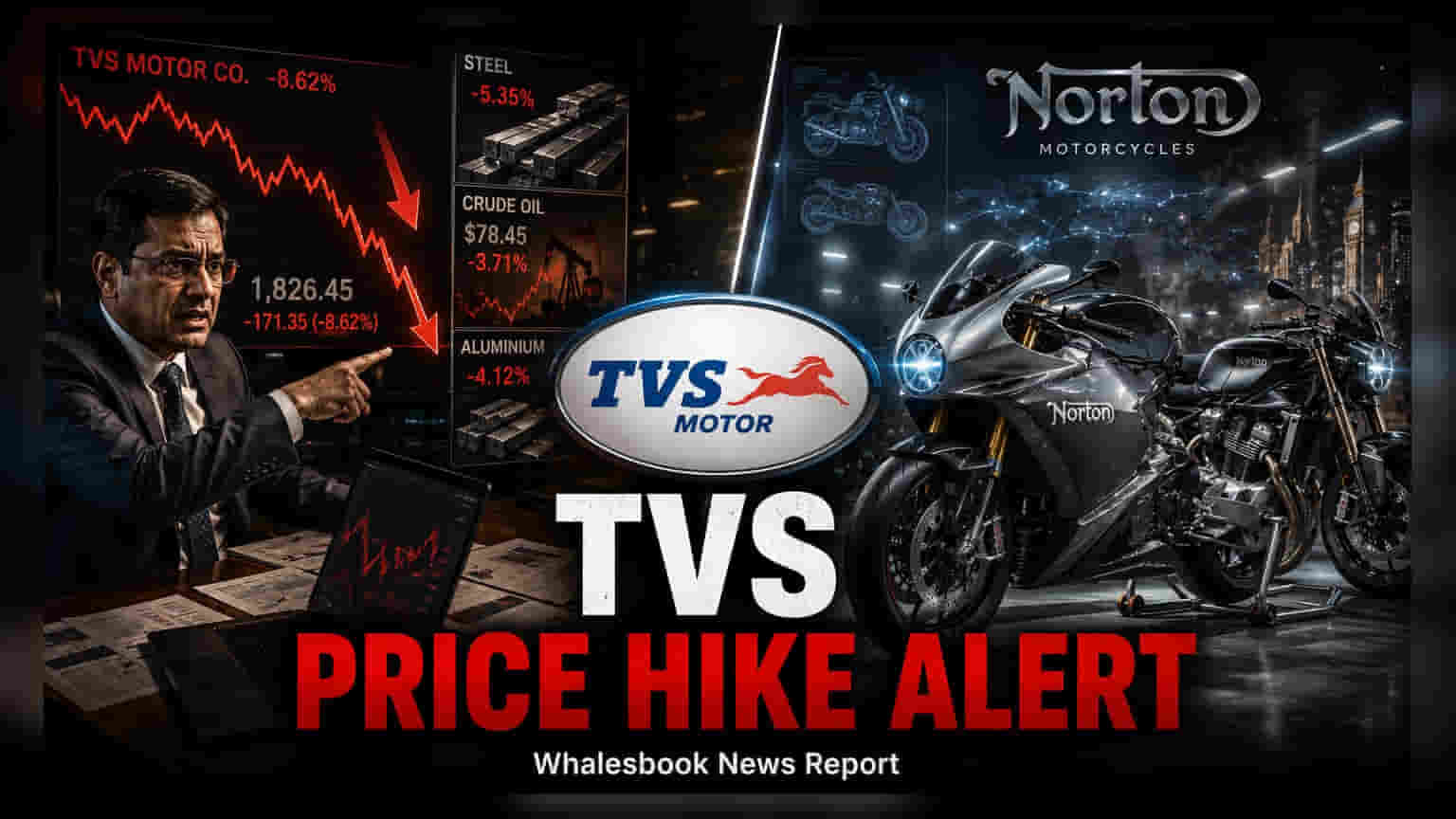
TVS Motor Company intends to raise vehicle prices in the second quarter to protect profit margins against higher steel and aluminum costs. The manufacturer is simultaneously investing ₹3,500 crore this fiscal year to expand capacity for premium motorcycles and electric vehicles.
Detailed Coverage
TVS Motor Company is preparing to implement price increases during the second quarter of the current financial year. The decision follows a period of rising costs for essential raw materials, including steel, aluminum, and petroleum-based components. During a recent earnings discussion, Managing Director KN Radhakrishnan noted that these cost pressures, partly driven by global supply chain challenges, have impacted the company’s profit margins during the first quarter.
Balancing Costs and Premium Ambitions
While the company looks to offset inflation through price adjustments, it continues to pursue a long-term strategy of moving toward higher-value products. A key pillar of this plan is the revival of the Norton Motorcycles brand. Over the past four to five years, the company has invested approximately ₹2,500 crore into this British marquee. Management is now preparing for the launch of four new global Norton models, which will target various categories such as adventure and naked sport motorcycles in markets across India, Europe, the UK, and the US.
Capacity Expansion and Financial Outlay
The manufacturer has committed a significant capital expenditure of ₹3,500 crore for the ongoing fiscal year. These funds are directed toward new product development and increasing manufacturing capacity across its two-wheeler, three-wheeler, and electric vehicle divisions. The company aims to boost its annual two-wheeler production capacity to 8.3 million units by the fourth quarter, up from the current 6.8 million units. Furthermore, the company is scaling up its electric vehicle infrastructure, with production targets for electric scooters rising to over 50,000 units per month.
Strategic Monitorables for Investors
The effectiveness of this strategy will depend on the company's ability to balance price hikes with consumer demand in a competitive two-wheeler market. Investors may track how successfully the company passes on these increased material costs to customers without losing market share to domestic peers like Bajaj Auto or Hero MotoCorp. Additionally, the execution of the capacity expansion project remains a critical factor. The market will likely watch for updates on the actual production ramp-up of the new Norton models and the speed at which the company achieves higher utilization of its expanded manufacturing facilities.