

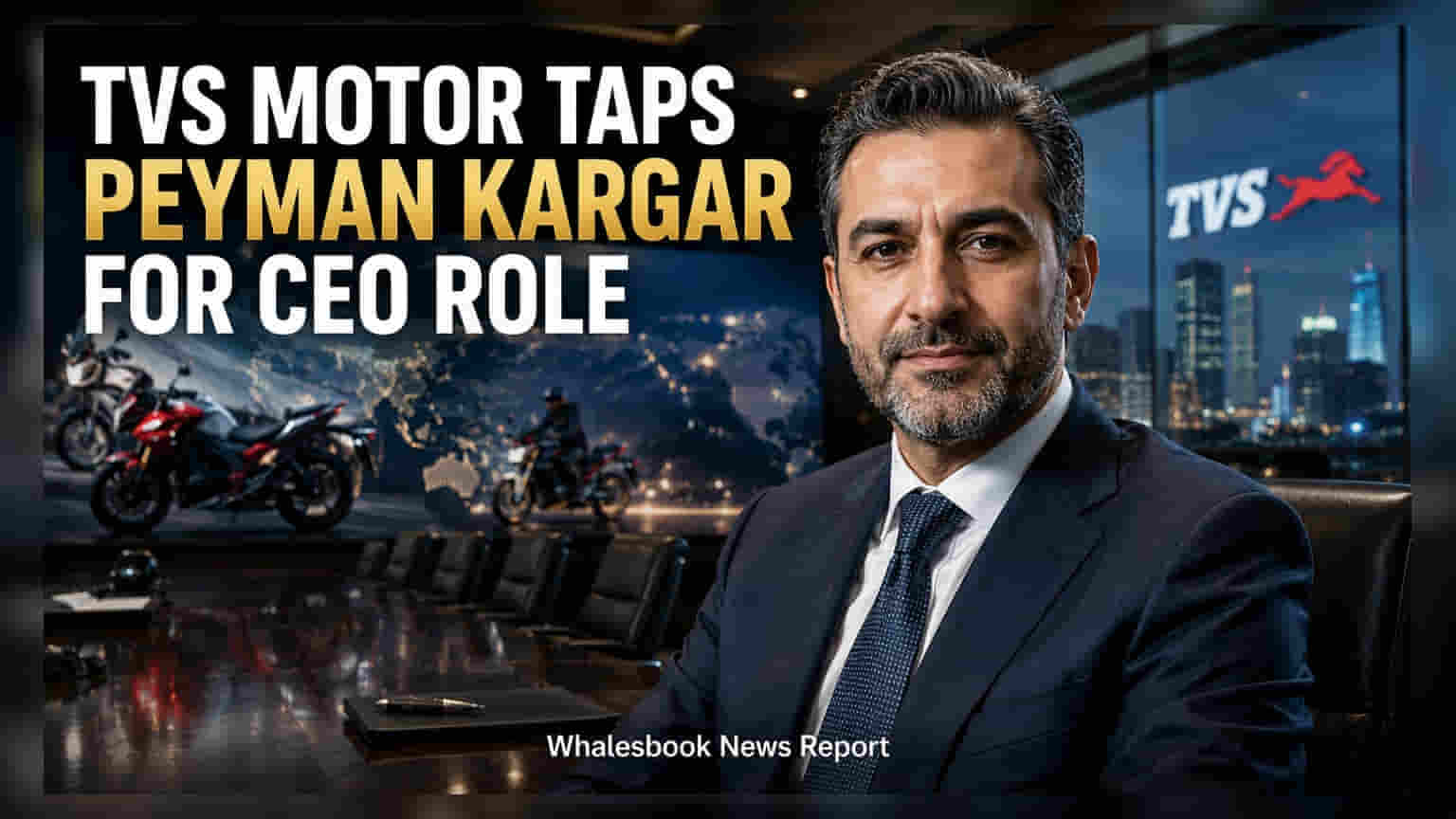
TVS Motor Company has appointed automotive veteran Peyman Kargar as its next CEO, effective January 27, 2027. Kargar, currently leading the company's international business, will take over from K.N. Radhakrishnan to spearhead global growth and premium product expansion. While the company recently reported strong quarterly performance, investors are focusing on the transition strategy and managing debt levels associated with its financing arm.
TVS Motor Company announced a major leadership change on August 28, 2026, naming Peyman Kargar as its next Chief Executive Officer. Kargar, who currently serves as the company's President of International Business, will officially step into the top role on January 27, 2027. The current CEO, K.N. Radhakrishnan, will continue in his position until the transition date and will subsequently serve as a non-executive director until the company's annual meeting in July 2027.
This leadership shift is part of a planned succession strategy aimed at strengthening the company’s focus on premium two-wheelers and aggressive international expansion. Kargar brings over 30 years of experience in the global automotive sector, including leadership roles at Infiniti—the luxury division of Nissan—and the Renault Group. His appointment reflects the company's intent to increase its footprint in developed markets, a sector he has been nurturing in his current role.
From a financial perspective, the company is entering this transition period with strong momentum. In the first quarter of fiscal year 2027, the firm reported a 38% increase in revenue and a 51% jump in profit after tax compared to the previous year. International sales have become a significant part of the business, now contributing roughly 29% to total volume, growing at a steady pace of 33%. These numbers highlight that the new leadership will be taking charge at a time when the core business is performing well.
While the growth outlook remains a focus, investors often evaluate the company's debt profile when looking at the overall financial health. TVS Motor’s debt-to-equity ratio appears higher than that of some other automotive manufacturers. This is primarily driven by the company’s captive financing business, where the firm lends money to customers buying its vehicles. While this practice helps support sales, it also increases the total debt on the balance sheet and exposes the company to interest rate risks and refinancing challenges. Managing this balance between supporting vehicle sales through financing and maintaining a healthy balance sheet remains a key area for observers.
Beyond financial metrics, the automotive sector remains highly competitive. The company faces ongoing pressure from shifting commodity prices and the need to maintain profit margins amidst rising input costs. Additionally, while the international business is expanding, some of the company’s overseas subsidiaries have historically faced challenges, with weaker operating performance compared to the domestic business.
As the company prepares for the handover in January 2027, the market will likely track how Kargar balances the push for global premium products with the need to maintain domestic margins and navigate sector-wide risks. The smooth execution of this leadership transition, coupled with continued performance from international markets, will be the next major monitorable for shareholders.