

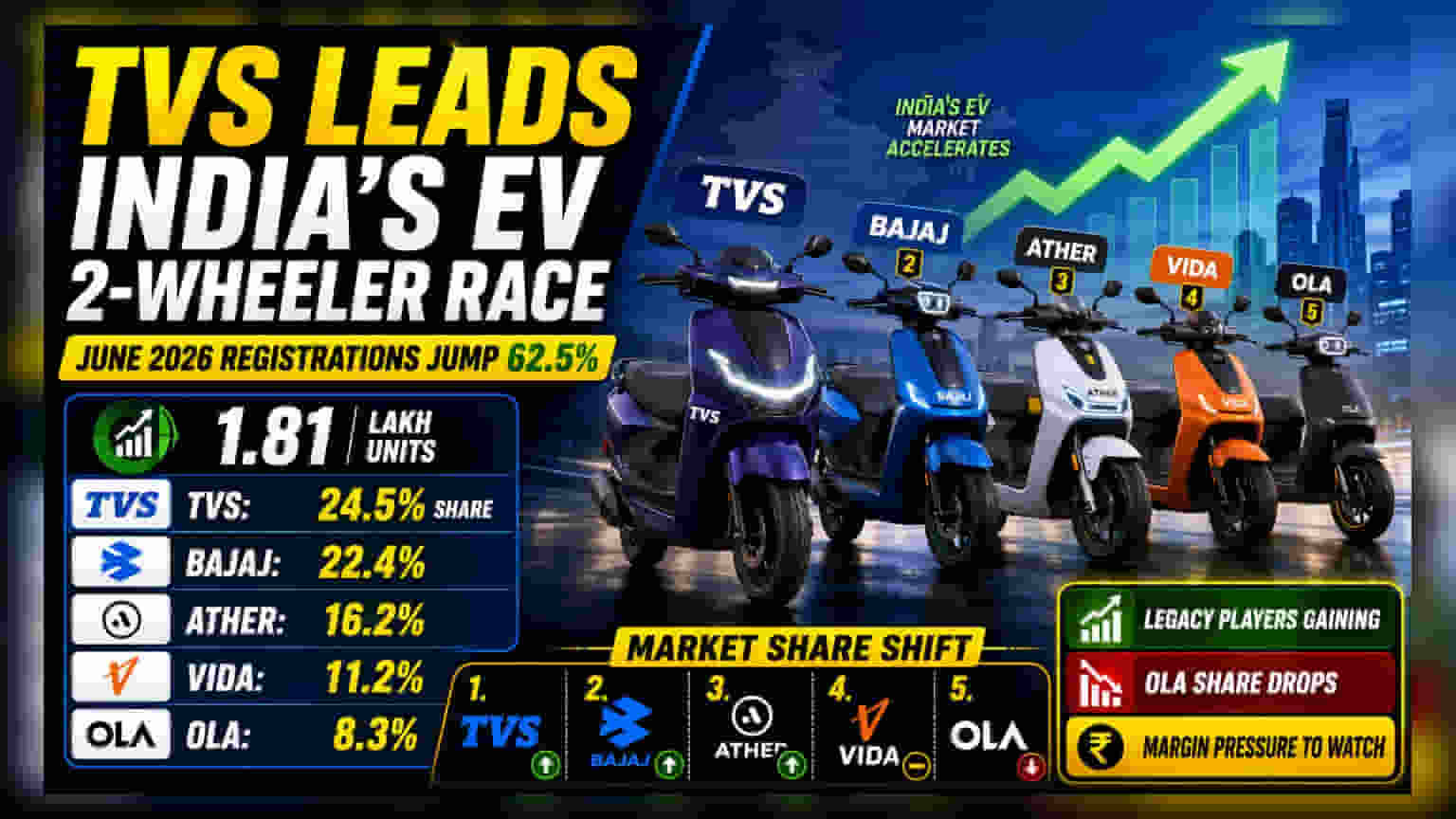
India’s electric two-wheeler market grew 62.5% in June to 1.81 lakh units. While TVS Motor retained the top spot with 44,467 registrations, Bajaj Auto and Hero MotoCorp’s Vida brand are rapidly gaining market share. Meanwhile, the data shows a sharp decline in registrations for Ola Electric, highlighting the intensifying competition among manufacturers.
What Happened
India’s electric two-wheeler market saw strong growth in June 2026, with total vehicle registrations reaching 1.81 lakh units. This marks a 62.5% increase compared to the same month last year. TVS Motor Company continued to lead the pack, recording 44,467 registrations. This volume gave the company a 24.5% share of the total market, cementing its position at the top despite a slight dip in percentage share compared to the previous year.
The Shift in Market Shares
The competitive dynamics in the electric scooter space are changing rapidly. Bajaj Auto, which secured the second position, recorded 40,576 registrations. Its market share rose to 22.4%, showing that it is narrowing the gap with the leader, TVS Motor.
Similarly, the Vida brand, backed by Hero MotoCorp, showed notable growth. It registered 20,198 units, pushing its market share to 11.2%, up from 7.1% last year. Ather Energy also performed well, holding the third spot with 29,422 registrations and a 16.2% market share. In contrast, Ola Electric saw its registrations fall to 15,096 units, with its market share dropping significantly to 8.3% from 18.6% in June 2025.
Why Competition Matters for Investors
For investors, these numbers highlight two major themes. First, the overall market is expanding fast, which is positive for the sector. Second, the battle for dominance is moving away from just the early entrants to include large legacy players who have strong dealership networks and established service centers.
While high sales numbers are good, investors often look at whether companies can maintain profit margins while fighting for market share. When companies increase discounts or launch aggressive price cuts to win customers, it can put pressure on their profitability. The ability to balance volume growth with healthy margins will be a key differentiator in the coming quarters.
The Legacy vs. Startup Dynamic
The current data shows that companies with traditional automotive manufacturing experience are gaining traction. These firms often have an advantage in scaling production and managing supply chains, which are critical in the auto industry. Startups like Ola Electric, which enjoyed an early-mover advantage, are now facing stiffer competition from these established manufacturers.
What Investors Should Track Next
Investors may want to watch for three main factors in the coming months:
- Profit Margins: Look for management commentary on whether current sales volumes are sustainable without heavy discounting.
- Production Capacity: As the market grows, the ability to deliver vehicles without long waiting periods will be important.
- New Product Launches: Watch how different companies update their portfolios to compete on features, range, and pricing, as this will determine who captures the next wave of buyers.