

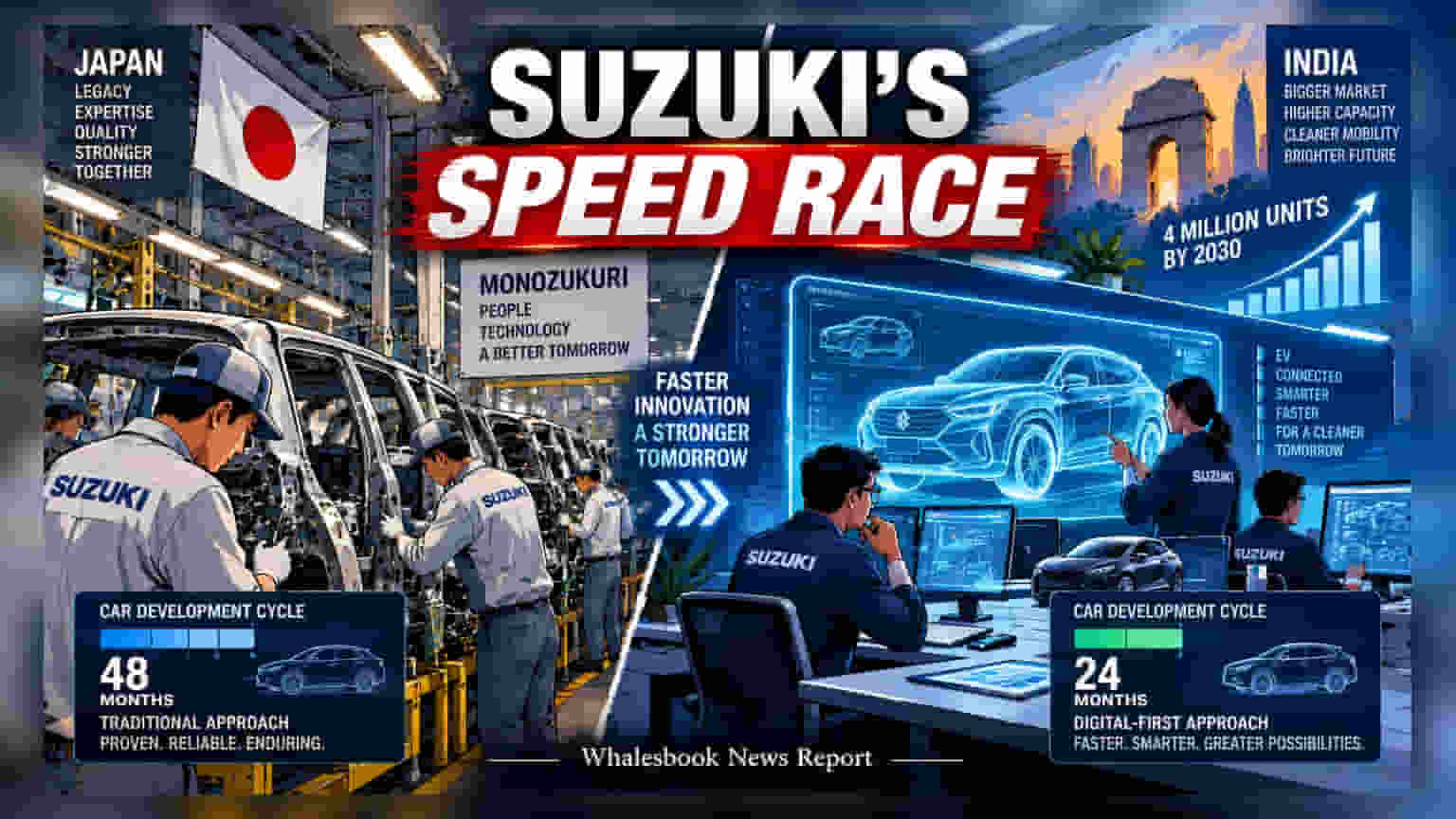
Suzuki Motor Corp aims to halve its vehicle development timeline to 24 months by 2030 to better compete with rapid Chinese automakers. The company is doubling down on India, planning to increase local production capacity to 4 million units annually to capture rising demand in the world's third-largest car market.
Suzuki Motor Corp is overhauling its global manufacturing strategy, aiming to reduce the time it takes to develop a new car from 48 months to 24 months by 2030. This shift is a direct response to the rapid innovation cycles of Chinese electric vehicle makers like BYD and Xiaomi, which have disrupted traditional manufacturing standards with software-heavy designs and faster product launches.
For Suzuki, which relies heavily on its Indian subsidiary, Maruti Suzuki, this strategy is critical. The company has designated India as its primary growth engine. To support this, the automaker plans to scale its manufacturing capacity in India to 4 million units annually by the end of the decade. This is a significant push to ensure it keeps pace with the changing preferences of Indian consumers who are increasingly shifting toward modern features and electric options.
Moving to a 24-month development cycle is a major challenge for a legacy automaker. It requires a fundamental change in how the company uses digital tools and manages its supply chain. While this speed is necessary to remain competitive, investors often track whether such rapid acceleration impacts product quality or introduces new manufacturing complexities. Successfully executing this transition while managing heavy capital spending for new plants and electric vehicle technology will be a key performance area.
The Indian automotive sector is witnessing intense competition. While Chinese brands currently have a smaller footprint in India, their global speed has forced local players and established multinationals to rethink their product lifecycles. Maintaining market share in India—where domestic rivals like Tata Motors and Mahindra, along with international players like Hyundai, are also aggressively investing in new platforms—will depend on how quickly Suzuki can bring new models to the showroom without compromising on its traditional value proposition.
The key monitorable for stakeholders will be the execution of these new manufacturing plants and the company's ability to introduce refreshed models faster. Investors will watch for updates on the timeline for these new facilities and how the company balances this increased capital spending with its profit margins in the coming years.