

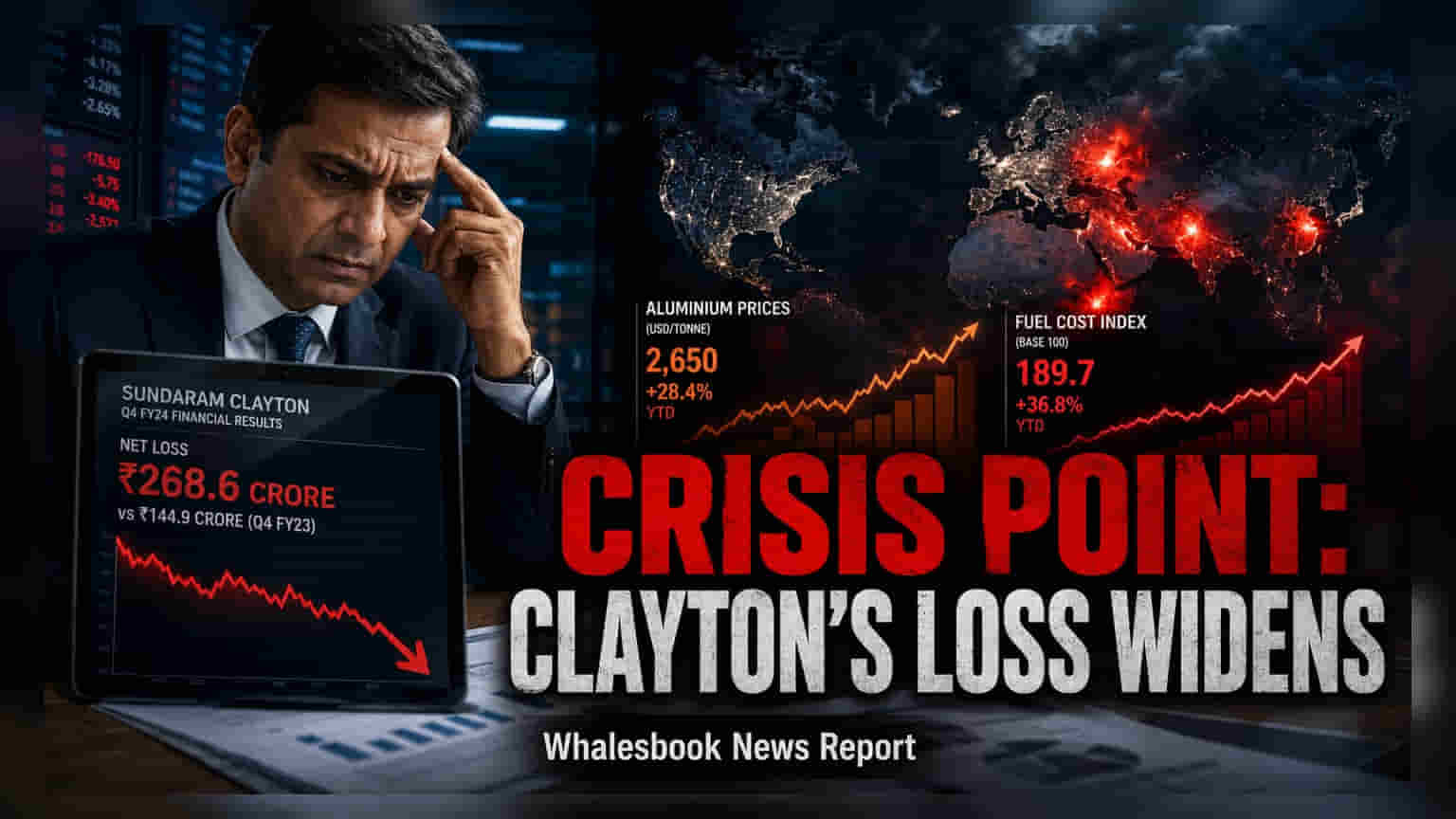
Sundaram Clayton reported a consolidated net loss of ₹59 crore for the June quarter, compared to a ₹58 crore loss a year ago. While revenue grew 16% to ₹592 crore, higher raw material and fuel costs weighed on the bottom line. Investors should track how the company manages these rising expenses alongside recovering demand in the North American truck market.
Detailed Coverage
Sundaram Clayton, a prominent manufacturer in the automotive components space, released its financial results for the first quarter of the 2026-27 fiscal year on Tuesday. The company posted a consolidated net loss of ₹59 crore, slightly higher than the loss of ₹58 crore reported in the same period last year. This performance highlights the challenge of balancing double-digit revenue growth against persistent inflationary pressure.
Revenue Growth vs. Margin Pressure
The company achieved a 16% increase in consolidated revenue, rising to ₹592 crore from ₹512 crore in the previous year's first quarter. This growth was supported by steady activity in the Indian automotive market, particularly within the passenger vehicle and commercial vehicle segments. However, this top-line expansion did not translate into profitability due to rising expenses related to raw materials, energy, and logistics. The increase in input costs, particularly for aluminum, has pressured operating margins, a common theme currently affecting various players in the auto-ancillary sector.
Segment Performance and Geographic Dynamics
In India, the company noted that the commercial vehicle segment continues to benefit from ongoing infrastructure development and replacement demand. Simultaneously, the passenger vehicle segment maintains momentum, with continued interest in SUVs and hybrid vehicle models. Beyond domestic borders, the company observed signs of a slow recovery in the North American truck market. This region has seen some improvement in original equipment manufacturer production schedules and fleet replacement cycles. Despite this, the recovery remains sensitive to broader economic factors, including high interest rates and cautious freight demand.
Operational Strategy and Outlook
To navigate these conditions, Sundaram Clayton is focusing on optimizing its supply chain and operational efficiency. The company is currently ramping up production capacity at its facilities to keep pace with customer demand and is prioritizing the development of new product lines to broaden its portfolio. Strengthening customer relationships remains a core pillar of its strategy to improve financial stability in the coming quarters.
For investors, the key monitorable will be the company’s ability to control input costs while navigating a volatile global logistics environment. Future quarterly reports will reveal whether the revenue growth continues to outpace rising costs, and whether the anticipated recovery in international markets can provide the necessary support to turn the business toward sustainable profitability.