

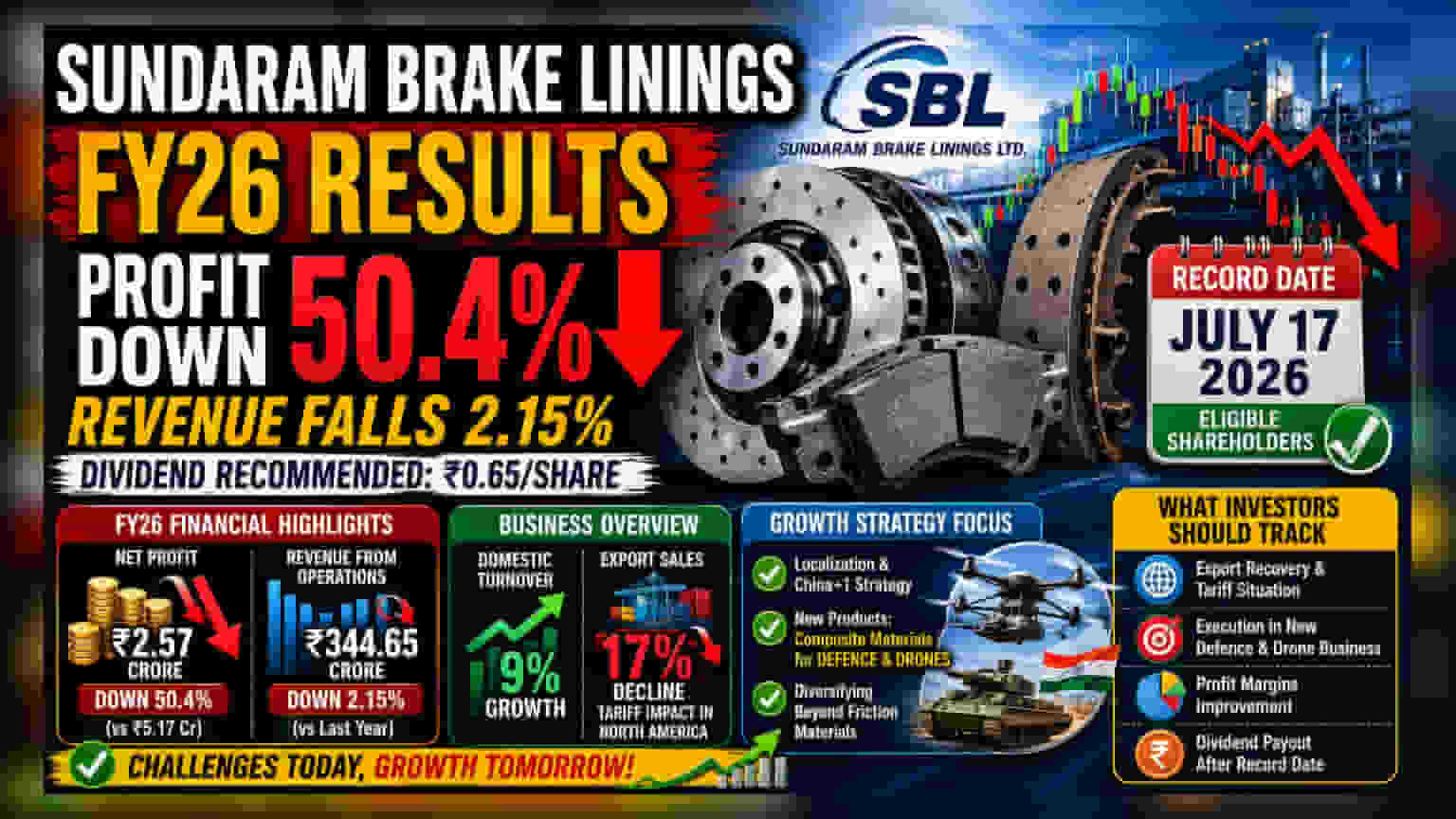
Sundaram Brake Linings reported a 50.4% decline in annual net profit for FY26 as revenue fell, contrasting with its stated long-term expansion goals. While domestic sales showed signs of resilience, the company faced significant export pressure. Investors are now watching its strategic pivot toward composite materials and new defense segments.
What Happened
Sundaram Brake Linings Limited reported its financial results for the full fiscal year ended March 31, 2026. The company’s net profit declined by 50.4% to ₹2.57 crore, down from ₹5.17 crore in the previous year. Revenue from operations also saw a contraction, falling 2.15% to ₹344.65 crore. Despite the earnings dip, the company’s Board of Directors has recommended a final dividend of ₹0.65 per share. Shareholders on the register as of the record date of July 17, 2026, will be eligible for this payout, subject to approval at the upcoming Annual General Meeting.
Financial and Business Context
The company’s performance highlights the challenges of balancing a long-term growth strategy with immediate market pressures. While the management has emphasized plans for expansion through increased localization and the China+1 global supply chain shift, the FY26 results show the reality of a difficult operating environment. Export sales recorded a 17% decline, primarily due to tariff impacts in North American markets, which offset some of the gains made in the domestic market, where turnover grew by 9%.
Why This Matters For Investors
The divergence between the company's growth narrative and its recent financial results is a key area for investors. Sundaram Brake Linings is attempting to diversify away from traditional friction materials by moving into composite products for sectors like defense and drones. While these areas represent potential future revenue, the core business is currently navigating high input costs and cyclical demand fluctuations in the automotive industry. The stock currently trades at a valuation that implies high expectations for future earnings growth, which makes execution in these new segments critical.
Sector Pressure And Peer Comparison
The Indian auto component industry has faced varied conditions in FY26. While domestic demand for sport utility vehicles (SUVs) and two-wheelers has provided a stable base, many manufacturers, including Sundaram Brake Linings, have struggled with global trade uncertainties and tariff pressures that affect export margins. Compared to larger peers in the auto component space that have better diversified their product portfolios and geographical revenue streams, Sundaram Brake Linings faces a narrower base, making it more sensitive to localized demand and inventory destocking by original equipment manufacturers (OEMs).
What Investors Should Track Next
Investors may want to monitor a few specific indicators:
Export Recovery: Whether the company can regain lost export volumes in the coming quarters and if tariff conditions stabilize.
New Business Execution: Progress on the development and supply of composite materials for the defense and drone industries, which the company views as key growth drivers.
Profit Margins: Tracking whether the company can improve its operating margins, which have been pressured by a lower revenue base and rising employee and interest costs.
Dividend Payout: The timeline for the dividend payout following the July 17 record date, which will be the next major corporate action for shareholders.