

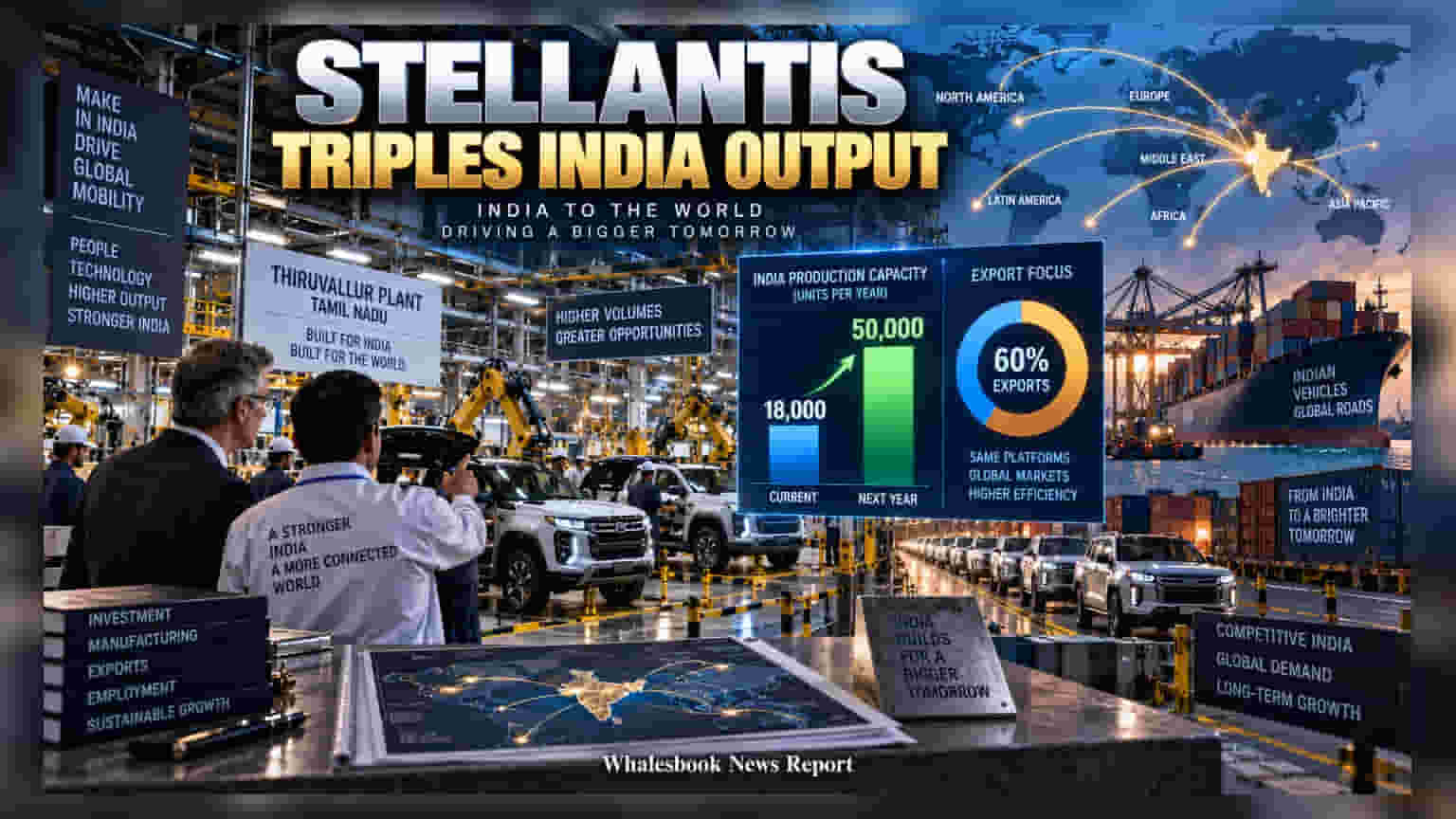
Stellantis will raise its annual vehicle production in India to 50,000 units, up from 18,000, focusing heavily on exports. Investors will monitor if this scale-up, aimed at improving capacity utilization and production costs, can be matched by stronger domestic demand and successful new product launches.
Stellantis, the global automotive group, has announced plans to ramp up its vehicle production in India to approximately 50,000 units annually next year, a significant increase from the current output of roughly 18,000 vehicles. This expansion is part of the company's broader FaSTLAne 2030 strategy, which aims to leverage India’s cost structure and supplier network to serve both local and international markets.
A central element of this production plan is a heavy focus on exports. The company intends to direct about 60% of this increased production to overseas markets, using the same vehicle platforms that are manufactured for Indian buyers. By consolidating production for both domestic and global needs at its Thiruvallur facility in Tamil Nadu, Stellantis aims to achieve better operational efficiency and improved capacity utilization.
The Thiruvallur plant has been central to the company’s operations since its partnership with the Hindustan Motor Finance Corporation, part of the CK Birla Group, began in 2017. Management has indicated that this existing manufacturing and engineering ecosystem is vital for reducing production costs and scaling output. The ability to manufacture common models for both domestic and export markets helps the company avoid the cost of maintaining separate production lines.
For investors, the success of this strategy rests on several moving parts. While higher production volumes are intended to bring down the cost per vehicle, the company also faces the challenge of growing its domestic sales. Stellantis, which operates brands like Jeep and Citroën in India, has seen relatively modest domestic volumes compared to the dominant players in the Indian automotive market. Expanding the production base is a necessary step, but its effectiveness will depend on the company's ability to introduce new, accepted models and gain market share locally.
Stellantis has already invested nearly €1 billion in its Indian operations. Moving forward, the company plans additional spending on manufacturing and research, although the specific timing and scale of these investments remain tied to business performance. The key monitorables for the coming quarters will be the company’s ability to secure export orders, the speed of its new product pipeline, and its progress in increasing market share within India's competitive automotive sector.