

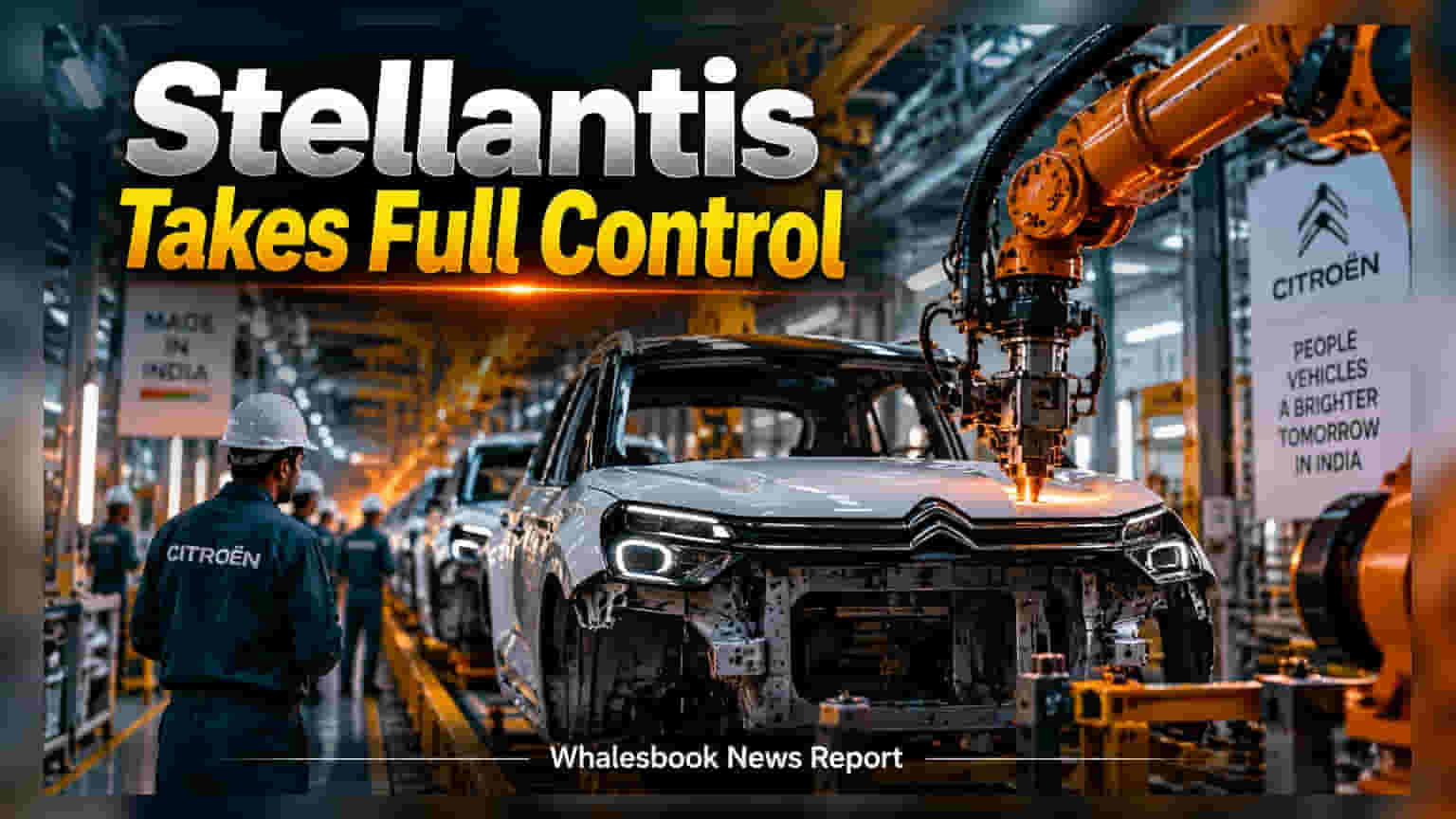
Stellantis has acquired the remaining stake in its Thiruvallur plant from Hindustan Motor Finance Corporation to gain full ownership. The company aims to increase annual production by 160% by 2028, focusing on exports. Investors will monitor if this capacity boost aligns with actual market demand, as the brand continues to face stiff competition in the Indian automotive sector.
Stellantis has finalized its purchase of the remaining stake in its Thiruvallur manufacturing facility from the Hindustan Motor Finance Corporation, a part of the CK Birla Group. This move gives the global automaker full ownership of its production operations in India, ending a partnership that began in 2017. By consolidating control, the company aims to streamline its governance and align local operations more closely with its global corporate priorities.
The company has set an ambitious target to scale its annual production from 16,000 units in 2026 to over 43,000 units by 2028. This represents a 160% increase in capacity. The Thiruvallur facility currently produces models like the Citroën C3 and the Basalt. With approximately 95% of components localized, the company intends to use this plant as a primary export hub, shipping vehicles to markets across four continents. This strategy is backed by a cumulative investment exceeding €1 billion in India, reflecting the company’s long-term commitment to the country.
While this expansion signals a push for growth, the Indian automotive sector remains highly competitive. Established players like Maruti Suzuki, Hyundai, and Tata Motors hold significant market share, and new entrants face pressure to differentiate their products. Stellantis, through its Citroën brand, has seen lower market penetration in India compared to these market leaders. The financial challenge for any manufacturer scaling up operations is the burden of fixed costs associated with large-scale factories. If production volume does not reach the expected targets, it can put pressure on profit margins.
From an operational perspective, the company plans to double its direct workforce to over 1,200 employees by 2028. Management has stated that the shift in ownership allows for faster decision-making and better integration into the company's international manufacturing network. However, the success of this model will depend on the company's ability to maintain a strong supply chain and secure steady demand in both domestic and international markets.
Investors tracking the Indian auto ecosystem will likely monitor future developments closely. The key monitorable will be whether the increased capacity leads to a sustainable rise in actual sales and export volumes, or if the company faces risks related to under-utilization of its new manufacturing capacity. Regular updates on production milestones and the performance of the Citroën brand in the competitive Indian passenger vehicle market will be important indicators of the company's progress.