

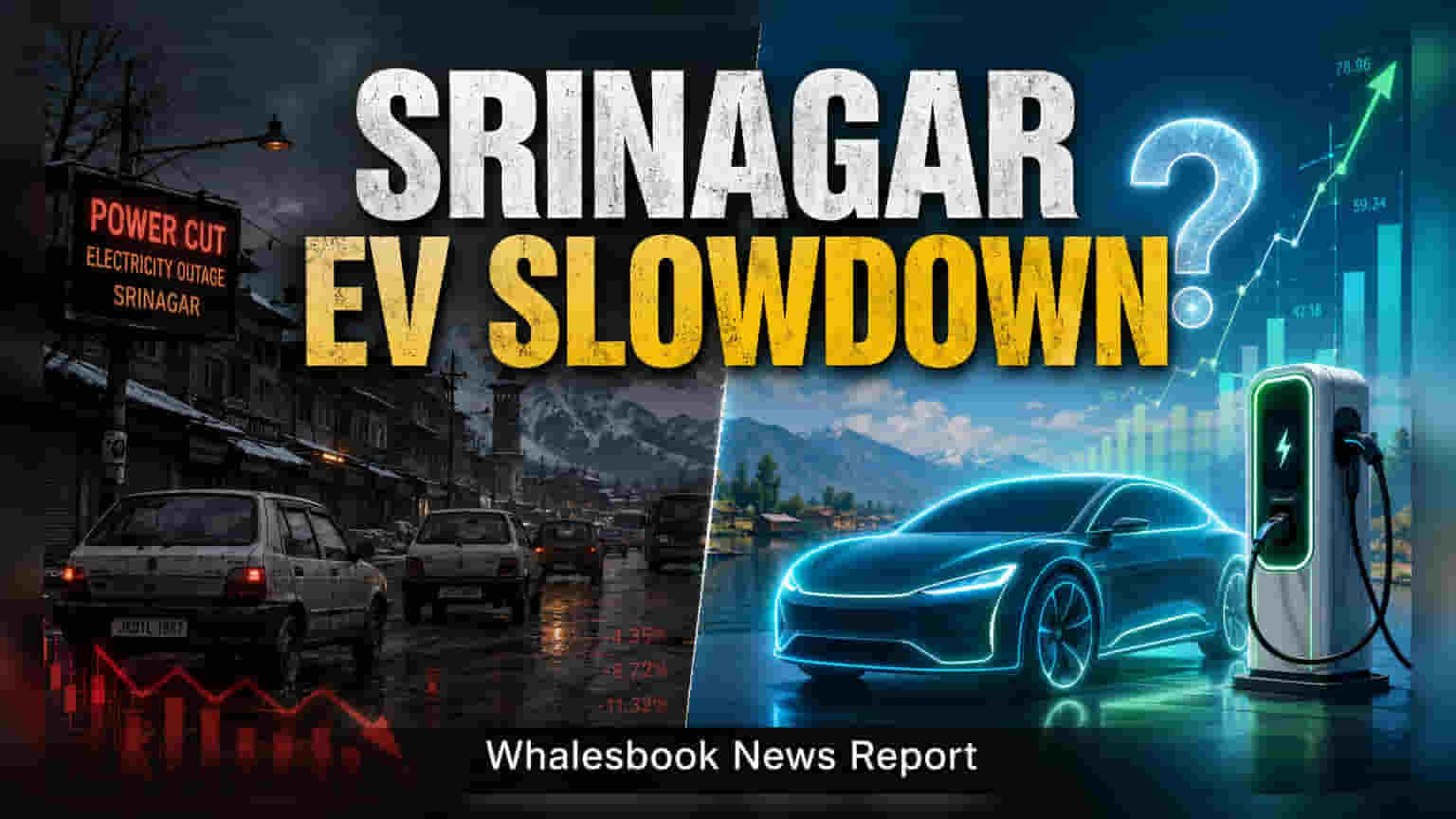
While public electric transport in Srinagar is finding success, private electric vehicle (EV) ownership remains low. Growth is being held back by power reliability issues, a limited charging network, and the absence of a dedicated state-level EV policy. Market data shows a clear divide, with electric three-wheelers dominating registrations, while personal car buyers remain hesitant due to high upfront costs.
Electric mobility in Srinagar presents a tale of two markets. While the public sector, led by initiatives like the Srinagar Smart City electric buses, has successfully integrated EVs into daily transit, the adoption of personal electric cars and two-wheelers continues to face significant hurdles. As of August 2026, the local market is heavily dominated by commercial electric three-wheelers, which account for approximately 65% of all EV registrations in Jammu and Kashmir. For investors and industry observers, this divergence highlights that while commercial feasibility is improving, the ecosystem for private EV ownership is still in a nascent stage.
Infrastructure and power reliability remain the most pressing concerns for potential buyers. Although there are 295 operational EV charging stations across the Union Territory, their density is often insufficient for personal use, especially outside main urban hubs. This creates range anxiety for private car owners. Furthermore, power supply consistency, particularly in rural areas and during the winter months, remains a persistent challenge for residential charging setups. For a region where electricity reliability is already a major daily factor, the added stress of charging a vehicle at home is a significant deterrent for many residents.
Adding to the structural challenges is the absence of a finalized, localized EV policy in Jammu and Kashmir. While central schemes like the PM E-DRIVE provide support for electric buses and commercial vehicles, the lack of a state-specific policy means personal buyers are currently missing out on additional, localized financial incentives. This has kept the upfront cost of purchasing new electric cars and scooters high. Consequently, many price-sensitive residents continue to prefer cheaper, imported used internal combustion engine vehicles, which are often available at a fraction of the cost of a new EV.
Technical and environmental factors also play a role in consumer sentiment. Srinagar’s harsh winter climate, with temperatures frequently dropping well below freezing, poses a unique challenge for lithium-ion battery performance. Range reduction during extreme cold remains a known technical issue for EVs, adding to the hesitation among potential buyers who need reliable, long-distance transport.
For investors monitoring the sector, the key developments to watch will be the finalization of the regional EV policy and any government moves to offer targeted subsidies for personal two-wheelers and four-wheelers. Future market expansion will likely depend on whether infrastructure developers can increase the density of public charging networks and if battery technology can be adapted to better withstand the region's intense winter conditions.