 Whalesbook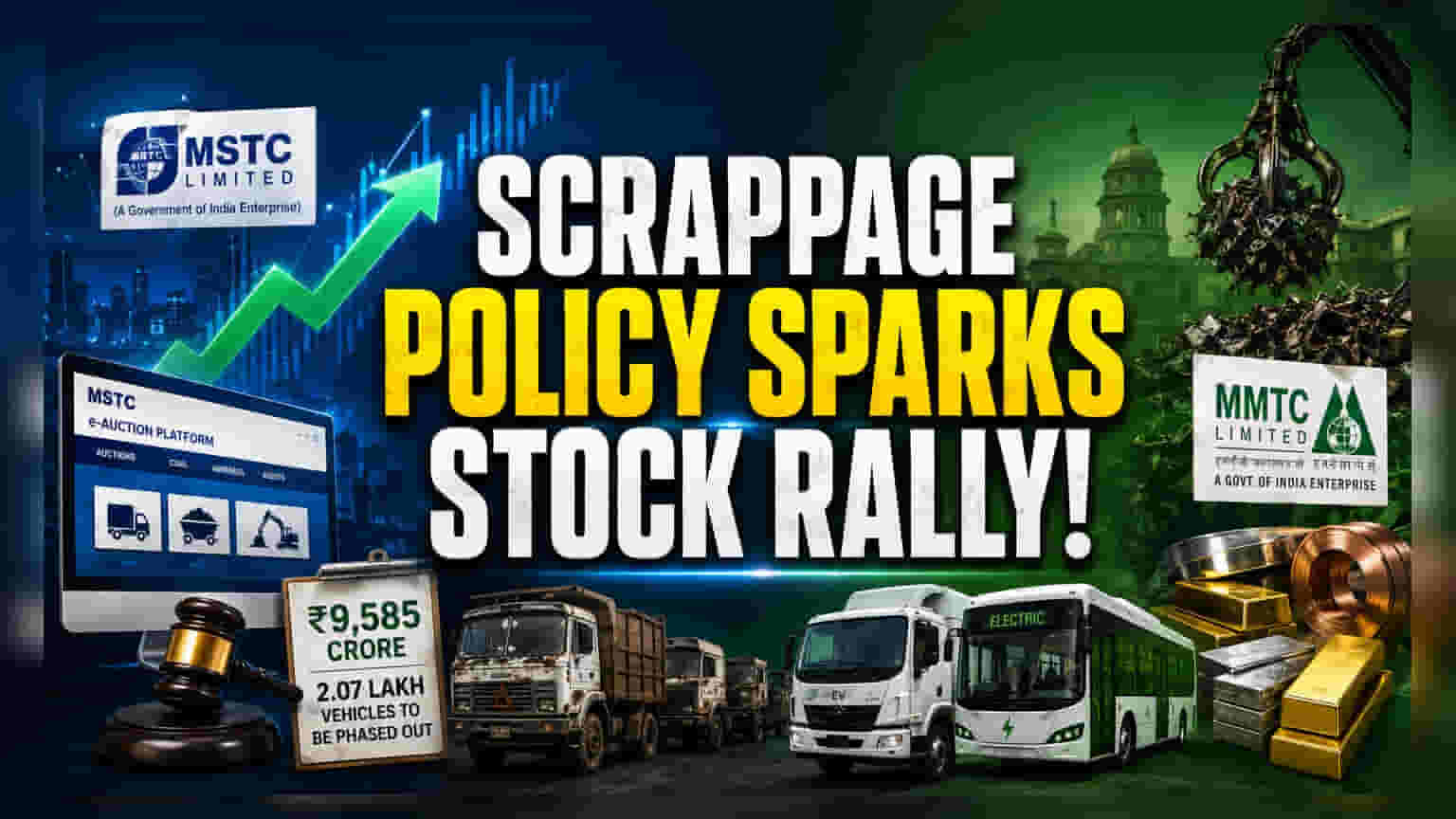


The Catalyst and Market Reaction
Market participants responded with immediate optimism following the Union Cabinet’s approval of a two-year incentive package aimed at phasing out older trucks and buses in the Delhi-NCR region. The initiative, backed by a significant ₹9,585 crore outlay, seeks to replace roughly 2.07 lakh polluting vehicles—predominantly trucks—with cleaner BS-VI or electric alternatives. MSTC, serving as a primary e-auction conduit for government assets, saw its share price trade higher, mirroring the market’s expectation of increased auction volumes. Similarly, MMTC experienced a notable intraday spike as investors linked its role in metal trading to the projected surge in scrap supply.
Analytical Deep Dive: Policy vs. Execution
While the headline figures are substantial, the effectiveness of the scheme hinges on the actual conversion rate of legacy vehicles. The infrastructure for scientific recycling is still evolving; MSTC’s own 50/50 joint venture, Mahindra MSTC Recycling Private Limited (MMRPL), remains a key player in this space. However, the market’s enthusiasm may be outpacing the operational reality of setting up sufficient dismantling centers. Furthermore, historical data indicates that while such policies create a cyclical boost, the long-term valuation of companies like MSTC is more closely tied to its broader e-commerce services, including coal and mineral block allocations, rather than vehicle scrappage alone.
The Forensic Bear Case: Structural Weaknesses
Investors should maintain a cynical view regarding the sustainability of this rally. MMTC, in particular, operates primarily as a trading entity and its connection to the scrappage sector is often overstated; its core business focus remains on precious metals and commodity trading. Previous financial disclosures highlight the risks of high trade receivables and a heavy reliance on government mandates, which often complicates margin stability. Additionally, MSTC, despite its 'deemed monopoly' status in government e-auctions, faces risks related to high employee benefit costs and the inherent cyclicality of its business model. Reliance on a single geographical region—Delhi-NCR—for this scrappage scheme limits the total addressable market and leaves revenues susceptible to shifts in regional environmental policy.
Future Outlook
Brokerage sentiment remains mixed, with the stock performance currently driven by momentum rather than fundamental re-ratings. The success of the scheme will be measured by the participation rates of vehicle owners, who are currently incentivized by interest subventions and fuel vouchers. Future gains will likely require evidence of sustained, higher-margin auction volumes flowing through MSTC’s platform and a clearer path to profitability for MMTC’s non-precious metal divisions.