

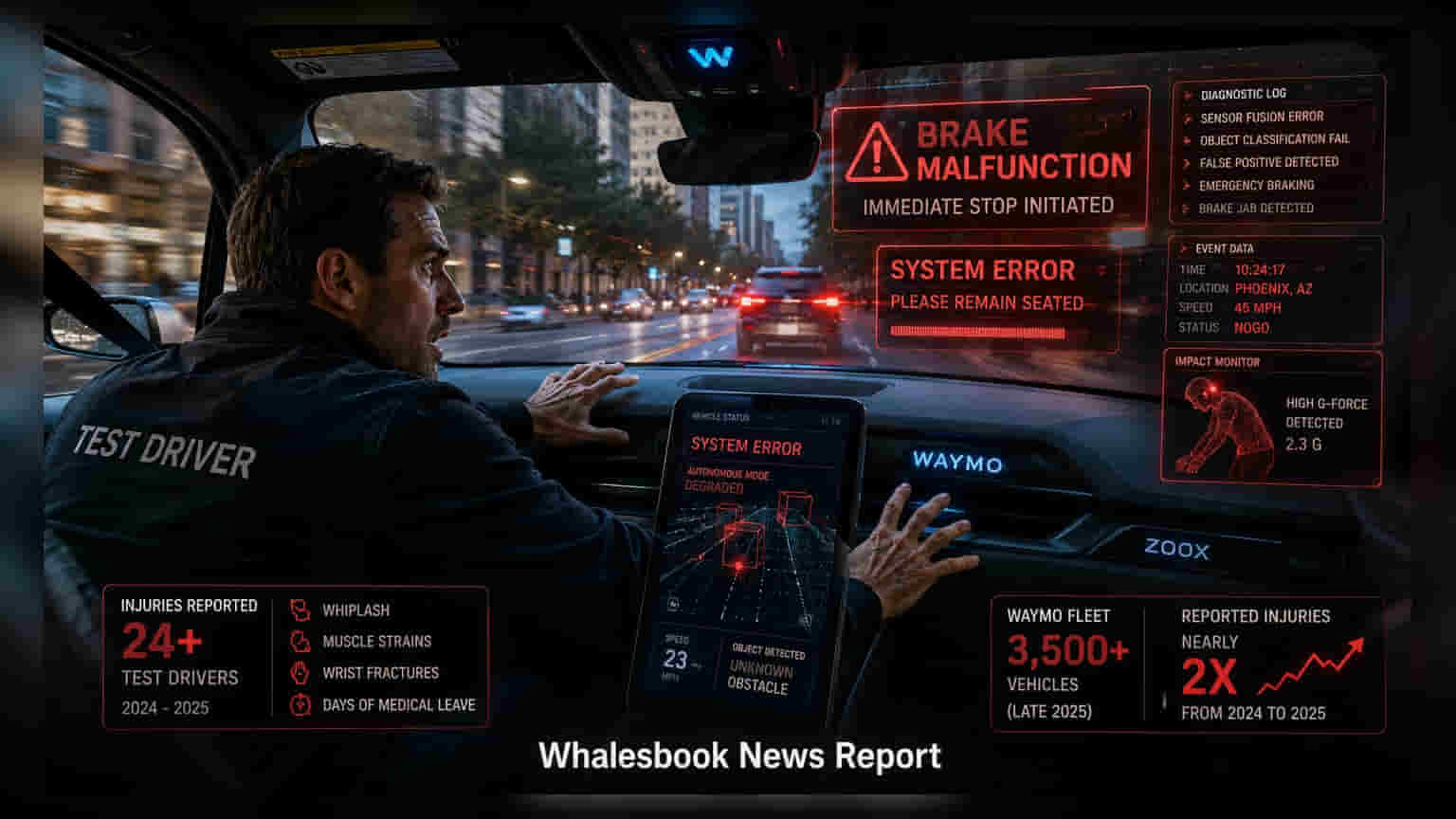
Waymo and Zoox test drivers are sustaining significant injuries, including whiplash and fractures, linked to abrupt hard-braking maneuvers by autonomous vehicles. OSHA data reveals over two dozen incidents since 2024, raising concerns about the safety of scaling driverless fleets. Despite software recalls and safety protocols, contractors report persistent, unexplained 'brake jabs' that force vehicles into emergency stops, sidelining personnel for weeks. The findings highlight the hidden human cost of validating self-driving technology in public traffic.
Human Toll Behind Automation
The push to scale autonomous taxi fleets has resulted in a mounting tally of physical harm for the human operators tasked with monitoring the vehicles. Data submitted to the Occupational Safety and Health Administration (OSHA) indicates that test drivers for Waymo and Amazon-owned Zoox sustained more than 24 injuries between 2024 and 2025. These incidents are largely tied to violent, unexpected braking events often termed 'brake jabs' or system 'nogos,' where the autonomous software abruptly triggers emergency stops while in motion.
The Mechanics of Injury
Workers operating Waymo’s fleet, managed through Transdev, reported injuries ranging from severe whiplash and strained muscles to wrist fractures. One documented case involved a vehicle suddenly reversing during a parking maneuver, causing a driver’s hand to catch on the steering wheel with enough force to crack bone. In another instance, a Phoenix-based operator required 157 days of medical leave after an unprovoked emergency stop. Similarly, Zoox contractors describe recurring incidents where the self-driving system triggers abrupt halts, either due to faulty debris detection or internal software shutdowns, throwing occupants against their restraints at speeds of up to 45 mph.
Scaling Challenges and Regulatory Hurdles
While Waymo expanded its commercial fleet to over 3,500 vehicles by late 2025, the frequency of reported injuries also climbed, nearly doubling from 2024 to 2025 within core markets like San Francisco, Los Angeles, and Phoenix. Zoox continues to face scrutiny despite a federal investigation that led to a software recall. Notably, four of the company’s reported injuries occurred after this fix was implemented, suggesting that the underlying technical instability remains unresolved. Both companies maintain that these incidents represent a small fraction of the millions of miles traveled, yet the persistent nature of these 'brake jabs' suggests a fundamental issue in how autonomous systems interpret urban environments and respond to phantom obstacles. The reliance on human testers remains a critical component of their development cycle, but the data underscores the precarious nature of maintaining safety while transitioning to fully driverless commercial operations.