

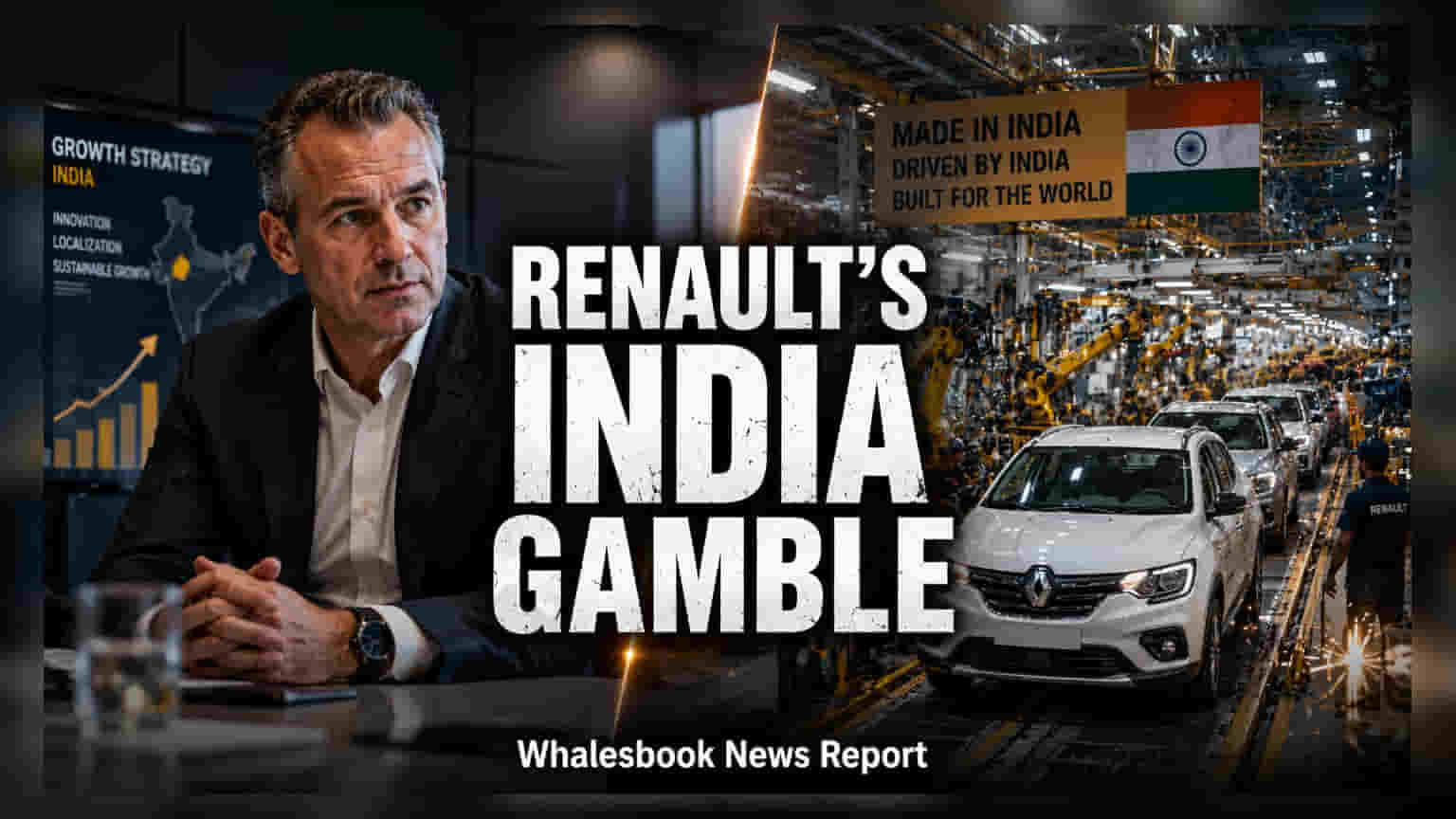
Renault India aims to become one of the group's top three global manufacturing centers by 2030, targeting $2 billion in exports. The strategy includes launching seven new models, including a mass-market electric vehicle, and leveraging full control over its Chennai plant to revitalize its domestic market share.
Renault India is embarking on an ambitious transformation plan under the leadership of CEO Stéphane Deblaise, aiming to position the country as a primary global hub for the company's manufacturing and engineering operations. Following discussions with Union Commerce and Industry Minister Piyush Goyal, the automaker has announced a target of $2 billion in exports from India by 2030. This shift marks a strategic pivot to move beyond the company's historical reliance on smaller passenger vehicle segments in the Indian market.
The FutuReady India Product Plan
The company’s roadmap, dubbed 'FutuReady India,' centers on a major product offensive involving seven new models and 22 variants by 2030. This lineup includes the revival of the Duster SUV, new SUV offerings, and, crucially, the company's first locally produced mass-market electric vehicle. Renault is targeting a 5% share of the domestic passenger vehicle market, a significant increase from its current position, where market share has remained below 1% for an extended period due to an aging product portfolio.
Manufacturing and Operational Control
To support this growth, Renault will deploy a dual-platform strategy. The Renault Group Entry Platform will continue to support core models like the Kwid, Kiger, and Triber, while the more flexible Renault Group Modular Platform will be used to develop new SUVs. This modular approach is designed to accommodate internal-combustion, hybrid, and battery-electric engines on the same production lines, which helps in reducing overall manufacturing costs and adapting quickly to shifting consumer preferences.
A key factor enabling this new strategy is Renault's recent move to take full ownership of its Chennai manufacturing joint venture by acquiring the remaining 51% stake previously held by Nissan. This change in ownership structure provides Renault with greater autonomy to make independent investment decisions and streamline its supply chain, which is essential for scaling up export capabilities and improving localization levels.
Market Context and Future Monitoring
The success of this strategy will be tested by the company’s ability to compete in the highly crowded Indian SUV segment, which is currently dominated by established players like Maruti Suzuki, Hyundai, and Tata Motors. While the shift toward high-value SUVs and electric vehicles aligns with current sector trends, the company faces the challenge of rebuilding its brand presence and distribution network. Investors will closely watch the company’s progress in executing these product launches, the actual utilization levels at the Chennai facility, and the ability to maintain competitive pricing as it moves toward higher-value products.