

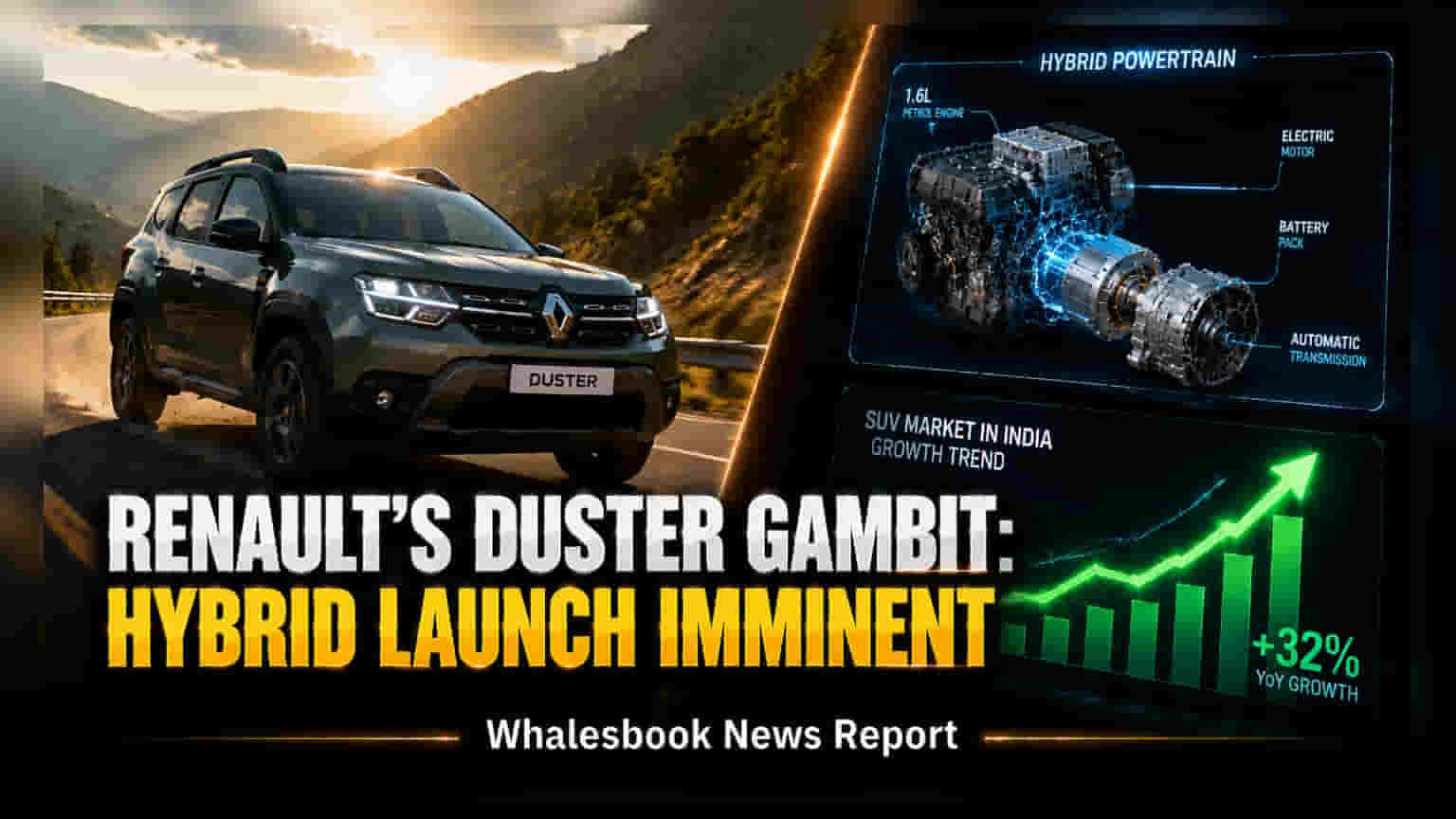
Renault India is set to launch a new hybrid Duster around Diwali, marking the first of seven planned multi-energy vehicles by 2030. The automaker aims to regain market share by expanding its footprint to 700 touch points and leveraging its increased control over its Chennai manufacturing operations.
Renault India is preparing for a major strategic push to strengthen its presence in the competitive Indian passenger vehicle market. The company has announced a roadmap to introduce seven multi-energy models—including hybrid and electric vehicles—by 2030. A central part of this strategy involves bringing back the Duster SUV brand, which previously held significant recognition among Indian consumers.
Hybrid Technology and Manufacturing Focus
The upcoming hybrid version of the Duster, expected around the Diwali festival period, serves as a crucial test for the company's new technological focus. To support this, Renault has upgraded its Chennai manufacturing facility to handle the complexities of hybrid powertrains. Since acquiring full ownership of this plant from its partner Nissan in August 2025, Renault has gained more flexibility in managing its local production and long-term capital spending. This shift in ownership is viewed as an effort to streamline operations and better align production with local demand.
Expanding Retail Reach and Brand Visibility
Renault acknowledges that it has seen a dip in visibility and market presence in recent years. To address this, the company is targeting an aggressive expansion of its service and retail network, aiming to exceed 700 touch points across India by the end of 2026. This move is designed to support the launch of its future product lineup and improve customer service standards, with showrooms being updated to meet global specifications.
Strategic Challenges in the Indian Auto Market
The Indian SUV segment is currently dominated by entrenched players like Mahindra & Mahindra, Tata Motors, and Maruti Suzuki, all of whom have aggressively scaled their SUV portfolios. Renault’s reliance on the Duster brand is a strategic attempt to reclaim space in this crowded segment. However, the company faces stiff competition, and its success will largely depend on its ability to price these new models competitively while maintaining high local content to manage costs.
Furthermore, the automotive sector in India is experiencing a significant shift toward cleaner energy, with government policies favoring hybrid and electric vehicles. While the move toward hybrid technology positions Renault to benefit from these trends, the company must also manage the risks associated with high initial capital spending and the need to maintain strong brand differentiation against rivals who have already established a massive lead in the mid-size SUV market.
Investors will be tracking the company’s ability to execute this product rollout without significant delays, as well as the initial market response to the Duster hybrid, which will provide clues about the brand's current pull in the Indian market.