 Whalesbook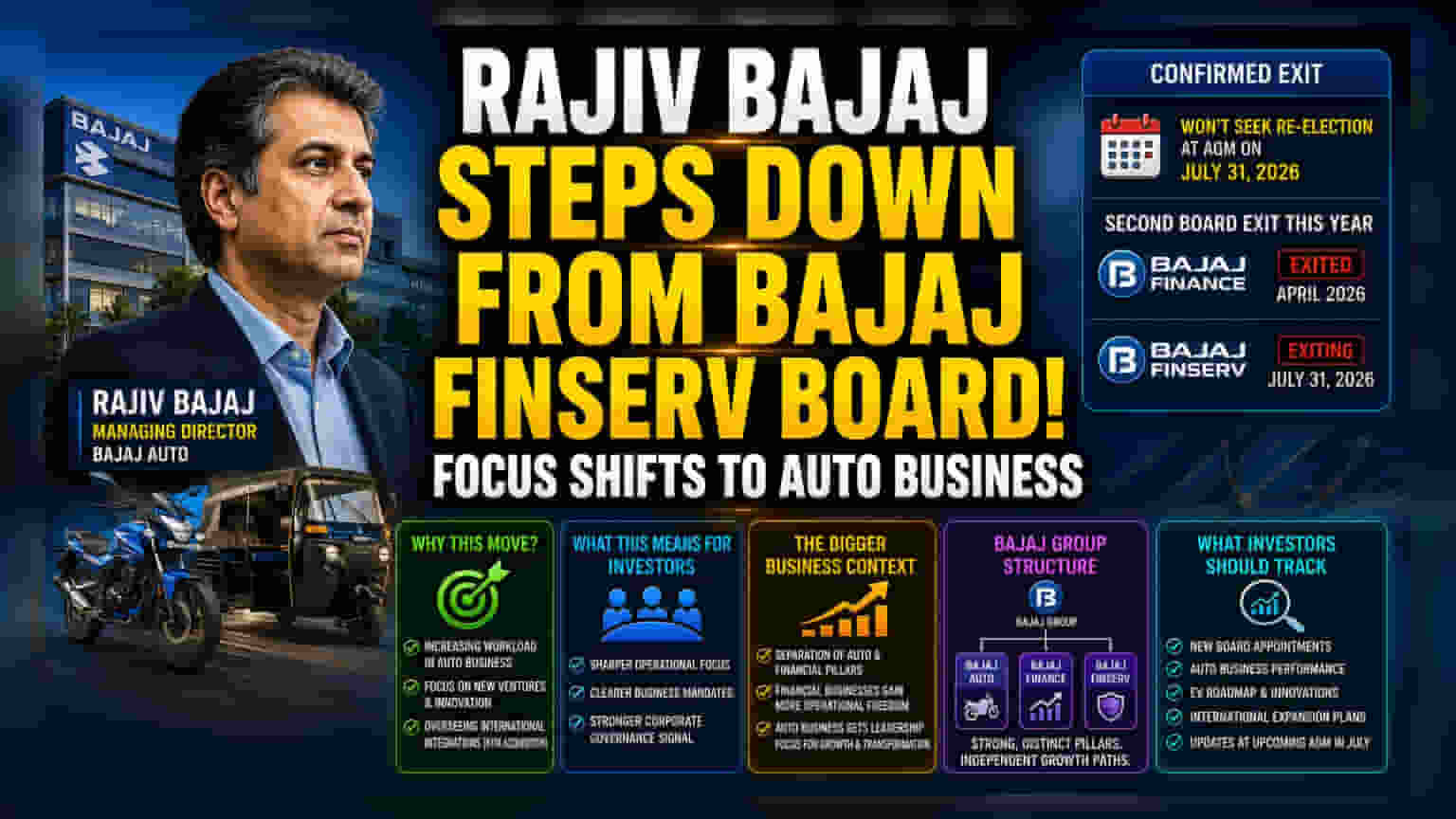


What Happened
Rajiv Bajaj has confirmed he will step down from his position as a non-executive director at Bajaj Finserv. He will not seek re-election for the board when his current term ends at the company’s annual general meeting scheduled for July 31, 2026. This is the second such board-level departure for the leader of the group's auto arm this year, following his exit from the board of Bajaj Finance in April 2026.
A Shift in Leadership Focus
The move appears to be a strategic decision by the management to separate leadership focus across the group's distinct business pillars. Rajiv Bajaj, who serves as the managing director of Bajaj Auto, has cited an increasing workload within the auto business as the primary driver for this change. His stated priorities include the development of new business ventures and overseeing international integrations, such as the KTM acquisition. By stepping away from the financial services boards, he is effectively narrowing his operational attention to the group's core manufacturing and two-wheeler business.
What This Means for Investors
For investors, such changes in board composition at large conglomerates are often interpreted as a move toward sharper, more distinct operational mandates. The Bajaj group has historically maintained a clear separation between its financial services arms—Bajaj Finance and Bajaj Finserv—and its manufacturing entity, Bajaj Auto. Rajiv Bajaj’s exit from the financial boards does not represent a withdrawal from the broader group. Instead, it signifies a transition where top leadership focuses more intensely on the specific needs of the automotive sector, which is currently undergoing significant transformation with the shift toward electric vehicles and new global partnerships.
The Bigger Business Context
When a key promoter or leader reduces board presence across a group's various entities, it is often viewed by the market as a step toward clearer corporate governance and operational specialization. While he will no longer be on the boards of the financial services companies, his role as the managing director of Bajaj Auto remains unchanged. Investors often watch these transitions for signals regarding long-term succession planning and the autonomy of individual business units. The separation of these roles allows the professional boards and management teams of the financial companies to operate with more independence, while the leader concentrates on the competitive challenges in the auto manufacturing landscape.
What Investors Should Track
Investors may keep an eye on how the Bajaj group manages the transition of leadership roles in the coming quarters. The primary focus for shareholders will remain on the operational performance of both the financial services and auto entities. Key monitorables include any upcoming announcements regarding new board appointments that might fill these vacancies and any strategic updates from the management regarding the expansion plans at Bajaj Auto, particularly concerning its EV roadmap and international business footprint. The company's upcoming annual general meeting in July may provide more clarity on the future board structure and the broader long-term strategy for the group.