 Whalesbook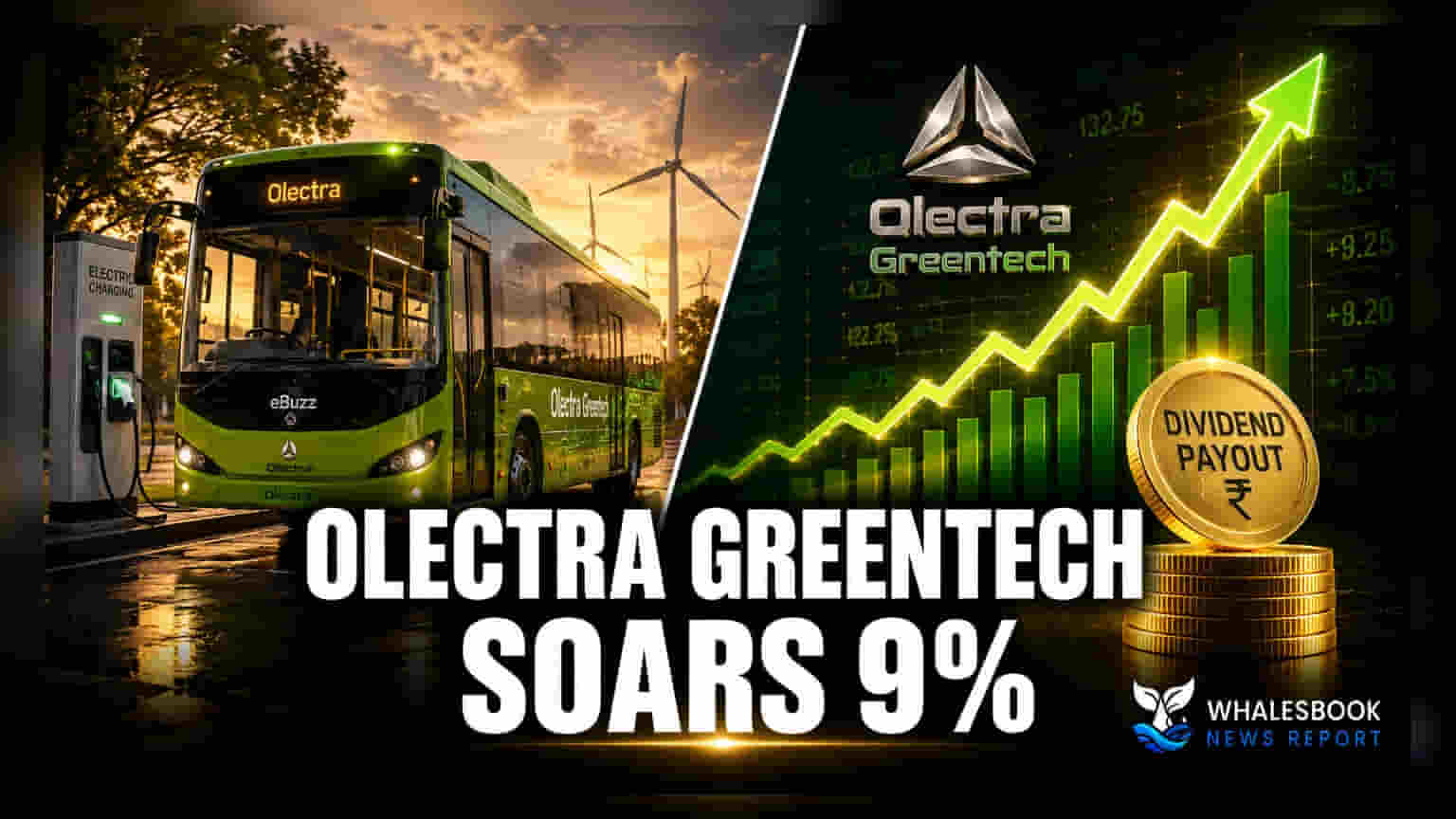


The Valuation Gap
Olectra Greentech shares climbed over 9% on Monday following the release of its March 2026 quarterly results. While the headline figures—a consolidated net profit jump to ₹56 crore and revenue growth of nearly 44%—captivated market participants, the underlying financial structure warrants scrutiny. The stock is currently trading at a price-to-earnings (P/E) ratio near 57x, a premium valuation in the Indian commercial vehicle sector where industry peers often trade at significantly lower multiples. This rally comes after a period of sustained volatility, with the stock recently struggling below several key moving averages, suggesting the current enthusiasm is heavily tied to this singular earnings event rather than a fundamental shift in its trading trend.
The Analytical Deep Dive
When benchmarked against the broader Indian electric bus market, Olectra faces a complex environment. Although it remains a leading manufacturer alongside players like PMI Electro Mobility and the resurgent Switch Mobility, the sector is increasingly crowded. Government-backed initiatives, such as the National Electric Bus Programme, have accelerated demand, yet the company’s reliance on imported components, particularly from its strategic partner BYD, introduces supply chain and geopolitical sensitivity. Furthermore, historical data reveals that while Olectra has achieved impressive top-line expansion, its earnings have often been mismatched with free cash flow, a divergence that traditionally signals 'paper profits' over actual cash generation. Unlike competitors that may possess more diversified revenue streams or higher levels of localized manufacturing, Olectra’s dependence on state transport unit orders leaves it vulnerable to shifts in government procurement cycles.
The Forensic Bear Case
Institutional participation in the stock has shown signs of waning over recent periods, a trend that warrants investor caution. A critical structural weakness lies in the company’s cash conversion ability; the firm has periodically reported high accrual ratios, indicating that statutory profits are not consistently backed by hard cash flow. Additionally, the company has grappled with margin pressure throughout the fiscal year. Despite the headline revenue growth, earlier quarterly results for FY26 showed EBITDA margin compression, driven by high input costs and an unfavorable product mix. Management’s ability to scale production at its new Telangana facility will be the ultimate test of whether it can convert this revenue momentum into durable shareholder value, or if it will continue to face the margin headwinds that plagued previous quarters.
The Future Outlook
Analysts have recently adjusted their expectations, with some price targets reflecting a more guarded outlook despite the growth potential of the Indian EV transition. The company’s forecast for continued revenue growth remains aggressive, yet it is set against a backdrop of intensifying competition that could erode pricing power. Shareholders will look to the upcoming Annual General Meeting for clarity on the operational roadmap and whether the recommended 15% dividend payout can be maintained alongside the massive capital expenditure required to secure its market leadership position.