 Whalesbook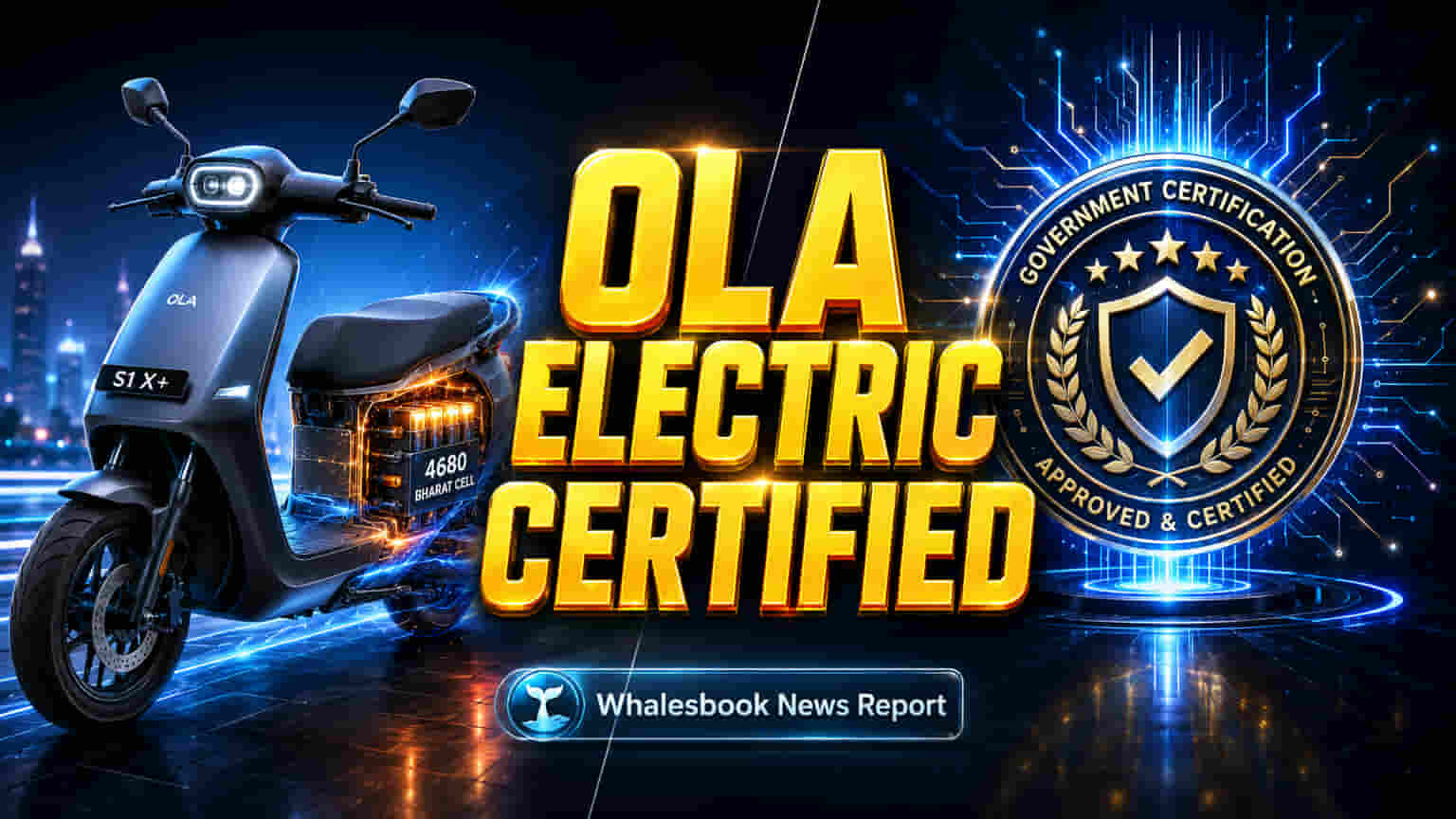


Ola's S1 X+ Achieves Key Certification
Ola Electric has reached a significant milestone with the International Centre for Automotive Technology (ICAT) certifying its mass-market S1 X+ electric scooter (5.2kWh model). This approval clears the way for wider sales. The scooter is equipped with Ola's own 4680 Bharat Cell battery technology. This new battery aims to provide higher energy density and better thermal performance. The S1 X+ is now set to offer the longest range in Ola's mass-market lineup, with a claimed 320 km IDC. It also reaches a top speed of 125 km/h, powered by an 11 kW mid-drive motor. Ola states this battery tech supports over 1,000 charge cycles and quicker charging, marking a key advantage as the company builds its own battery and vehicle production. Ola is expanding its battery manufacturing, including plans for a gigafactory, to boost local production.
Facing Strong Competition
Priced at an introductory Rs 1.29 lakh (ex-showroom) until April 15, 2026, the S1 X+ directly challenges rivals in the mid-price electric scooter market. Competitors include the TVS iQube (Rs 94,434 - Rs 1.71 lakh, up to 212 km range), Ather Energy's 450S (Rs 84,341 - Rs 1.58 lakh, up to 161 km range), and Hero Electric's Optima CX (Rs 83,300 - Rs 1.04 lakh). Although Ola Electric's 320 km claimed range offers a clear edge, the Indian electric two-wheeler market is recovering after a 2025 slowdown, boosted by incentives and higher fuel costs. The market is seeing consolidation, with TVS Motor, Bajaj Auto, and Ather Energy leading, supported by extensive sales and service networks.
Mounting Financial Pressures
Beneath the tech advancements, Ola Electric is struggling with serious financial issues. Ola Consumer, the parent company, saw operating revenue drop 42% to Rs 1,171 crore in FY25, and net losses nearly doubled to Rs 662 crore. Ola Electric's own consolidated revenue fell to Rs 4,514 crore in FY25 from Rs 5,010 crore in FY24, with its net loss growing to Rs 2,276 crore from Rs 1,584 crore. Ola's share of the electric two-wheeler market has shrunk considerably, down to 18% in May 2026 from 48% a year earlier, despite its tech investments and a $5 billion valuation in March 2025. Parent ANI Technologies has also faced criticism for late financial reports and governance issues, sparking concerns about its operations and transparency. The use of introductory pricing for new models points to pressure to boost sales in a crowded market.
Looking Ahead
Ola Electric plans to keep building its integrated manufacturing, focusing heavily on in-house battery cell output. Reports suggest the company is preparing for an IPO and seeking more funding for growth. The success of models like the S1 X+ will be key to proving its technology-first mass-market approach. However, the company must find a way to become profitable by tackling tough competition, improving its cost efficiency, and rebuilding trust regarding its financial stability. How Ola Electric turns its technical strengths into lasting market gains and financial recovery will be a major focus for investors and customers.