 Whalesbook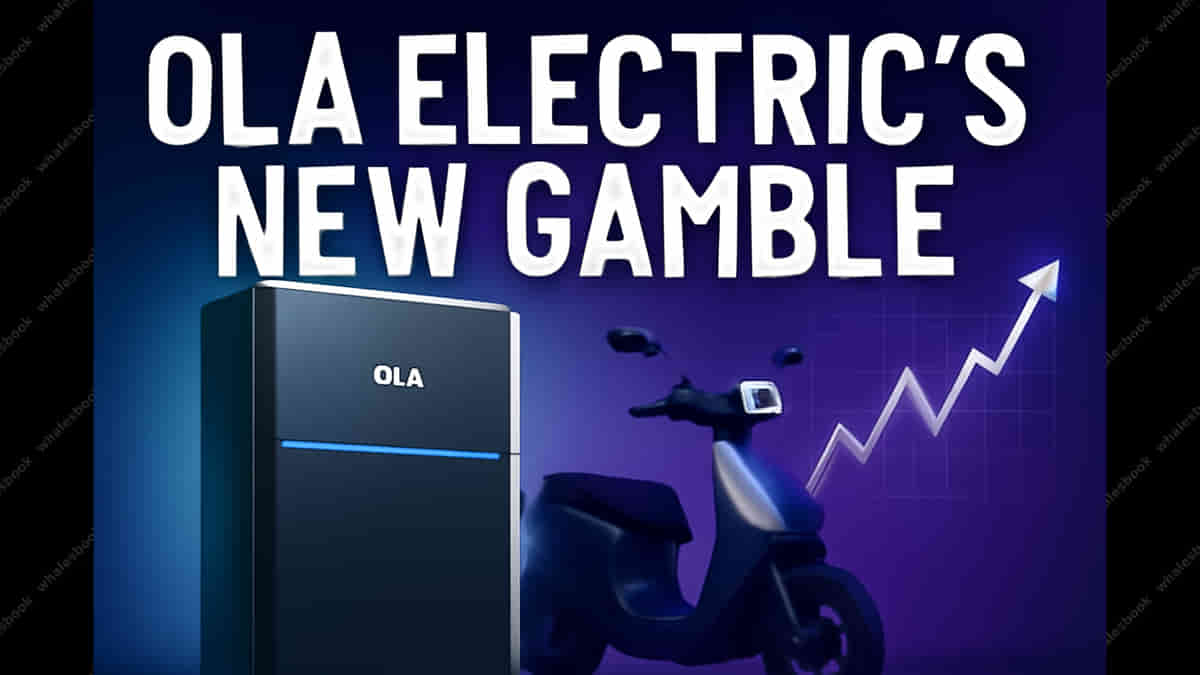


Ola Electric Mobility Ltd. is facing significant financial challenges, including a declining market share and difficulty securing new funding. The company is now pinning its hopes on a new venture into home battery storage to revitalize its business.
Financial Struggles
- Ola Electric, once a leader in the electric scooter market, is now grappling with shrinking market share, which fell to 11.5% in October from a high of 30% last year.
- The company has reported a substantial decline in its latest quarterly results, with revenue dropping by 43% and sales falling by 47%. This has led to a downward revision of full-year sales estimates.
- Persistent cash burn and operating losses are highlighted as primary reasons for negative cash flow from operations in the first half of the fiscal year.
- Ola Electric has been turned down by multiple financiers for its new 15-billion-rupee equity fundraising plan and a 17-billion-rupee debt-raise plan, indicating investor skepticism about the company's financial health.
- Net cash reserves have significantly decreased, dropping to 1.6 billion rupees by the end of September from 4.8 billion rupees earlier in the year.
New Battery Venture: Ola Shakti
- In an effort to pivot and find new revenue streams, Ola Electric is launching a new product line called Ola Shakti, focusing on home battery storage systems for homeowners and small businesses.
- The company aims to generate INR 1 billion in revenue from this venture in the March quarter of next year and projects revenue of INR 10 billion by fiscal year 2027.
- This move is similar to strategies employed by companies like Tesla Inc. in diversifying into backup power solutions.
- The battery packs are based on Ola's proprietary 4680 Bharat battery cells and are priced between INR 120,000 and INR 125,000.
Market Challenges and Analyst Opinions
- Analysts from Kotak Securities Ltd. have expressed concern, warning that the company's current trajectory could escalate into a "full-blown crisis" if core issues are not addressed. They have issued a 'sell' rating on the stock.
- Kotak Securities estimates significant debt obligations for Ola Electric in the coming years and highlights pricing pressure expected in the battery cell market.
- Challenges exist in penetrating the home inverter market, which is dominated by established players with lead-acid based systems selling at lower prices. Ola's lithium-ion packs face competition requiring strong brand presence and distribution, which is currently limited.
- Experts suggest that partnerships with real estate players and influencers like architects are crucial for new entrants in the home inverter market, as these are not impulse purchases and require technical understanding.
- Rivals such as Bajaj Auto Ltd., TVS Motor Co., and Hero MotoCorp Ltd., along with startup Ather Energy Ltd., are gaining market share, increasing the competitive pressure on Ola Electric.
Stock Price Movement
- Ola Electric has experienced a significant plunge in its share price, dropping by nearly 53% this year, erasing recent gains made in August and September.
- A portion of founder Bhavish Aggarwal's stake is encumbered, creating a risk of margin calls if share prices fall further.
Impact
- This news indicates significant financial strain for Ola Electric, potentially impacting its ability to fund future growth and operations.
- The success of its new battery storage venture is critical for its turnaround, but faces substantial market challenges and requires strong distribution networks.
- The situation could affect investor sentiment towards Indian EV startups and renewable energy companies.
- Impact Rating: 8/10
Difficult Terms Explained
- Market Share: The portion of a total market that a company controls. For Ola Electric, it refers to the percentage of all electric scooters sold in India that are Ola models.
- Cash Burn: The rate at which a company spends its available cash reserves, especially when it is not generating sufficient revenue to cover its expenses.
- Fundraising: The process of obtaining capital from investors or lenders to finance a company's operations or growth. This can be through equity (selling shares) or debt (borrowing money).
- Debt-Raise Plan: A plan by a company to borrow money, which needs to be repaid with interest over time.
- Proprietary: Belonging exclusively to one person or company; a unique technology or product developed internally.
- Revenue: The total amount of income generated by the sale of goods or services related to the company's primary operations.
- E-scooter Segment: The specific category of electric scooters within the broader automotive market.
- Gross Margins: The difference between revenue and the cost of goods sold, indicating profitability before operating expenses.
- Encumbered Stake: Shares owned by an individual that have been pledged as collateral for a loan, meaning they can be seized by the lender if the loan is not repaid.
- Margin Call Risk: A situation where a lender demands that an investor deposit additional money or securities to cover a potential loss on a leveraged position.