

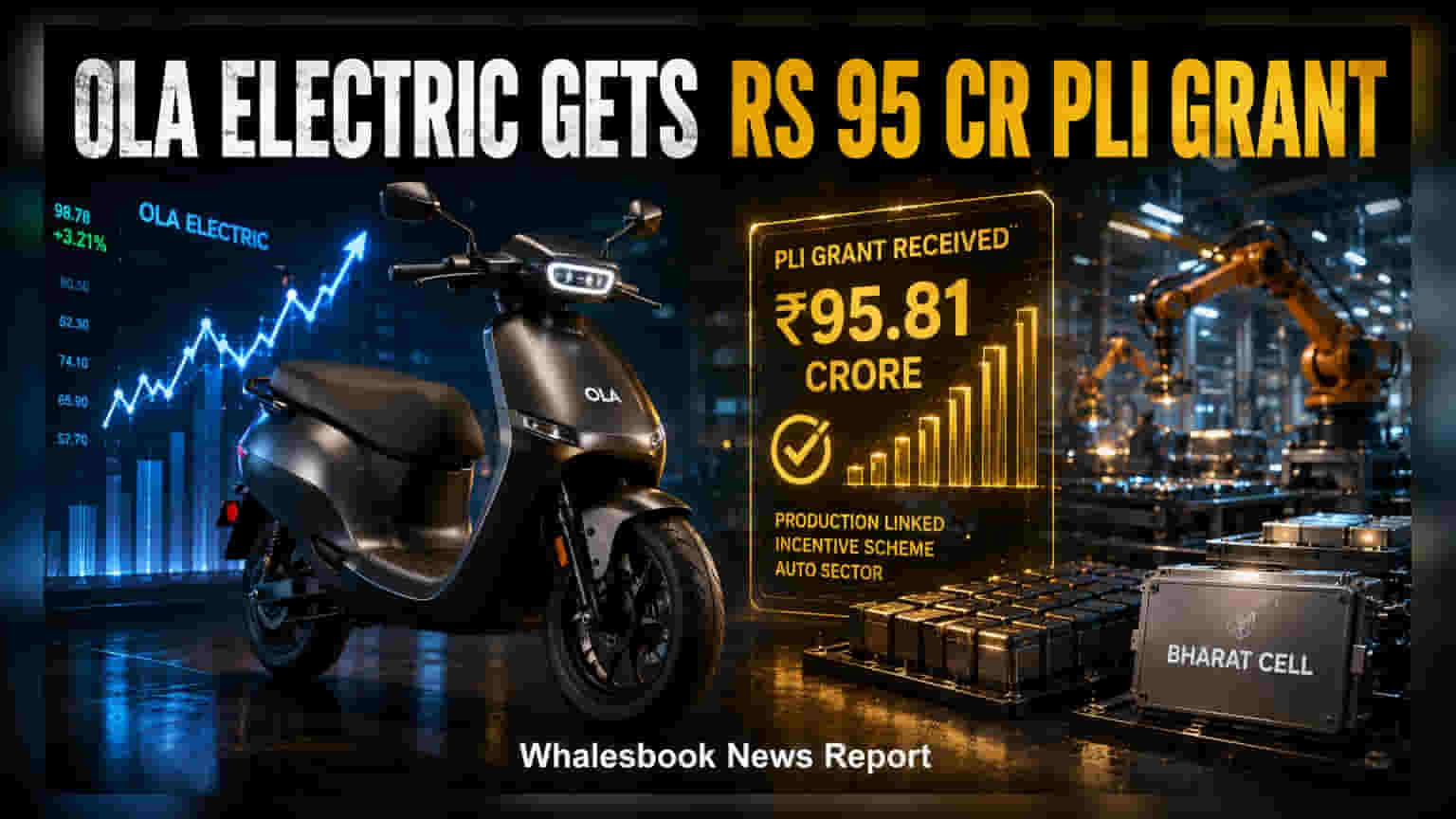
Ola Electric has received approval for Rs 95.81 crore in incentives under the government’s automotive PLI scheme. This funding, combined with a recently extended battery manufacturing incentive timeline and a new scooter launch, helped push company shares up by over 3% today. Investors are now tracking how the company manages intense competition and works toward profitability.
Ola Electric shares traded over 3% higher on August 28, 2026, following the company’s announcement that it has secured Rs 95.81 crore in incentives under the government’s Production Linked Incentive (PLI) scheme for the auto sector. The funds, which will be released through the Central Nodal Agency, IFCI Ltd, mark the second consecutive year the company has qualified for these payouts. This receipt is considered a validation of the company's efforts to increase the local content in its electric vehicle components.
This disbursement comes alongside a broader strategy to secure government support for long-term manufacturing. Earlier in August 2026, the government revised the timelines for the Advanced Chemistry Cell (ACC) PLI scheme. This change allows Ola Electric to potentially access up to Rs 7,240 crore in incentives through 2031, provided the company meets specific production and localization targets. The firm is focusing heavily on vertical integration, utilizing its in-house Bharat Cell technology to manage costs and improve the performance of its vehicles. This battery technology is also a central feature of the company’s newly launched S1Z electric scooter range, which debuted on the same day.
While these incentives provide a financial boost, investors should remain aware of the significant challenges facing the electric two-wheeler market. Ola Electric operates in a highly competitive space where established rivals and new entrants are aggressively expanding their manufacturing capacity and offering price discounts. The company has historically faced pressure on market share and has reported net losses. Financial analysts frequently note that achieving consistent long-term profitability will depend on the company’s ability to reduce cash burn, improve operational efficiency, and successfully navigate intense price wars.
The next important steps for investors to monitor will be the execution of the battery cell production roadmap and the market acceptance of the new S1Z scooter range. Continued demand for its products and the actual realization of the planned government incentives will remain key indicators of the company’s financial health in the coming quarters.