

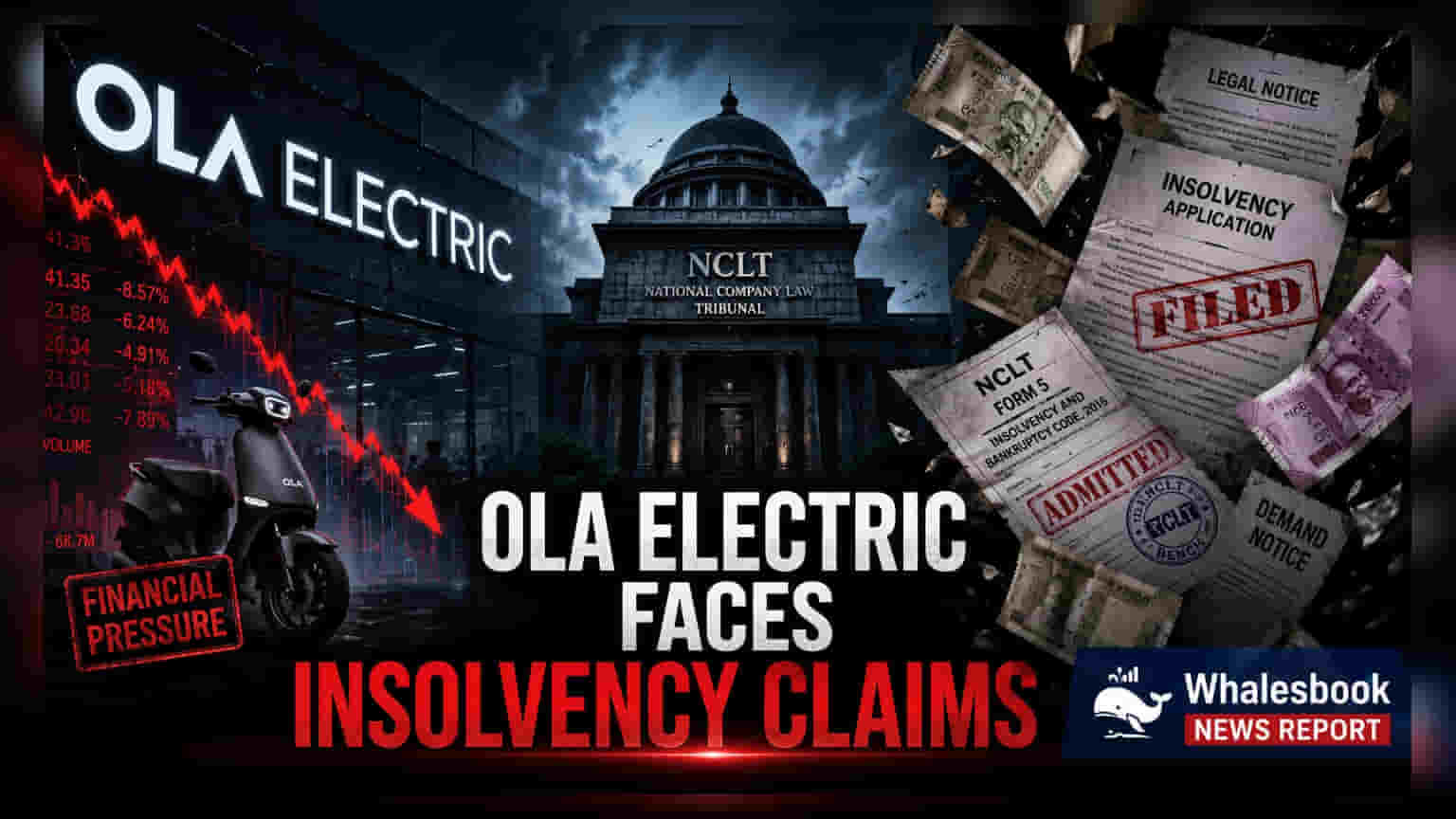
Two suppliers have filed insolvency petitions against an Ola Electric subsidiary over alleged ₹40 crore payment defaults. The company is contesting these claims, citing a prior legal suit regarding quality standards. This development comes as the company works to improve its operational performance and narrow net losses.
Electric two-wheeler manufacturer Ola Electric is currently navigating fresh legal challenges at the National Company Law Tribunal (NCLT). Two component suppliers, Sterling E-Mobility Solutions Ltd. and Anevolve Mando eMobility Pvt. Ltd., have initiated insolvency proceedings against Ola Electric Technologies Pvt. Ltd., a wholly owned subsidiary of the company. The suppliers allege that the electric vehicle maker has defaulted on payments totaling approximately ₹40 crore.
Origins of the Commercial Dispute
The dispute appears rooted in disagreements over product quality. According to company sources, Ola Electric launched legal action against these vendors prior to the NCLT filings, claiming that the components provided did not meet the agreed-upon standards. From the company's perspective, the insolvency petitions are a reactive step by the suppliers to secure payments despite the ongoing quality concerns. This highlights the inherent risks in the electric vehicle supply chain, where manufacturing precision is critical and disagreements over technical specifications can quickly escalate into formal legal disputes.
Historical Precedent and Financial Context
This is not the first time the company has dealt with vendor-related legal filings. In March 2025, Rosmerta Digital Services Ltd. similarly filed an insolvency petition against the company regarding alleged payment defaults. That case was eventually resolved through an amicable settlement, which led to the withdrawal of the petition. Investors and stakeholders often track these matters to assess the company’s relationship with its supply chain partners and its ability to resolve commercial conflicts without prolonged litigation.
These legal pressures arise during a phase of transition for the company. In its recent financial reporting, Ola Electric demonstrated a 42% reduction in its consolidated net loss, which stood at ₹500 crore for the quarter ended March 2026, compared to ₹870 crore in the same quarter the previous year. This improvement was part of a strategic shift often described by the company as a year of reset, which involved prioritizing operational efficiency over rapid volume expansion.
Operational Performance Trends
Beyond financial results, operational metrics show a recovery in market activity. Based on VAHAN registration data, the company recorded 43,719 vehicle registrations in the April-June quarter of FY27, marking a significant increase from the 22,252 units registered in the preceding quarter. The primary monitorable for investors going forward will be the status of these NCLT proceedings and whether the company can resolve these supplier disputes as it did with past cases, while maintaining its momentum in vehicle registrations and narrowing its net losses.