 Whalesbook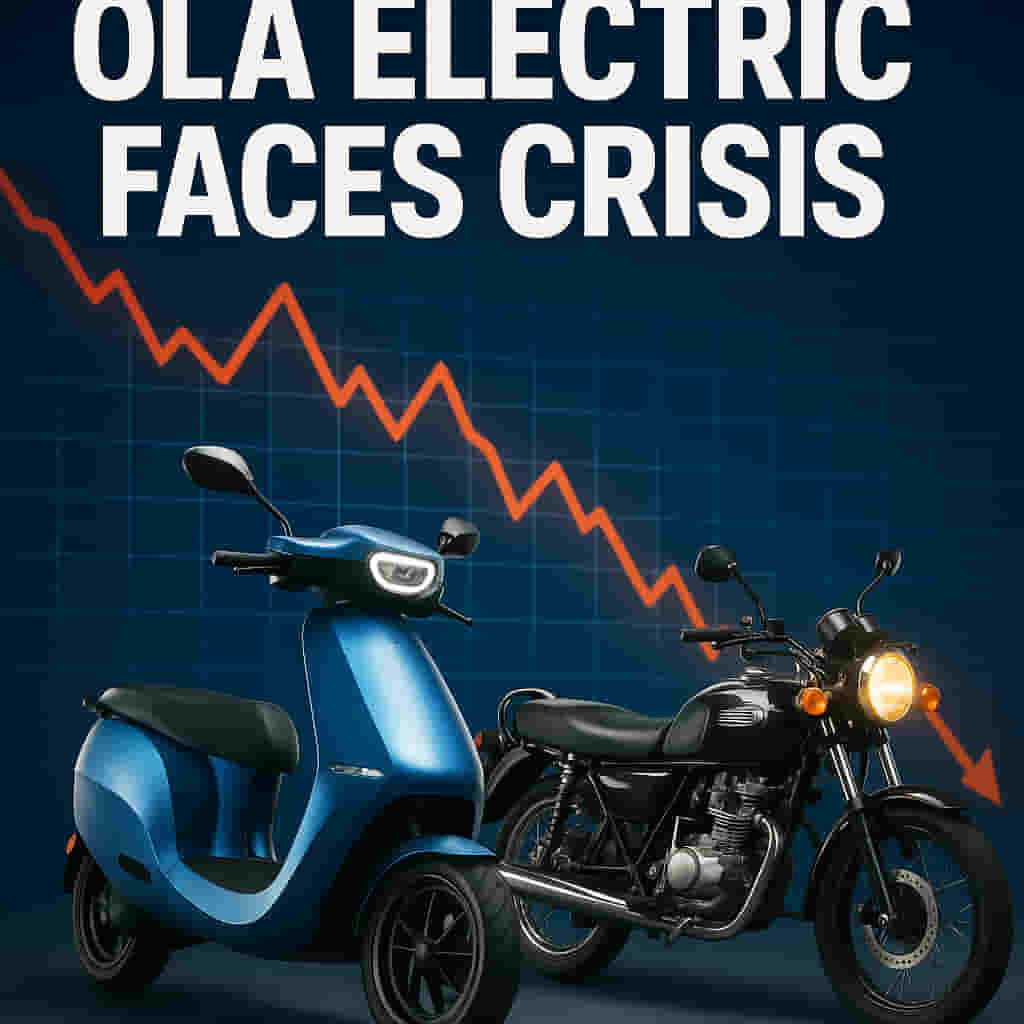


Ola Electric Mobility Ltd is facing significant headwinds as its November retail sales hit a multi-month low. This downturn is largely attributed to the recent Goods and Services Tax (GST) rate cut on traditional internal combustion engine (ICE) two-wheelers, which has intensified competition and eroded Ola's pricing advantage.
The government's decision to reduce the GST on ICE two-wheelers from 28% to 18%, effective September 22, has had a direct impact on the market. Manufacturers like Hero MotoCorp Ltd, Bajaj Auto Ltd, and TVS Motor Co. Ltd have responded by slashing prices by at least ₹5,000 per vehicle. This move effectively cancels out the maximum ₹5,000 benefit previously available to buyers of electric vehicles under the PM E-Drive scheme. Consequently, the price gap between Ola's electric two-wheelers and their petrol-powered rivals is projected to widen by at least ₹10,000. This is a substantial figure, representing approximately 25% of Ola's gross margin per vehicle of ₹40,000 achieved in the September quarter (Q2FY26).
Background Details
- The Goods and Services Tax (GST) rate on internal combustion engine (ICE) two-wheelers was reduced from 28% to 18% effective September 22.
- This policy change has directly enabled traditional manufacturers to lower their retail prices significantly.
Key Numbers or Data
- Ola Electric's November retail sales stood at 8,046 vehicles, the lowest figure recorded since February.
- Competitors like Hero MotoCorp, Bajaj Auto, and TVS Motor have reduced prices by at least ₹5,000 per vehicle.
- The price gap between Ola's electric vehicles and ICE rivals is expected to widen by at least ₹10,000 per vehicle.
- This ₹10,000 price difference represents about 25% of Ola's gross margin of ₹40,000 per vehicle in Q2FY26.
- Ola's share price was around ₹41, near its all-time lows hit in July, and has halved in value during 2025.
- While Q1FY26 sales volumes rose 33% QoQ to 68,192 units, Q2FY26 volumes fell to 52,666 units.
- October and November sales data from Vahan show 16,048 and 8,046 units, respectively, indicating a sequential decline in Q3FY26 volumes.
- The management has stated that the auto business breakeven volume is around 20,000 units per month.
- Motorcycle sales constituted about 12-15% of Q2FY26 total volumes, equating to approximately 6,000 units.
- Deducting motorcycle sales from Q2FY26 totals reveals an even steeper QoQ decline in scooter volumes.
- Ola's upcoming Ola Shakti battery energy storage system (BESS) is projected to generate potential revenue of ₹1,000 crore in FY27.
- Bloomberg consensus estimates Ola's total revenue at ₹4,700 crore for FY27.
- The stock currently trades at 3.8 times FY27 estimated sales.
- The IPO issue price was ₹76 per share.
Market Reaction
- Ola's stock price has fallen significantly in 2025, halving its value and trading close to its all-time lows.
- Investor sentiment appears cautious given the recent sales dip and competitive pressures.
Company Financials
- Ola reported a gross margin of approximately ₹40,000 per vehicle in Q2FY26.
- The company anticipates potential revenue of ₹1,000 crore from its BESS initiative in FY27.
- Bloomberg consensus forecasts total revenue of ₹4,700 crore for FY27.
Future Expectations
- Ola Electric is pinning hopes on its Ola Shakti lithium-ion-based battery energy storage system (BESS) for residential and commercial use.
- The company aims to capture a significant share in the growing BESS market, especially with the rise of rooftop solar projects.
Risks or Concerns
- The widening price gap with ICE competitors poses a significant challenge to Ola's sales volume.
- Declining sequential sales volumes in Q3FY26 could fall below the breakeven point.
- The BESS initiative faces intense competition from established players like Exide Industries Ltd and Amara Raja Energy & Mobility Ltd, who are also investing in lithium-ion technology.
- The IPO valuation of ₹76 appears overpriced in hindsight, given current market performance and competitive landscape.
Importance of the Event
- This news highlights critical challenges for Ola Electric in maintaining its market position and sales momentum in the highly competitive Indian two-wheeler market.
- It underscores the sensitivity of the EV market to policy changes and price parity with traditional vehicles.
Impact
- The declining sales and stock performance of Ola Electric could negatively affect investor confidence in the Indian EV sector.
- Increased price competition may force other EV manufacturers to re-evaluate their pricing and subsidy strategies.
- The success of Ola's BESS venture will be crucial for its diversified revenue streams, but it faces formidable challenges.
- Impact Rating: 7/10
Difficult Terms Explained
- ICE two-wheelers: Internal Combustion Engine two-wheelers, referring to conventional petrol or diesel-powered motorcycles and scooters.
- GST: Goods and Services Tax, a unified tax system in India applicable to the supply of goods and services.
- PM E-Drive scheme: A government initiative aimed at promoting electric mobility by providing subsidies to electric vehicle buyers.
- Gross Margin: The profit a company makes after deducting the costs associated with making and selling its products.
- Q2FY26 / Q1FY26: The second and first financial quarters of the fiscal year 2025-2026, respectively. The Indian fiscal year runs from April 1 to March 31.
- QoQ: Quarter-on-Quarter, a comparison of financial performance between consecutive fiscal quarters.
- Breakeven volume: The minimum sales volume required for a company to cover all its costs, resulting in neither profit nor loss.
- Battery Energy Storage System (BESS): A technology designed to store electrical energy, often used for grid stabilization or as backup power.
- Lithium-ion battery: A type of rechargeable battery commonly used in electric vehicles and portable electronics.
- Lead acid batteries: A type of rechargeable battery that uses lead and sulfuric acid, typically found in older inverters and car batteries.
- Bloomberg consensus: An average forecast of financial performance compiled from estimates provided by financial analysts surveyed by Bloomberg.
- IPO: Initial Public Offering, the process by which a private company first sells shares of stock to the public.