

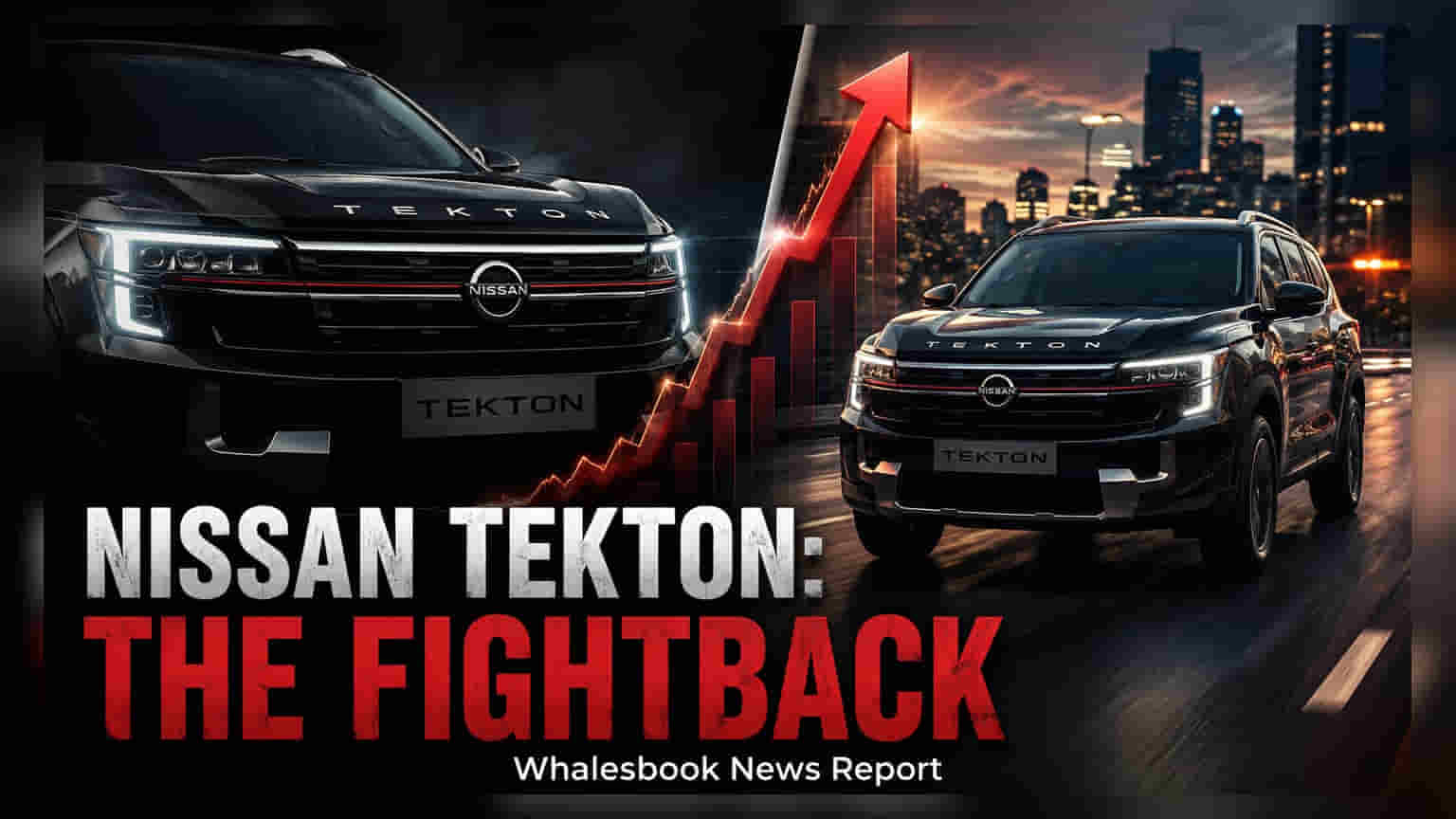
Nissan has launched the Tekton SUV in India, priced between ₹10.49 lakh and ₹18.59 lakh. The model recorded 1,670 unit sales in its first month, becoming the brand's top-selling vehicle. The SUV competes in the mid-size segment against rivals like the Hyundai Creta and Kia Seltos, utilizing a shared platform strategy to drive volume.
Nissan has entered the mid-size SUV segment with its new Tekton model, which recorded 1,670 wholesale units in its debut month of July 2026. This performance makes it the company's best-selling vehicle in India, signaling a critical attempt to boost its market presence beyond the entry-level Magnite.
The Tekton is a result of the Renault-Nissan alliance, sharing its platform, engine options, and core mechanical components with the Renault Duster. This collaboration is a strategic move to manage costs and reduce the time needed to bring the product to market. By using a shared platform, the company aims to optimize production spending while entering a segment where it has been absent for years.
The vehicle is offered with 1.0-litre and 1.3-litre turbo-petrol engine options, available with both manual and automatic gearboxes. A key feature is its 5-star safety rating from Bharat NCAP, which the company highlights to compete with popular models like the Hyundai Creta and Kia Seltos. With an ex-showroom price range of ₹10.49 lakh to ₹18.59 lakh, the Tekton is positioned as a competitive alternative to the established leaders in the segment.
However, the company faces distinct challenges in sustaining this momentum. A major risk for the Tekton is Nissan’s limited service and dealer network in India compared to larger market players. If the company cannot provide a reliable service experience, it may struggle to retain customers in the long term. Additionally, the SUV is restricted to petrol-only powertrains at launch. With many rivals offering diesel or hybrid options, this may limit the Tekton’s appeal to buyers seeking higher fuel efficiency or lower running costs.
There is also the challenge of brand cannibalization, as the Tekton shares significant parts with the Renault Duster. Potential buyers may compare the two, which could lead to internal competition between the alliance partners. Investors should monitor whether the Tekton can maintain its initial sales volume in the coming quarters and whether the company takes steps to expand its service reach to support a growing customer base.