

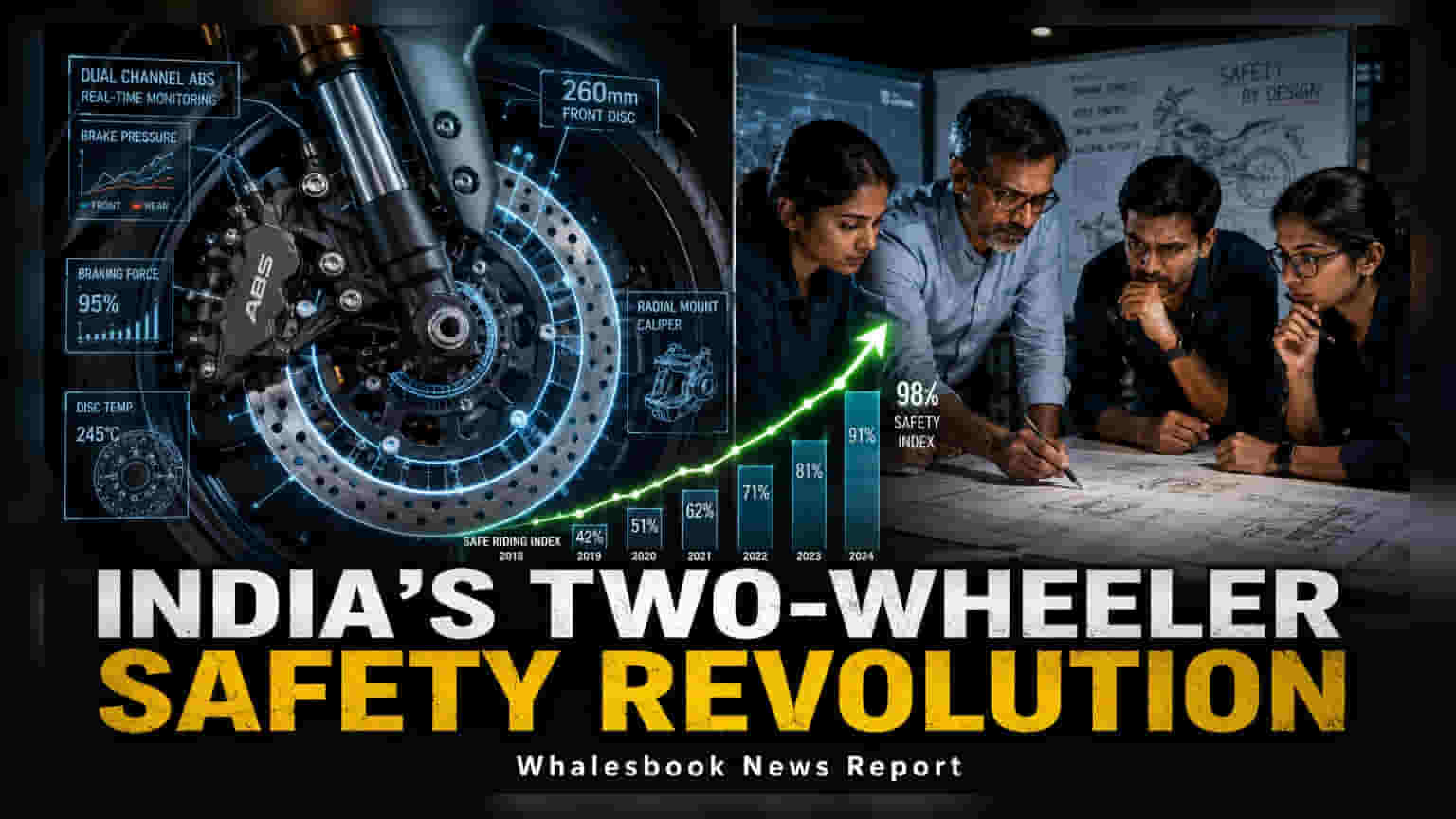
The Ministry of Road Transport and Highways is moving toward performance-based safety standards for two-wheelers instead of mandating specific technologies like ABS or CBS. This shift aims to lower compliance costs and encourage innovation while maintaining safety benchmarks for braking performance. The change is expected to help manufacturers design more efficient, cost-effective safety systems for entry-level motorcycles and scooters.
Detailed Coverage
The Ministry of Road Transport and Highways (MoRTH) is preparing to transition toward a performance-based regulatory framework for two-wheelers in India. This update represents a major shift from previous policies that forced manufacturers to adopt specific safety technologies like Anti-lock Braking Systems (ABS) or Combined Braking Systems (CBS) regardless of vehicle design.
Impact on Manufacturing and Engineering
Under the proposed regime, regulators will define clear safety outcomes, such as specific stopping distances and braking efficiency levels, rather than prescribing how a company must achieve them. This provides manufacturers with the engineering flexibility to select the most cost-effective or innovative technology that meets the required safety benchmarks. For companies producing entry-level motorcycles and scooters, this could lead to more optimized design processes and potentially more efficient manufacturing, as firms are no longer bound to a single technology provider or mandated hardware configuration.
Alignment with Global Safety Practices
The move aligns Indian vehicle safety standards more closely with global automotive practices, where performance-based testing is increasingly common. By focusing on measurable results like vehicle stability and controlled deceleration, the government intends to reduce road fatalities, particularly in the commuter motorcycle segment, which accounts for a large share of the Indian two-wheeler market. This approach is intended to strike a balance between enhancing public safety and reducing the compliance burden that manufacturers previously identified as a barrier to innovation and product pricing.
Future Monitoring for Investors
For investors and industry followers, the primary monitorable will be the release of the final draft notification for public consultation. While the industry has expressed support for this flexibility, the actual impact on production costs and profit margins will depend on the final benchmarks set by the ministry. If the performance targets are set too high, companies may still face significant engineering and cost pressures to meet them. Conversely, a pragmatic set of standards could assist manufacturers in balancing safety requirements with the price-sensitive nature of the Indian two-wheeler market. Shareholders should track the eventual implementation timeline and whether these changes lead to reduced capital spending on R&D as companies align their platforms with the new performance metrics.