 Whalesbook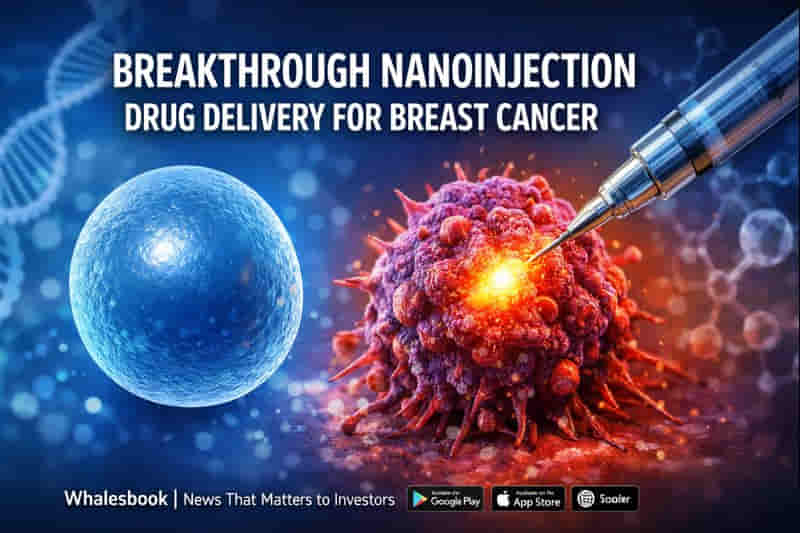
A New Era in Breast Cancer Therapy Emerges from India and Australia
A pioneering nanoinjection drug delivery platform, developed by an international collaboration involving researchers from the Indian Institute of Technology Madras (IIT Madras) and Australian universities, promises to revolutionize breast cancer treatment. This cutting-edge technology aims to make therapies significantly safer and more effective by precisely targeting cancer cells and minimizing harm to healthy tissues.
The Core Issue
Breast cancer remains a major global health challenge, particularly affecting women. Traditional treatments like chemotherapy and radiation, while often life-saving, come with severe drawbacks. These therapies can spread throughout the body, indiscriminately damaging non-cancerous cells and leading to debilitating side effects. This systemic exposure not only impacts patients' quality of life but also limits the dosage that can be administered, potentially affecting treatment efficacy.
The Nanoinjection Solution
To combat these limitations, the joint research team devised an integrated nanoinjection system. The approach combines nanoarchaeosomes (NAs) for drug encapsulation with silicon nanotubes (SiNTs) for intracellular delivery. Specifically, thermally stable NAs loaded with the potent anticancer drug doxorubicin are delivered directly into cancer cells via vertically aligned SiNTs etched onto a silicon wafer. This method ensures that the therapeutic agent reaches its target with unparalleled precision.
Enhanced Efficacy and Safety
Experimental validation of the Nanoarchaeosome-Doxorubicin–Silicon Nanotubes (NAD-SiNTs) platform demonstrated remarkable results. The system exhibited strong toxicity against MCF-7 breast cancer cells, a common type used in research. Crucially, it largely spared healthy fibroblast cells, highlighting its selective action. The NAD-SiNTs were observed to induce cell-cycle arrest and necrosis in cancer cells, effectively killing them. Furthermore, the platform significantly inhibited angiogenesis, the formation of new blood vessels that tumors rely on for growth, by downregulating key pro-angiogenic factors.
Remarkable Potency and Cost-Effectiveness
A key finding from the research is the drug's significantly enhanced potency. The NAD-SiNTs platform showed a 23 times lower inhibitory concentration (IC50) compared to free doxorubicin. This metric indicates that a much lower dose of the drug is required to achieve the same therapeutic effect. Such a substantial reduction in required dosage has profound implications. It directly translates to the potential for considerably lower treatment costs and a significant decrease in adverse side effects experienced by patients.
Future Outlook and Global Relevance
Dr. Swathi Sudhakar, Assistant Professor at IIT Madras and a lead researcher, emphasized the transformative potential of this technology, especially for low- and middle-income countries like India. "By enabling targeted delivery of smaller doses with higher efficacy, the system can potentially lower the overall expense of cancer treatment and improve patients’ quality of life," she stated. This innovation aligns with national ambitions for affordable healthcare solutions and could be adapted for other cancer types. The research team also includes Kaviya Vijayalakshmi Babunagappan, Subastri Ariraman, Jann Harberts, Vimalraj Selvaraj, Mukilarasai Bedatham, Narendran Sekar, Nicolas H Voelcker, and Roey Elnathan. Collaborators from Monash University, Deakin University, and the Melbourne Centre for Nanofabrication were integral to the project, supported by initiatives like the IIT Madras–Deakin Joint Research Initiative and funding from the Alexander von Humboldt Foundation and the Australian Research Council (ARC). The findings were published in Advanced Functional Materials.
Impact
This breakthrough has the potential to significantly improve breast cancer treatment outcomes by increasing drug efficacy while reducing patient suffering due to side effects. Its development in India, in collaboration with international partners, highlights the nation's growing prowess in advanced medical research and innovation. For the healthcare sector, it represents a pathway towards more targeted, cost-effective cancer therapies, particularly beneficial for populations with limited access to expensive treatments.
Impact Rating: 8/10
Difficult Terms Explained
- Nanoarchaeosomes (NAs): Tiny, artificial structures designed to encapsulate drugs, acting like microscopic delivery vehicles.
- Silicon Nanotubes (SiNTs): Microscopic tubes made of silicon used to deliver substances, like drugs, directly inside cells.
- Intracellular Delivery: The process of delivering a therapeutic agent directly into the interior of a cell.
- Doxorubicin: A powerful chemotherapy drug commonly used to treat various types of cancer.
- Cytotoxicity: The quality of being toxic to cells; in this context, the ability to kill cancer cells.
- MCF-7 breast cancer cells: A specific type of human breast cancer cell line widely used in laboratory research.
- Fibroblasts: A common type of cell found in connective tissue, which are generally healthy cells.
- Cell-cycle arrest: A process that stops cancer cells from dividing and multiplying.
- Necrosis: The death of body tissue, often a result of disease or injury; in this case, induced in cancer cells.
- Angiogenesis: The formation of new blood vessels, a process that tumors often exploit to grow and spread.
- IC50 (Inhibitory Concentration 50%): A measure of the potency of a substance. A lower IC50 value means less of the substance is needed to inhibit a biological process (like cell growth) by 50%.
- Low- and middle-income countries (LMICs): Countries with lower gross national income per capita, often facing challenges in healthcare access and affordability.