

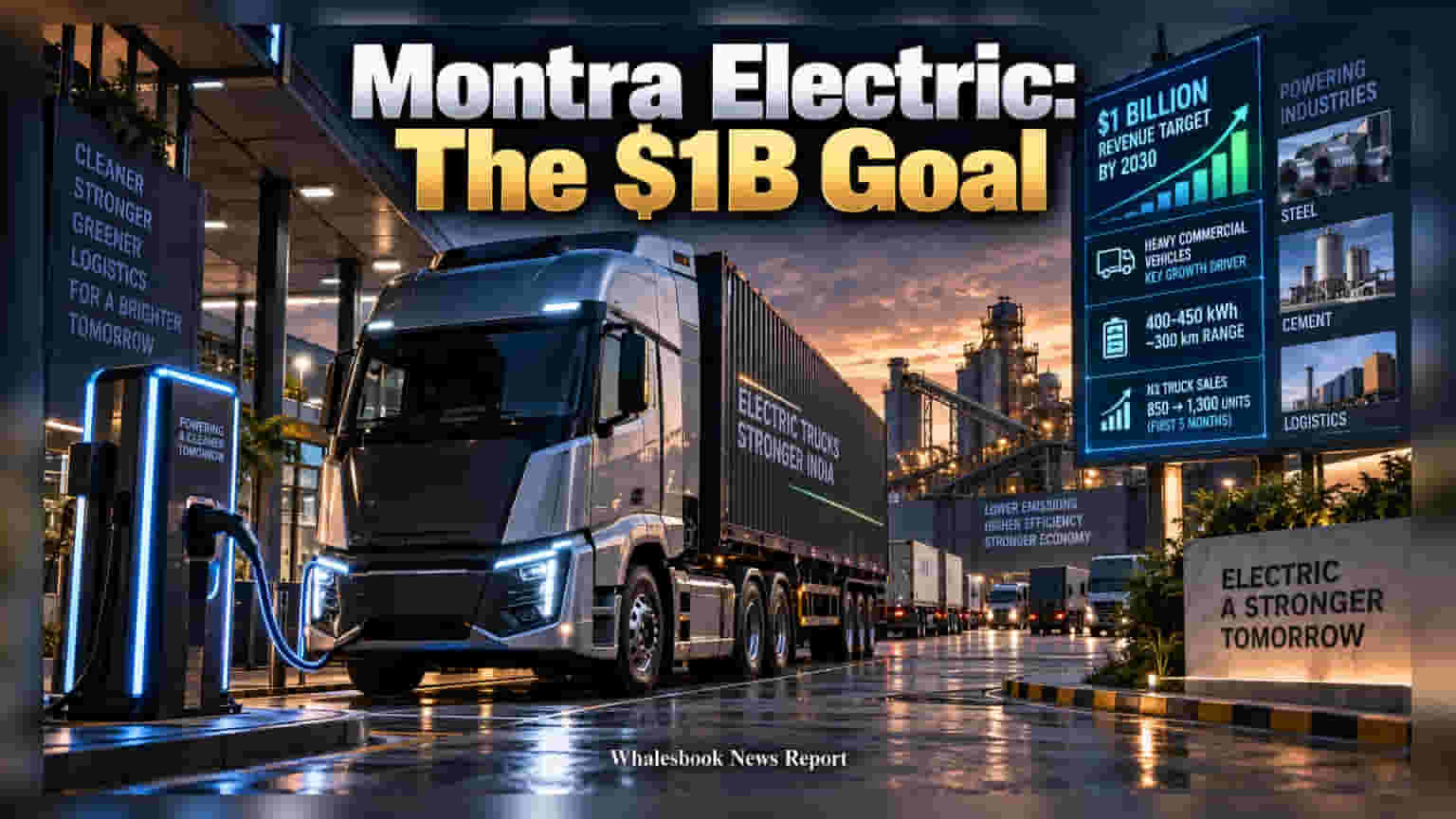
TI Clean Mobility’s Montra Electric aims for $1 billion in annual revenue by 2030, driven by a strategic shift into electric heavy commercial vehicles. The company intends to tap into demand from the steel and cement industries, though it faces challenges related to charging infrastructure and the adoption of the PM E-Drive scheme.
Montra Electric, the electric vehicle brand under TI Clean Mobility (part of the Murugappa Group), has unveiled a roadmap to reach $1 billion in annual revenue by 2030. The company plans to scale its operations to approximately ₹9,600 crore over the next six years, with heavy commercial vehicles serving as the primary growth engine. While the company has previously focused on three-wheelers and smaller commercial segments, the upcoming revenue target depends heavily on the successful transition to high-capacity electric trucks.
Strategic Pivot to Heavy Haulage
The company is aggressively moving into the electric heavy truck market. Management has indicated that this transition to high-capacity logistics is central to its financial roadmap, with a significant portion of the projected 2030 revenue expected to come from the sale of these electric trucks. The strategy involves targeting corporate clients, particularly in the steel and cement sectors, where heavy-duty logistics are essential.
Industry data shows the electric truck segment has already demonstrated resilience. Despite broader challenges, sales in the N3 truck category climbed from 850 units in the previous fiscal year to 1,300 units in just the first five months of the current year. To support this growth, the company is focusing on evolving battery technology, moving from 250-kilowatt-hour (kWh) standards to 400-kWh and 450-kWh configurations, which are designed to offer a range of approximately 300 kilometers on a single charge.
Infrastructure and Policy Hurdles
Despite the growth potential, the electric heavy vehicle segment faces significant structural challenges. Electric penetration in heavy commercial vehicles currently remains below 1%. A major barrier to widespread adoption is the lack of robust charging infrastructure, which restricts many current operations to short, predictable logistics routes.
Government support via the PM E-Drive scheme has also faced friction. The scheme ties upfront subsidies to the scrappage of legacy diesel vehicles, but because the vehicle scrapping process in India remains voluntary, it has slowed the pace of new vehicle adoption. Data indicates that only about 3,500 trucks have been scrapped under similar structures over the past three years. This regulatory complexity means that while demand from corporate sectors like steel and cement is growing, the speed at which the company can scale depends on how quickly the industry overcomes these scrappage and charging infrastructure bottlenecks.
Investors may monitor the progress of the company’s heavy truck sales, the pace of charging infrastructure development, and any policy shifts in the PM E-Drive scheme that might accelerate fleet transitions for corporate logistics providers. The company’s ability to execute this pivot while managing the capital requirements of such an expansion will be a critical factor for its long-term financial health.