

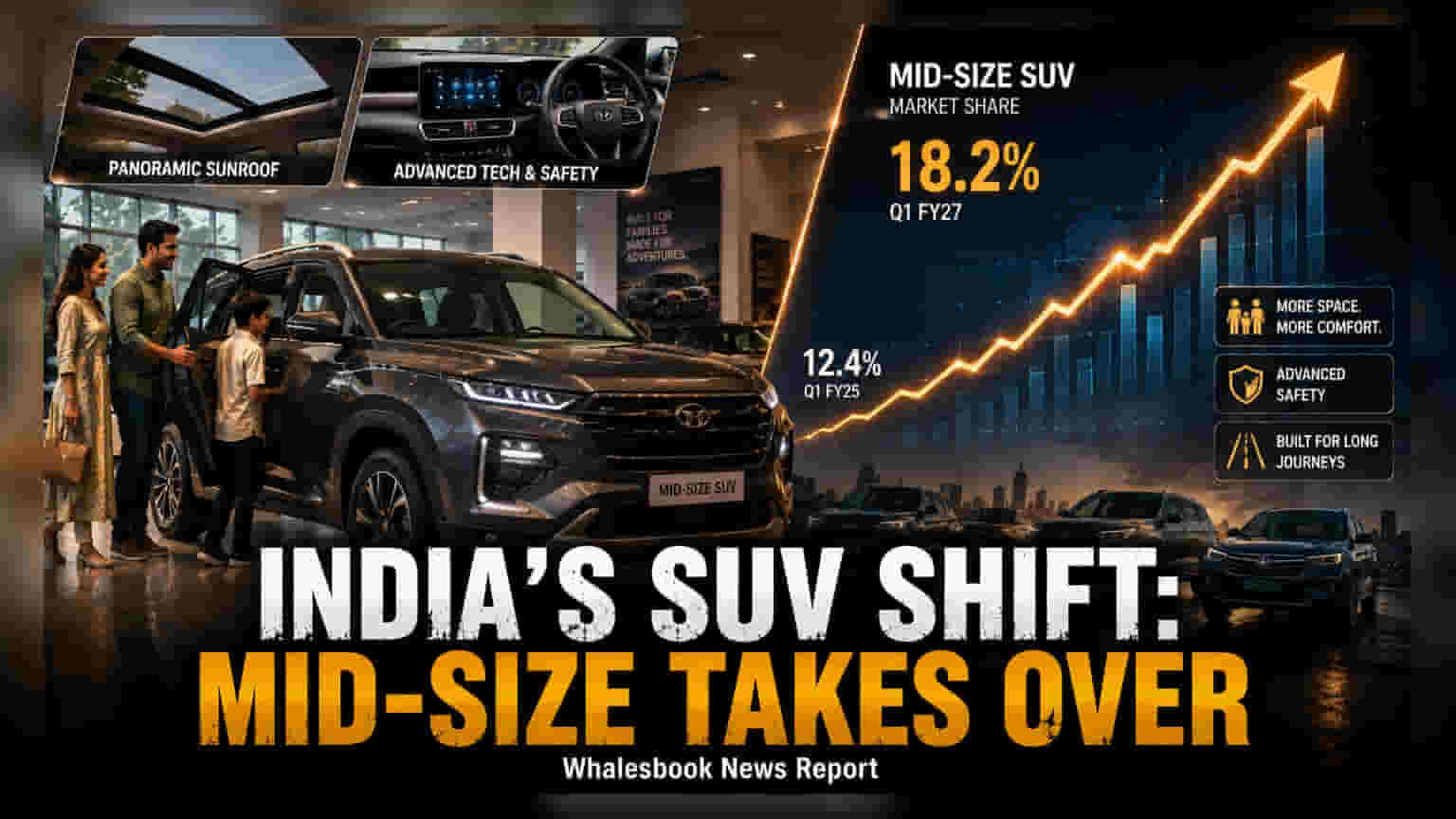
Mid-size SUVs now account for 18.2% of India's passenger vehicle sales as consumers prioritize space and features. While automakers are aggressively expanding their portfolios to meet demand, rising raw material costs have compressed industry margins, leading to planned price hikes. Investors are now balancing this volume growth against the challenges of intense pricing competition and commodity price volatility.
The Indian passenger vehicle market is seeing a distinct shift in buyer preference, with mid-size sport utility vehicles (SUVs) capturing an 18.2% market share in the first quarter of fiscal year 2027. This is a notable rise from the 12.4% share held by this segment just two years ago. This trend points to a shift toward what analysts call "premiumization," where consumers are increasingly willing to pay more for vehicles that offer greater cabin space, advanced safety technology, and comfort features like panoramic sunroofs.
Automakers including Hyundai Motor India, Tata Motors, and Mahindra are responding to this trend by launching new SUV models and refreshing existing ones to attract buyers. These companies are positioning these vehicles to capture the growing demand from families and long-distance travelers. However, the pursuit of higher market share in this segment has brought financial challenges for manufacturers.
The Challenge of Margin Compression
While demand for SUVs is rising, the profitability of the automotive sector faces significant headwinds. In the first quarter of FY27, aggregate EBITDA margins for automotive original equipment manufacturers (OEMs) declined by 210 basis points to 13.1%. This profit pressure stems largely from elevated raw material and commodity costs, specifically in steel, rubber, and aluminum.
To manage these rising costs, some manufacturers are passing the burden to customers. For instance, Hyundai Motor India has announced a price increase of up to 1% across its model lineup effective September 2026. This move highlights the delicate balance companies must strike between maintaining sales volumes and protecting their bottom line in an environment of high input costs and intense competition.
Competition and Risk Factors
Beyond commodity costs, intense pricing competition has become a key concern for investors. The pressure to gain market share in the mid-size SUV segment has led to increased discounting, which can erode short-term profitability even if vehicle sales remain high. Manufacturers are also dealing with other external risks, including potential geopolitical disruptions that could affect supply chains and uncertainty regarding rural income growth, which is a key driver for the passenger vehicle market.
On the positive side, the automotive component industry is showing resilience. Component manufacturers reported a 17% revenue increase in the first quarter, suggesting that high production volumes in the domestic auto industry are still driving growth in the broader supply chain ecosystem.
Looking ahead, investors may track how automakers manage the trade-off between growth and profitability. Key monitorables include commodity price trends, the success of new product launches in a crowded market, and whether sustained demand can help companies offset the recent margin compression through operational efficiencies.