 Whalesbook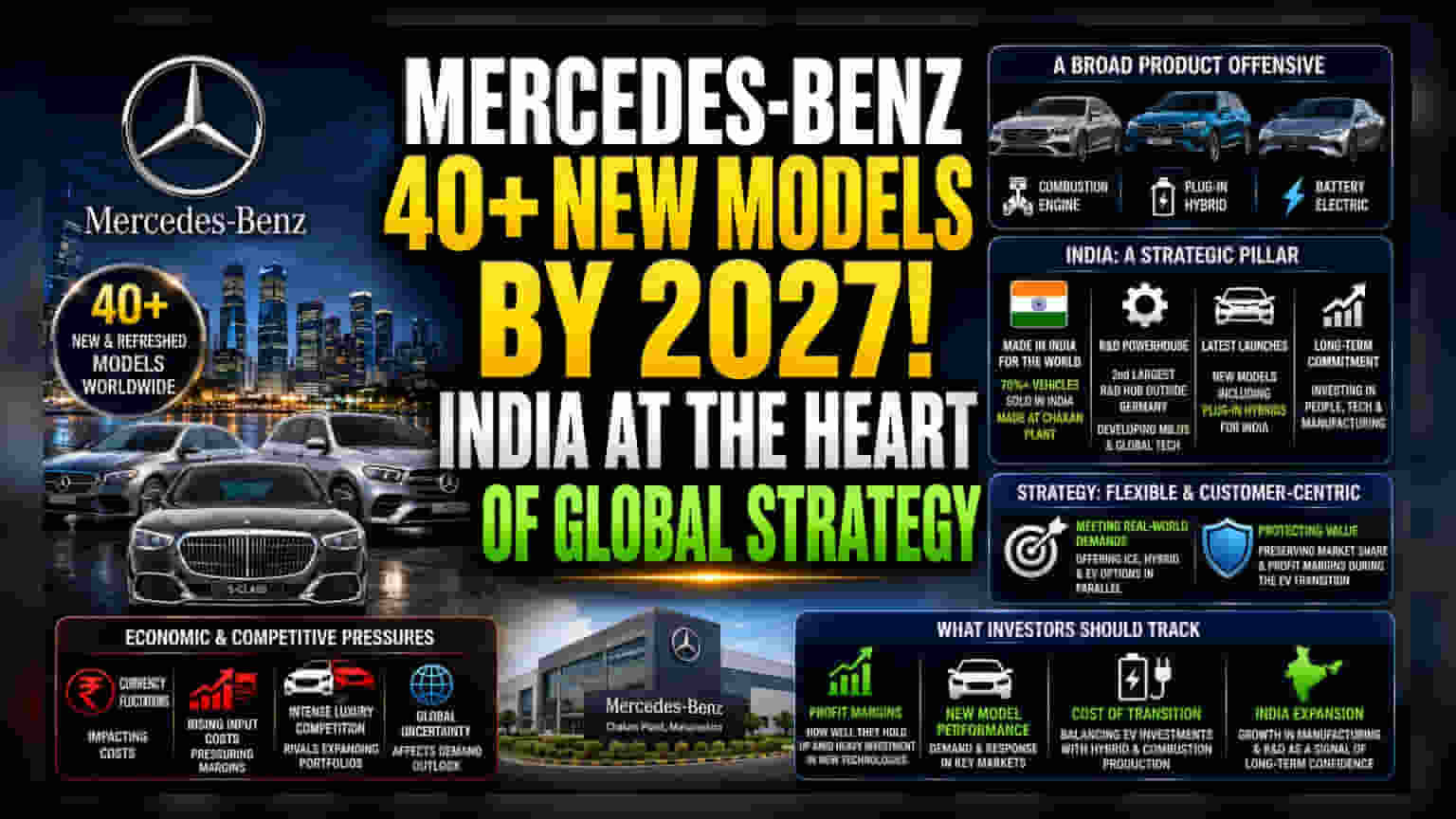


Mercedes-Benz plans to roll out over 40 new models globally by 2027, balancing luxury and electric vehicle growth. While the German automaker is not listed in India, its local subsidiary is expanding R&D and manufacturing, betting on sustained demand despite economic pressures.
What Happened
Mercedes-Benz has announced an ambitious product roadmap, planning to introduce more than 40 new or refreshed models worldwide by the end of 2027. This broad product offensive aims to cover all segments, from entry-level vehicles to high-end, luxury flagships. The strategy includes a mix of traditional internal combustion engines, plug-in hybrids, and battery-electric vehicles, signaling a shift toward a more flexible, pragmatic approach to its global electrification goals.
India’s Strategic Role
In India, the brand continues to deepen its footprint, viewing the country as a crucial market for both growth and operational support. Mercedes-Benz India is focusing on a 'local-for-local' strategy, with a significant majority of its vehicles sold in the country produced at its facility in Chakan, Maharashtra. Beyond manufacturing, India hosts the company's second-largest research and development hub outside Germany. This facility plays a pivotal role in developing software and technologies—such as the new Mercedes-Benz Operating System (MB.OS)—that are integrated into vehicles globally. The company recently highlighted its commitment to the Indian market by launching new models, including plug-in hybrid options, to cater to evolving luxury preferences.
Strategy and Market Reality
The company’s global pivot reflects a balance between market demand and technological innovation. While earlier goals leaned heavily toward an all-electric future, Mercedes-Benz is now adopting a more flexible strategy. It plans to continue offering combustion and hybrid engines alongside its growing electric portfolio, ensuring it meets the expectations of premium customers who may not yet be ready for a complete transition to battery-electric vehicles. This approach is designed to protect market share and profit margins as the industry navigates the complexities of the global EV transition, which has seen slower adoption in some regions than initially anticipated.
Economic and Competitive Pressures
Investors monitoring the automotive sector may note that Mercedes-Benz India faces similar challenges to its peers, including currency fluctuations and rising input costs. The company has indicated that price adjustments may be necessary to counter the impact of a depreciating Rupee and other inflationary pressures. Furthermore, the luxury car market in India is highly competitive, with established rivals also expanding their portfolios. While Mercedes-Benz India itself is a subsidiary and not listed on Indian stock exchanges, these operational updates offer insight into the broader health and strategy of the global Mercedes-Benz Group, which is listed on the Frankfurt Stock Exchange.
Potential Risks
Growth in the automotive sector is rarely linear. Investors should consider several risks that could impact the company's performance. Global economic slowdowns can lead to reduced discretionary spending, affecting demand for high-end luxury vehicles. Additionally, the transition to newer technologies and the development of in-house software (MB.OS) involve significant investment, which can put pressure on short-term profit margins. Supply chain uncertainties and the volatility of raw material costs remain persistent risks for any global manufacturer, potentially affecting production timelines and costs.
What Investors Should Track
For those watching the broader automotive space, key monitorables include the company's ability to maintain profit margins despite heavy investment in new technology and electrification. The performance of the new model launches in key markets will be a primary indicator of demand. Investors may also watch for commentary on how the company manages the cost of its transition to electric power, specifically how it balances the production of hybrid and combustion engines alongside its electric lineup. Continued expansion of the R&D and manufacturing base in India will likely remain a long-term signal of the brand's confidence in the region’s economic growth.